


How to Measure Reliability Engineer Performance Beyond the Paperwork
A reliability engineer can finish the year with a shelf of polished root cause analyses and a plant that fails about as often as it did in January. The binders ... Read more.

How to Improve CMMS Adoption When the Schedule Lives Off-System
A plant can run three software go-lives in five years and still schedule its week on a spreadsheet that only the planner understands. The system is technically ... Read more.

How to Build a Maintenance Knowledge Base Your Team Will Actually Trust
A maintenance team can spend two years and a healthy budget on a digital knowledge base and still reach for the same worn binder when a line goes down in the mi... Read more.
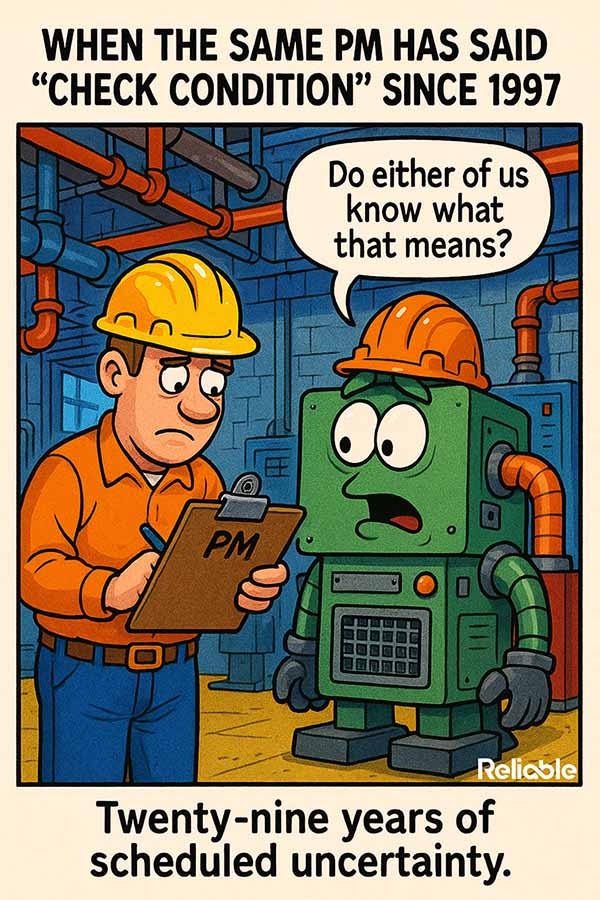
How to Write Effective PM Procedures Your Crew Will Actually Trust
A preventive maintenance (PM) task that has read the same way for thirty years carries a quiet authority. Nobody questions it, and nobody quite remembers what i... Read more.
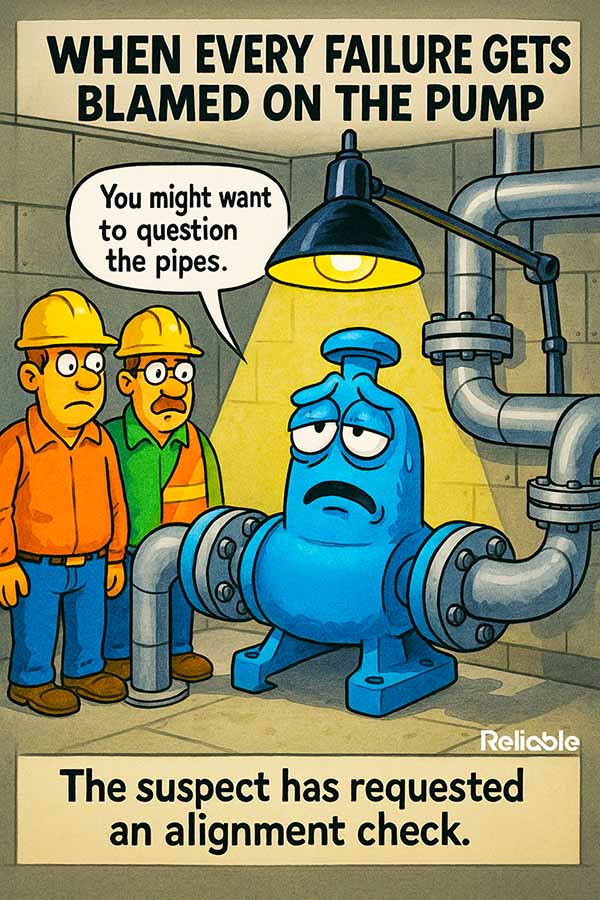
How to Prevent Centrifugal Pump Failure by Fixing the System First
A pump that keeps landing on the repair bench looks guilty. It gets pulled, rebuilt, and set back on its base, and a few months later it returns with the same w... Read more.
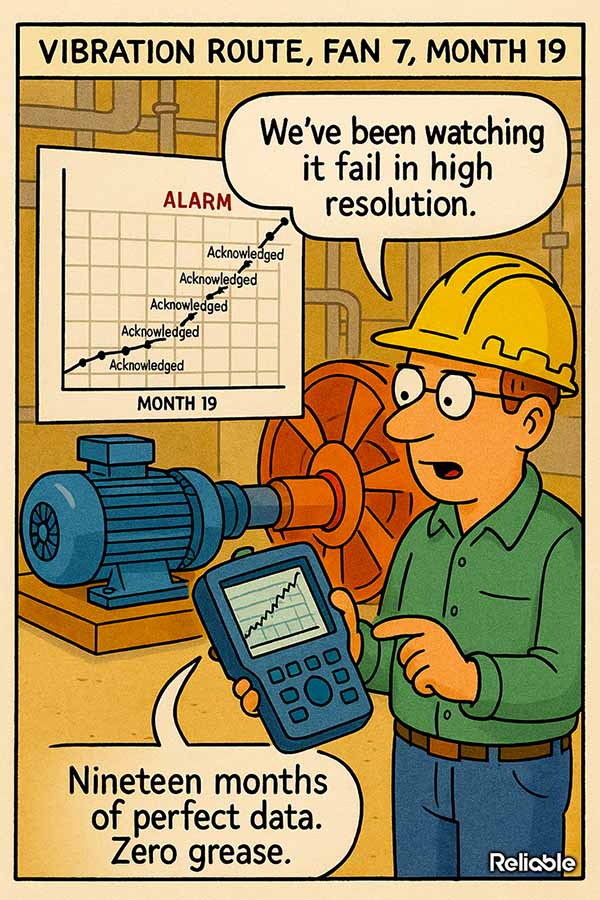
How to Respond to Condition Monitoring Alarms Before Equipment Fails
A condition monitoring program can detect a developing machine problem and still fail to prevent an unplanned event, which is why how to respond to condition mo... Read more.
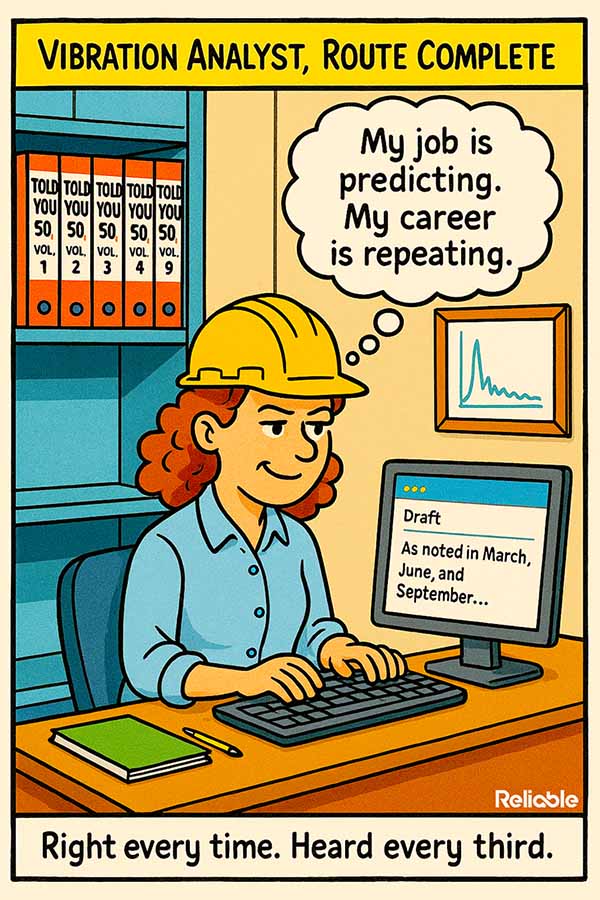
How to Communicate Reliability Findings So They Drive Decisions
A reliability program can detect problems accurately and still fail to change anything, because knowing how to communicate reliability findings is a separate sk... Read more.
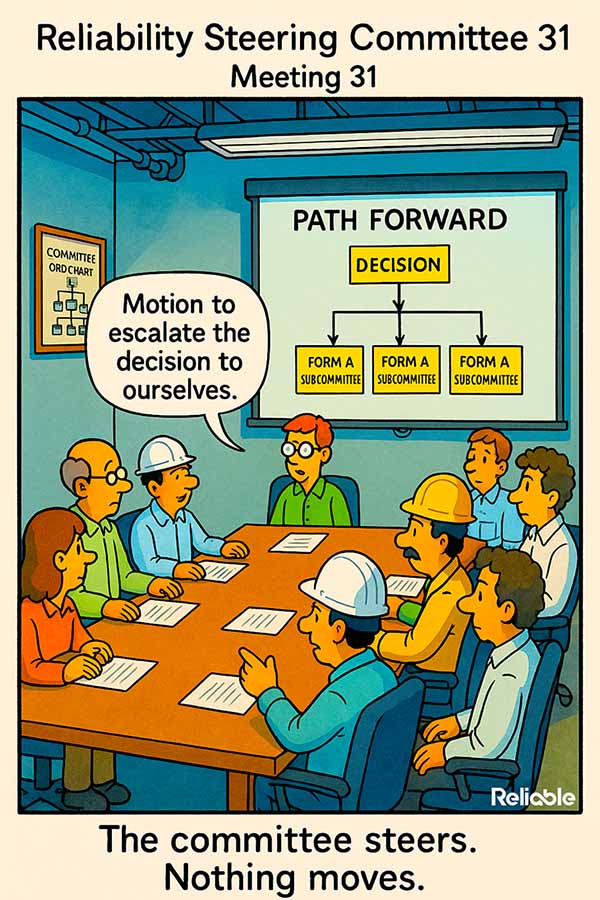
Reliability Program Governance That Drives Action Instead of Meetings
Reliability program governance exists to steer improvement, yet in many plants it can become a reason improvement stalls. A committee forms, a meeting schedule ... Read more.
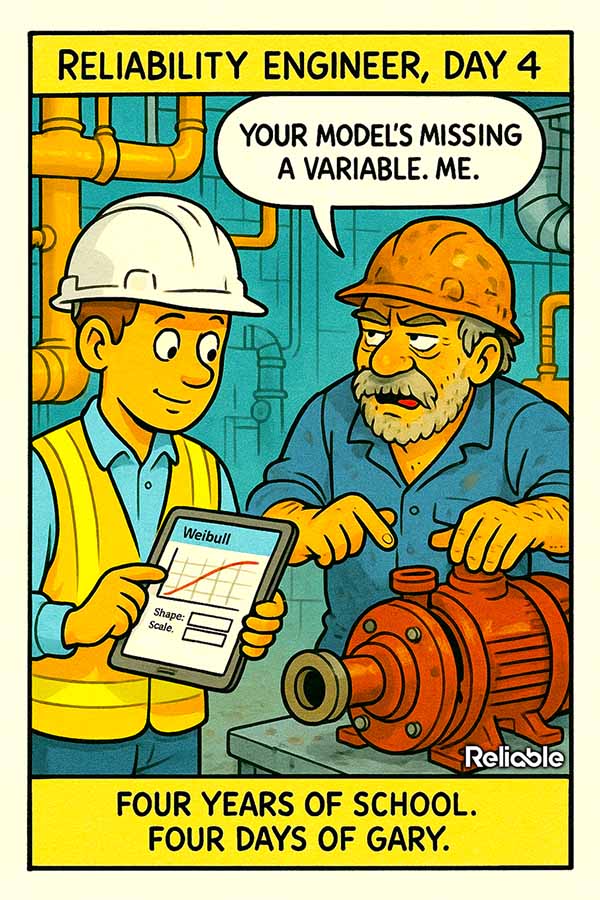
How to Capture Tribal Knowledge in Maintenance Before It Walks Out
Sooner or later, a plant has to confront how to capture tribal knowledge in maintenance, and it often becomes urgent when a veteran technician hands in a retire... Read more.
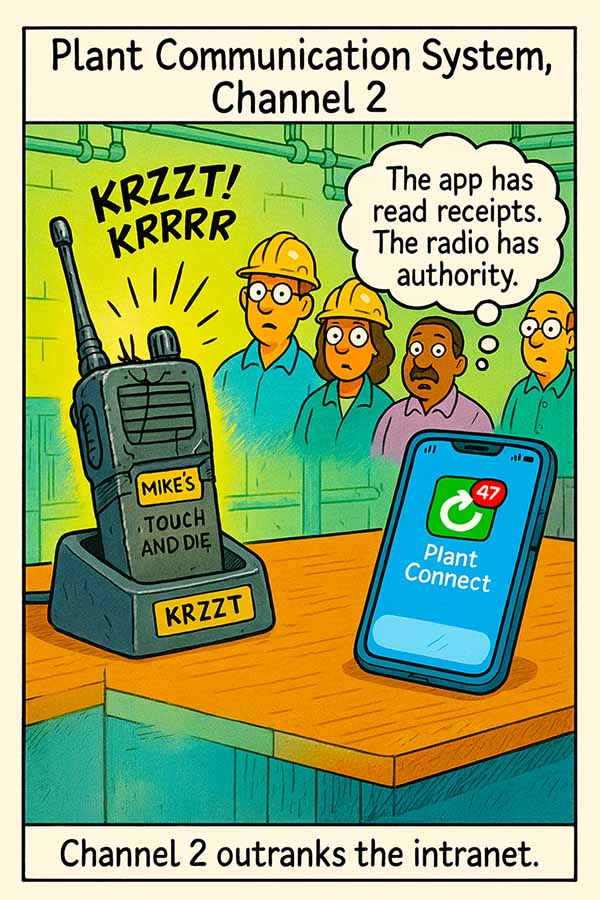
Maintenance Communication Best Practices That Survive a Busy Shift
Walk any plant during a shift change and the real maintenance communication best practices reveal themselves, usually over a handheld radio and a hallway conver... Read more.
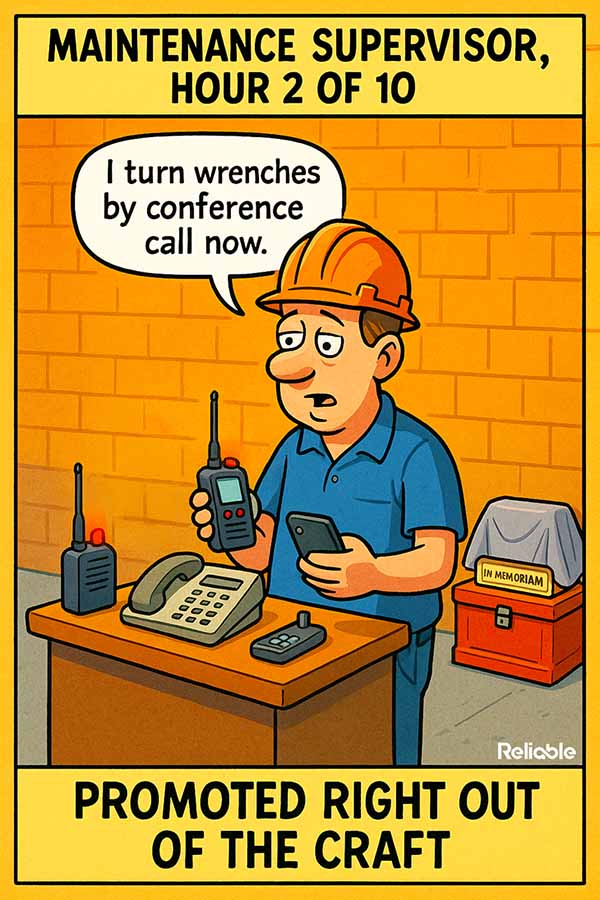
How to Develop Maintenance Supervisors Without Losing the Craft
The question of how to develop maintenance supervisors usually surfaces the hard way, a few weeks after a plant hands its sharpest technician a title and a phon... Read more.
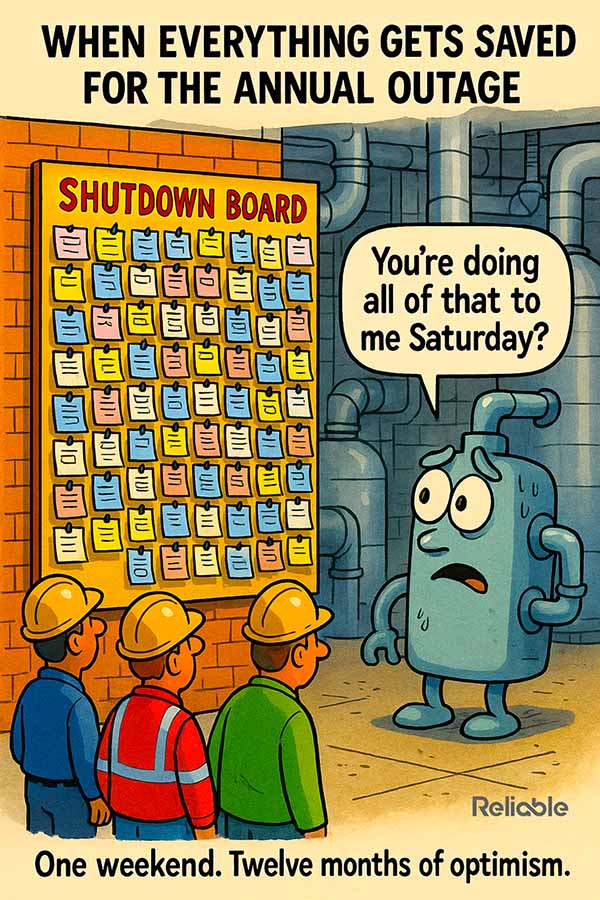
How to Reduce Shutdown Scope Creep at Your Annual Plant Outage
In many plants, the annual outage becomes the place where deferred work waits. A leaking valve, a motor that runs warm, or equipment that needs access for a pla... Read more.
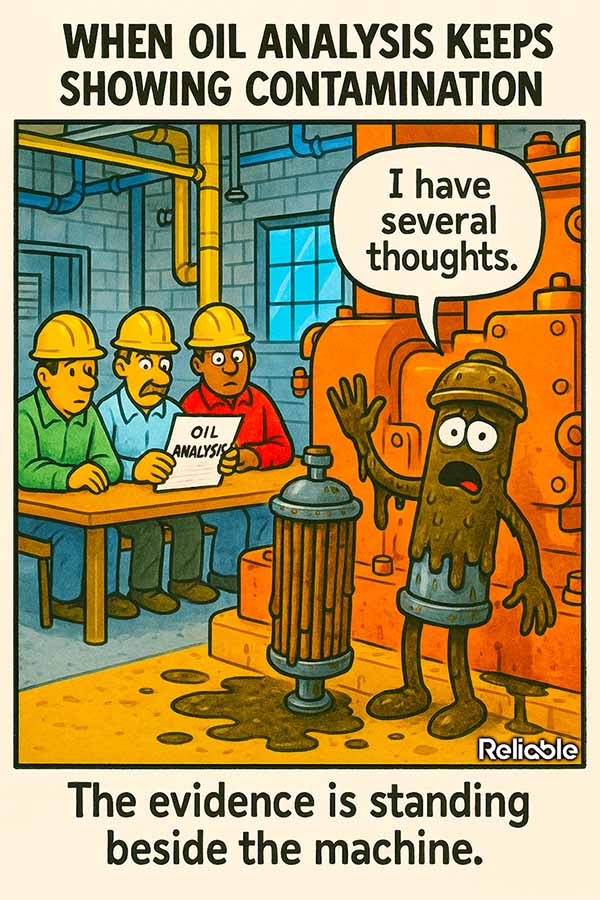
How to Control Oil Contamination Before It Wears Your Machines Out
When an oil analysis report comes back flagged for contamination month after month, the result deserves investigation rather than another blind oil change. Firs... Read more.
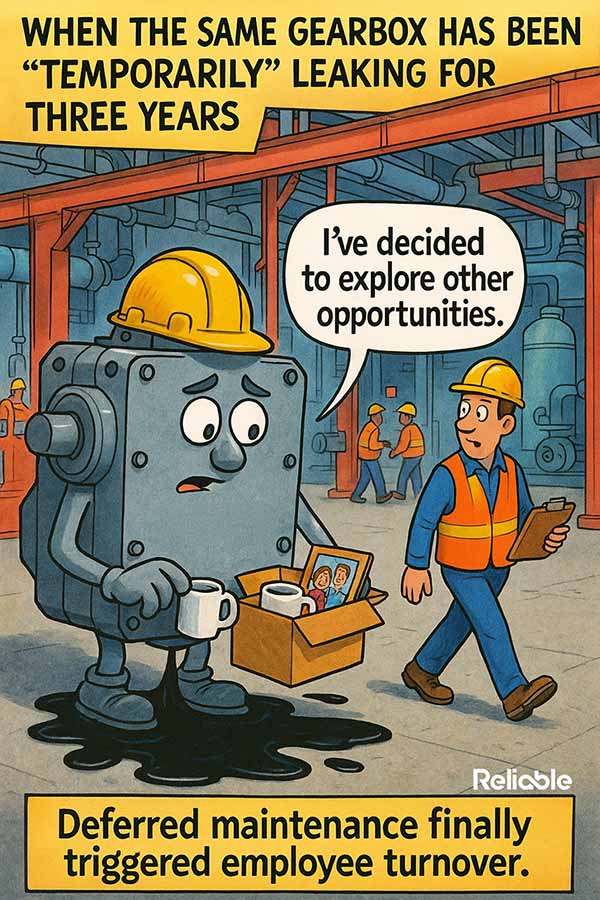
The Real Risks of Temporary Equipment Repairs You Keep Postponing
A gearbox that has been leaking for three years is a maintenance decision, even when nobody remembers making it. The risks of temporary equipment repairs grow q... Read more.
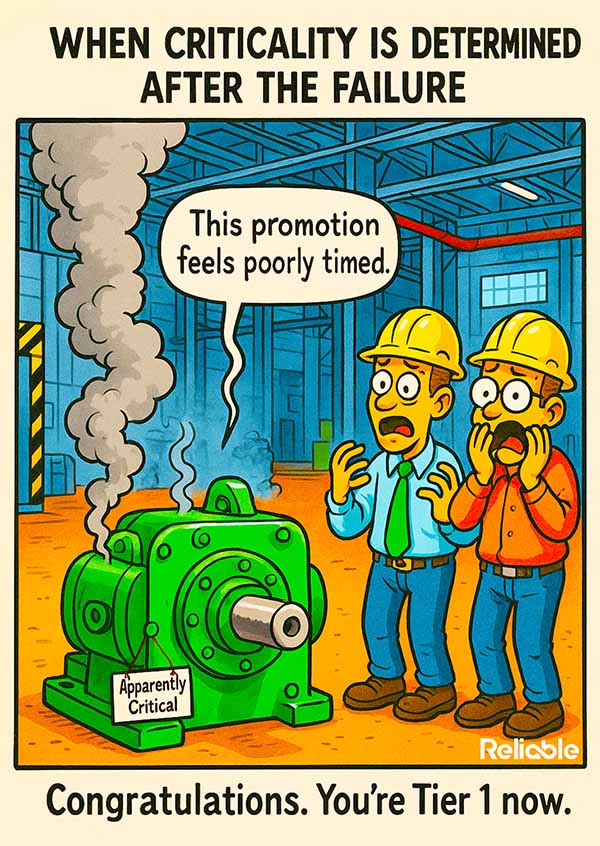
How to Rank Asset Criticality Before a Failure Forces the Answer
Most plants can tell you which machines are critical, yet many only learn the full list the hard way, one smoking gearbox at a time. Knowing how to rank asset c... Read more.
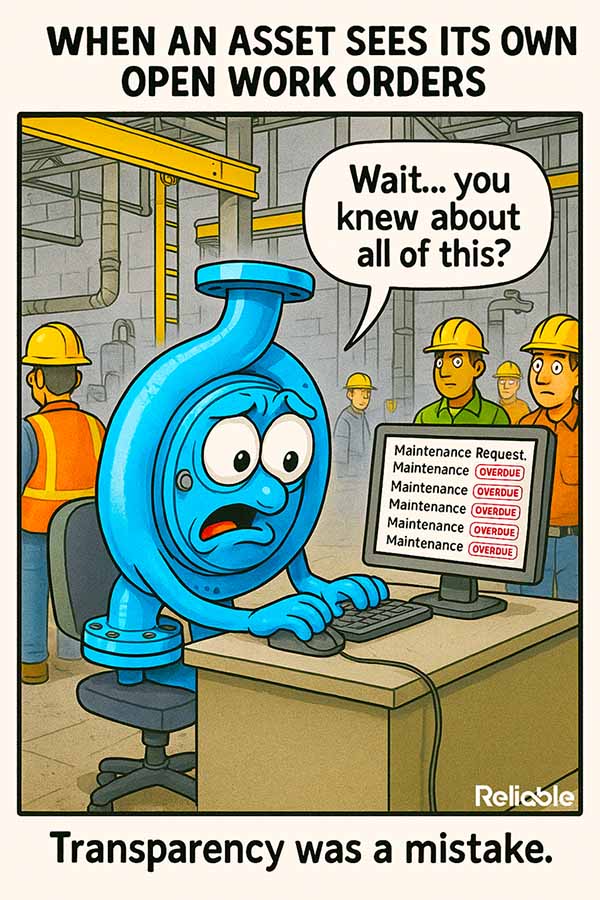
How to Manage Overdue Work Orders Before Risk Builds
Every maintenance operation reaches a point where the list of open jobs can outgrow the hours available to close them, and learning how to manage overdue work o... Read more.
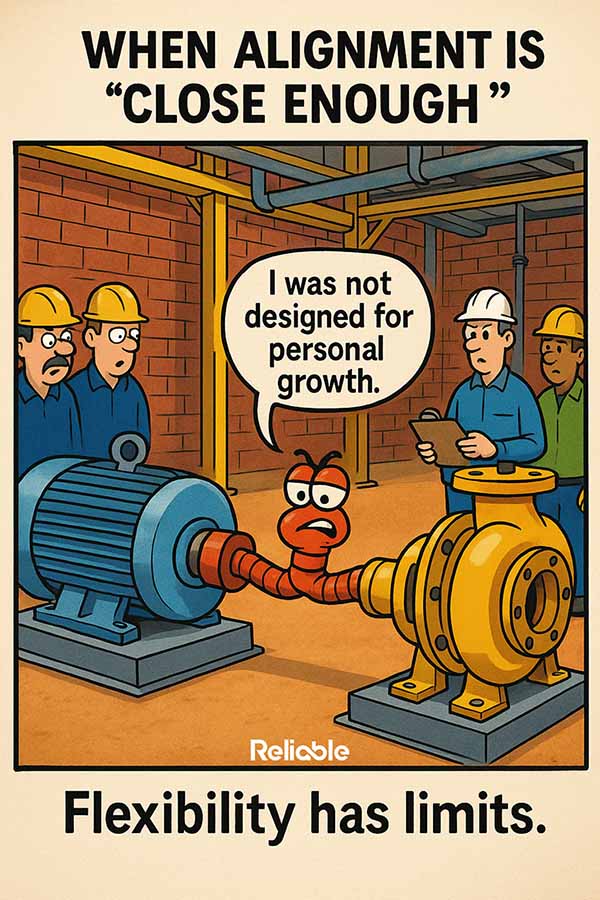
Why Shaft Alignment Tolerance Standards Matter for Bearing Life
On a plant floor, a coupling can look aligned to the eye and still be several thousandths of an inch out of position. Shaft alignment tolerance standards turn t... Read more.
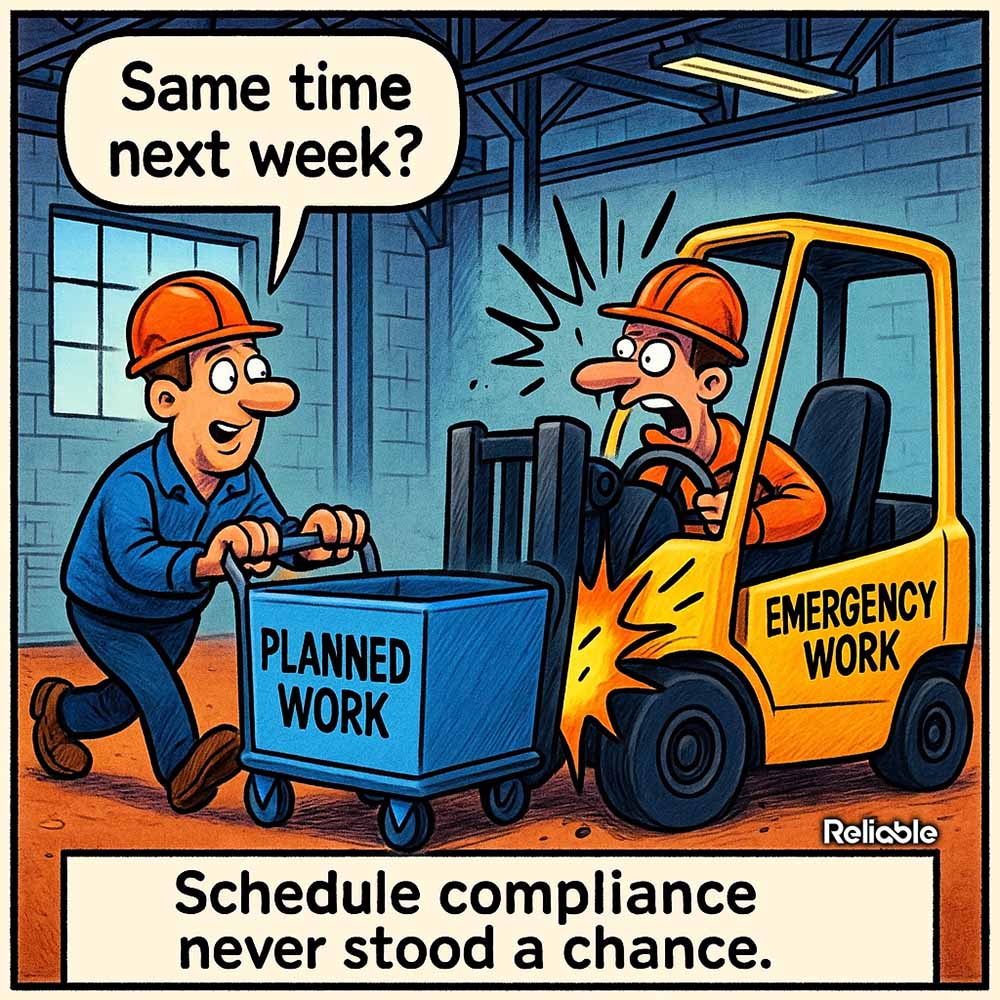
Planned vs Emergency Maintenance Work: Protecting the Weekly Schedule
Planned work and emergency work are not strict opposites. Planned describes whether a job went through a formal preparation process before execution; emergency ... Read more.
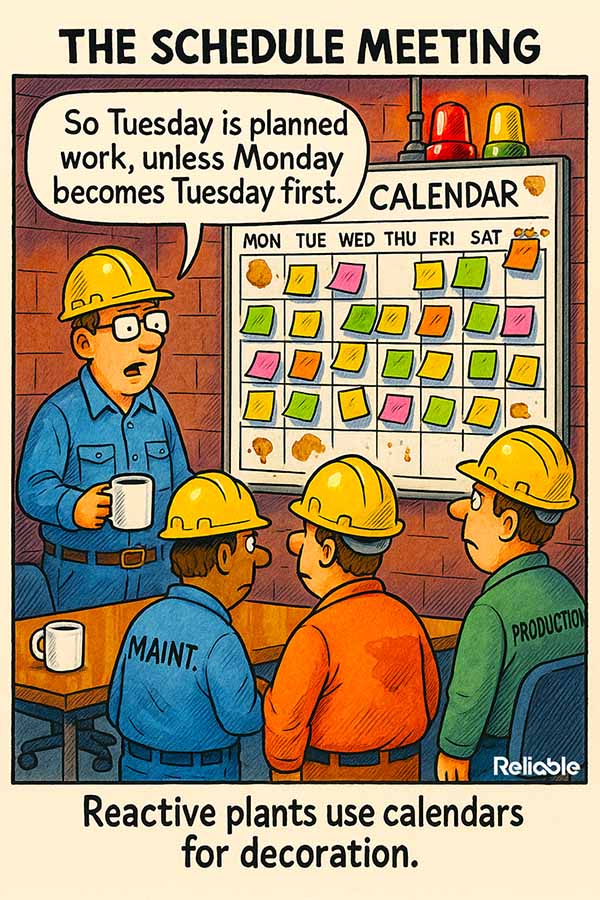
How to Build a Weekly Maintenance Schedule That Holds Up
In a reactive plant, the weekly schedule is a document everyone privately expects to be rewritten by Tuesday. Jobs get bumped, priorities reshuffle, and the pla... Read more.
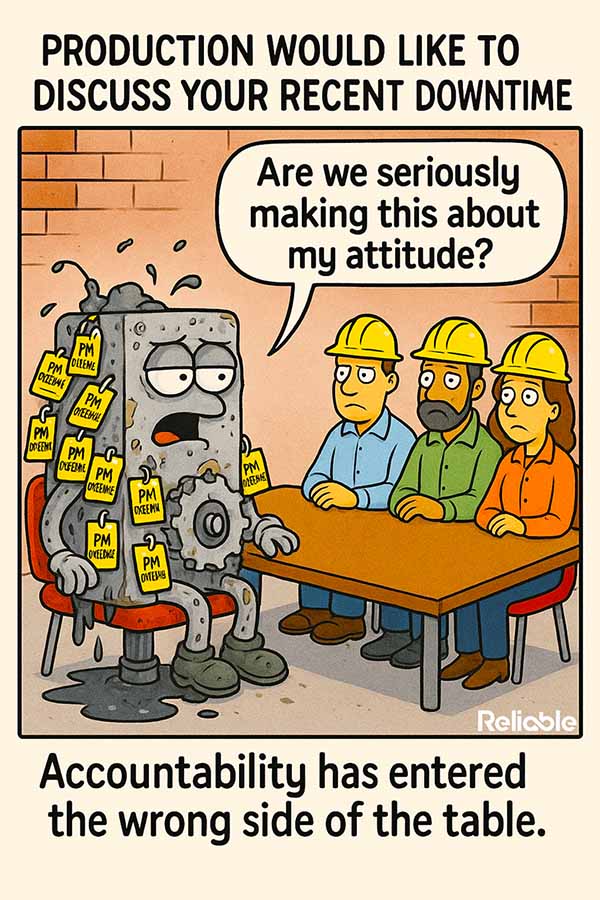
How to Improve Preventive Maintenance Compliance and Cut Downtime
When a line goes down, the meeting that follows has a familiar shape. Production wants answers, the equipment gets described as unreliable, and someone notices ... Read more.