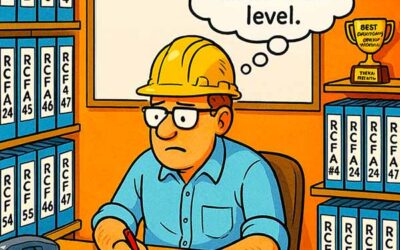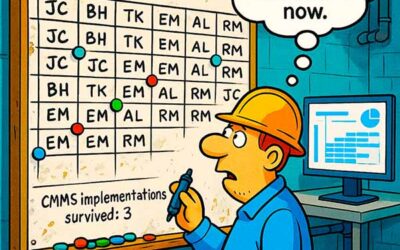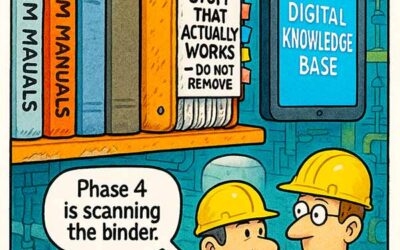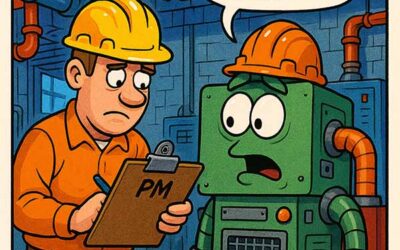
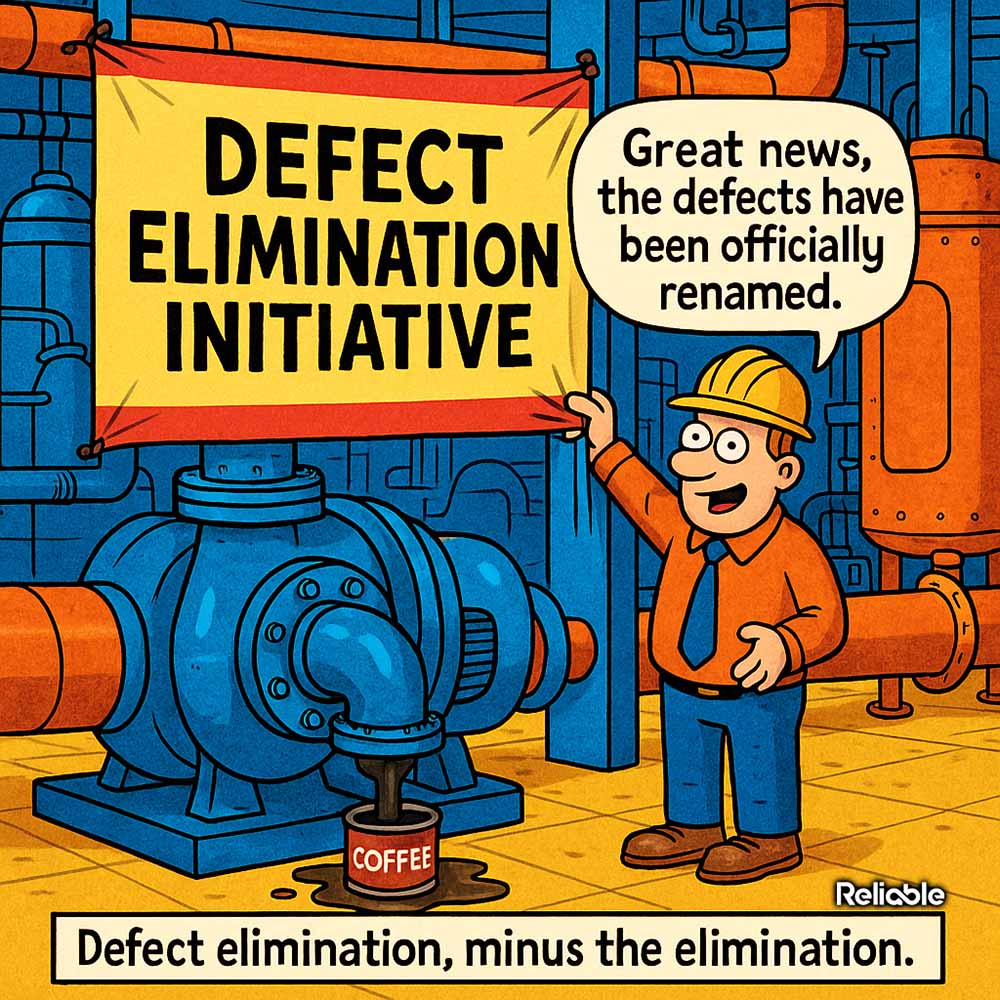

Every plant has seen it happen. A new defect elimination initiative is announced with real fanfare, the leadership team nods along, and three months later the same equipment is still failing in the same predictable way. So what is defect elimination in maintenance, and why does the label so often outlast the result? At its core, defect elimination is the disciplined practice of identifying the causes and contributing conditions behind recurring failures, applying corrective action, and verifying that recurrence has been reduced or prevented.
The gap between the phrase and the practice is where many programs stall. Relabeling a chronic problem, logging it, and scheduling another repair can feel like forward motion. Genuine elimination changes the equipment, operating condition, maintenance practice, or procedure in a way that removes or controls the causal condition and is then verified in service.
What Is Defect Elimination in Maintenance, Really
The term gets thrown around loosely, so it helps to be precise about it. A defect can be any adverse condition that increases the likelihood of a failure or performance loss: a misaligned coupling, contaminated lubricant, incorrect bearing installation, or a control setpoint left in the wrong position. Elimination means removing or controlling that condition so it no longer drives the targeted failure mode.
This is why serious defect work often uses structured root cause failure analysis. Treating a symptom can restore operation quickly; identifying and correcting the relevant causal factors is what reduces the chance of the same failure returning.
A defect you have only renamed is still a defect. The strongest evidence of elimination is that the targeted failure mode no longer recurs under comparable operating conditions.
That measure sounds obvious, yet it is easy to lose once a program comes under pressure. Activity is easy to tally: meetings held, forms filed, actions assigned, boxes checked. Outcomes take longer to surface, and they require someone to keep watching the asset after the corrective work is closed.
A useful field test is to ask what changed and how the change will be verified. If the answer is only an unverified procedure change or a fresh note in the log, elimination has not yet been demonstrated. If the answer is a redesigned seal, a closed contamination path, or a corrected installation method with defined verification criteria, the team has something it can test.
Where Recurring Defects Actually Come From
Before a team can remove defects, it has to see them clearly. Many recurring failures can be grouped into a short list of sources, and naming those sources turns a vague initiative into specific, assignable work.
- Design and selection: a component that was never truly suited to the duty it now runs day after day.
- Installation and assembly: alignment, fit, torque, cleanliness, or other precision errors introduced during installation or repair.
- Operation: running equipment outside its intended envelope, from overloading to constant starts and stops.
- Maintenance practice: contamination introduced during service, wrong parts fitted, or repairs done in a rush.
Each source calls for a different remedy, which is why a single tool rarely covers a whole program. A brief 5 whys discussion may be adequate for a simple, well-bounded problem, while a complex, high-consequence, or poorly understood failure may require formal root cause analysis or an engineering review.
The point of sorting failures this way is focus. A team that opens too many investigations at once can dilute ownership and follow-through. Start with a small number of recurring problems selected by risk and value: safety or environmental consequence, production loss, recurrence, repair cost, and the effort required to remove the cause.
Building a Program That Truly Removes Defects
A defect elimination program works best as a standing work process rather than a one-time event with a start date and a ribbon. The programs that hold up over time tend to share a handful of practical habits, and most are more about discipline than expensive tools.
It starts with a backlog of candidate defects drawn from work history, operator reports, condition data, and failure investigations. Each candidate should be ranked using criteria that fit the site, such as consequence, recurrence, exposure, downtime, and repair cost. That keeps the queue from being driven only by whatever failed most recently.
Most teams get more value by finishing a small number of high-priority eliminations than by opening dozens of investigations. Breadth looks productive on paper; verified closure is what changes performance in the plant.
Once a defect reaches the top of the queue, a small team should own it through a verified corrective action. Ownership matters because elimination work crosses boundaries. The causal factors may involve operations, the change may require engineering, and reliability or maintenance may own the follow-up, so one person or role needs to carry the action across those interfaces.
Verification is easy to skip, but it is what separates an applied corrective action from a confirmed elimination. A defect is not eliminated simply because the work order is closed. The verification method and observation period should fit the failure mode, operating exposure, and expected recurrence interval.
Why Defect Elimination Programs Stall Out
When defect elimination programs stall, the reasons are often organizational rather than purely technical. Common failure modes include lost ownership, weak prioritization, and corrective actions that are closed without meaningful verification.
- No protected time: the same people handling today’s urgent work are expected to prevent tomorrow’s failures, and improvement work is repeatedly displaced.
- No risk or value lens: without agreed criteria for consequence, recurrence, and cost, the queue becomes difficult to rank and hard to finish.
- No verification: corrective actions are declared complete when the wrenching ends, with no defined check that the targeted failure mode has stopped recurring.
- No learning transfer: a verified lesson on one asset is not evaluated for applicability to similar assets, job plans, specifications, or procedures.
That last point can multiply the value of a good fix. A confirmed change on one pump may be worth much more if engineering verifies that the same failure mechanism and corrective action apply to similar assets, then updates standards or job plans accordingly. That kind of controlled replication can help reduce reactive maintenance across a site.
Stalling is rarely a single dramatic collapse. More often, urgent work consumes the protected hours and the ranked queue stops moving. Guarding against that slide is a management responsibility because the technical work cannot continue if ownership, capacity, and follow-up disappear.
Making Elimination the Plant’s Default
The real goal is a plant where removing a defect is simply how repeated failures get handled, rather than a special campaign with a kickoff, a slogan, and a quiet end date that everyone eventually forgets.
Getting there is mostly about proof and repetition. Every verified elimination builds confidence that time spent removing a recurring cause can return capacity later. Over time, that evidence can turn a short initiative into a standing work practice.
A defect elimination program earns credibility one confirmed fix at a time. Nothing makes the case better than a chronic failure mode that stops recurring.
The outcome should be less recurrence of the targeted failure modes, not more paperwork. Useful measures can include repeat failures, repeat corrective work, downtime from the targeted modes, and whether corrective actions remain effective over a defined operating period.
If the language changes but the targeted failures continue at the same rate, the elimination has not been demonstrated. Start with one costly or high-risk repeating failure, remove or control its causal factors, verify the result, and use that evidence to justify the next item in the queue.