Washdown Leaves a Handoff Hazard Your Pre-Op Checklist Skips
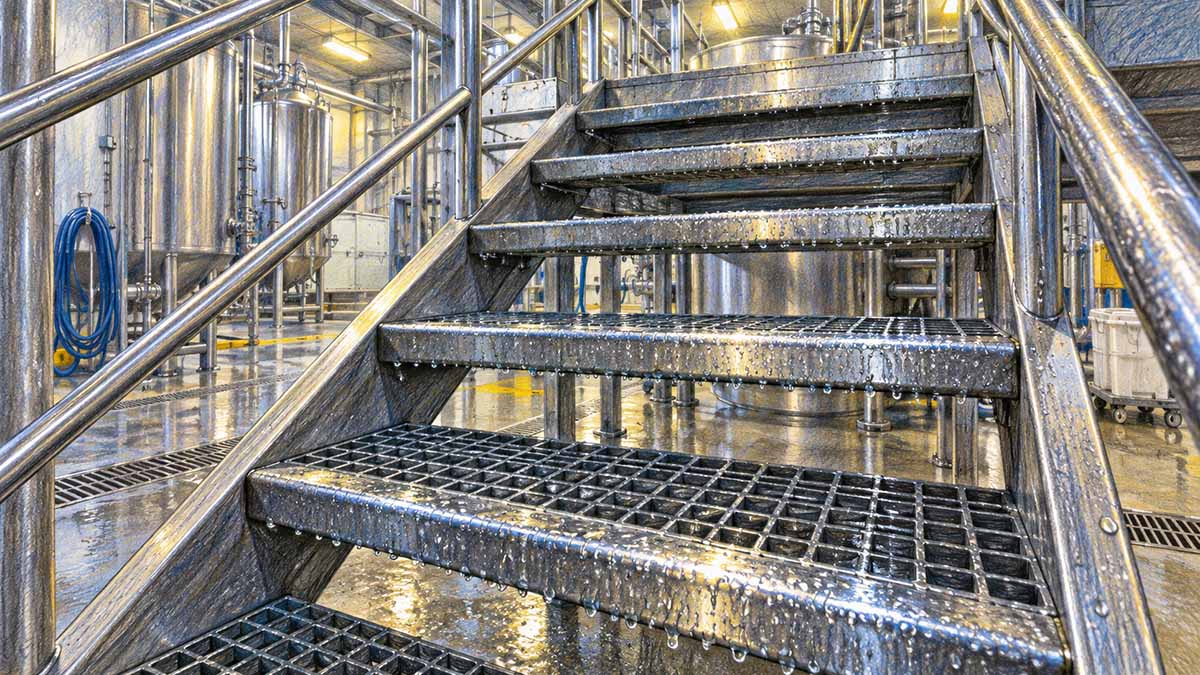
Sanitation signs off at 5:40. Production starts at 6:00. Somewhere in those 20 minutes, an operator walks up a grated stair onto a platform that got hosed with 160-degree water and a chlorinated alkaline cleaner an hour earlier.
That platform passed inspection. The ATP swabs came back clean. The pre-op check found the filler ready to run. Nobody checked whether the floor was safe to stand on.
This is the most predictable hazard in a food and beverage plant, and it repeats every single day.
Sanitation Verifies Clean. Dry Is Somebody Else’s Problem
A sanitation program has one job: get the plant to a verifiable microbial standard before product touches equipment. The verification tools reflect that. ATP swabs, allergen tests, visual inspection under white light. Every one of them measures cleanliness.
Wet is a passing condition for all of them. A grating platform still dripping rinse water reads as compliant on every form sanitation fills out.
A wet grating platform passes every sanitation check the plant runs. It fails the first person who walks onto it.
The production team inherits that platform 20 minutes later. Their pre-op checklist covers guards, sensors, and lockout status. Walking surfaces almost never appear on it either.
So the wet floor lives in a gap. Sanitation owns it until sign-off. Production owns it once the line starts. In between, it belongs to whoever slips.
Why Grating Dries Last
Solid floors in a food plant are designed to shed water. They slope to drains, the concrete gets a broadcast aggregate, and the epoxy is chosen for wet traction.
Grating comes out of a different design conversation. Bar grating on mezzanines, filler platforms, and stair treads is specified for load, span, and open area. Traction rarely makes the drawing.
After a washdown, water drains through the voids, which looks like the problem solving itself. The bearing bars tell a different story. Each one holds a film of water by surface tension, and that film carries whatever the cleaning cycle left behind.
Here is what is sitting on the bars at 5:45:
Rendered fat and oil that the caustic emulsified and the rinse only partly carried off
Protein residue from dairy, meat, or egg processes, which turns slick the moment it gets wet
Chlorinated alkaline or quaternary sanitizer residue, formulated to spread and cling
Foam from the cleaning cycle that has yet to break down
Condensation where chilled lines and cold rooms meet warm rinse water
Galvanized bearing bars make it worse. The zinc coating on new grating is smooth to begin with, and years of caustic exposure polish it further. Old grating in a wet process area often has less traction than the day it was installed.
The First Ten Minutes of First Shift
Wet grating meets a specific kind of walker at 6:00 a.m. Operators arriving at speed, often carrying totes, tools, or change parts. Supervisors moving between lines. A new hire on day three who has yet to learn which stair gets slick.
Bureau of Labor Statistics data puts food manufacturing injury rates above the manufacturing average year after year, and falls on the same level sit near the top of the event list. Most of those falls trace back to a surface that was wet, greasy, or both.
Shift start puts the most feet on the wettest steps in the shortest window of the whole day.
Timing makes it worse. Shift start compresses a lot of foot traffic into a few minutes, on exactly the surfaces that had the least time to dry. Stair treads take the heaviest load, because everyone coming onto a platform uses the same three or four steps.
Fixing the Surface Instead of the Schedule
The obvious fix is time. Finish sanitation earlier, or start production later, and let the grating dry.
Plants that have tried it know how that goes. Sanitation windows are already squeezed between the last case off the line and the first case on. Adding 45 minutes of dry time costs roughly 45 minutes of production every day, which nobody approves for a hazard that hasn’t hurt anyone yet.
The durable answer is traction that works wet. In a food plant, that rules out most of the traditional options.
Welding traction plates onto grating means a hot work permit in a facility full of packaging, dust, and cleaning chemicals, plus slag and spatter near food contact zones. Anti-slip coatings peel under daily caustic and hot water cycles within months. Adhesive tape lets go the first time it gets pressure-washed. Replacing the grating with serrated stock is a capital project with a shutdown attached.
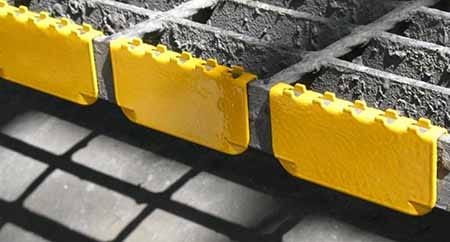
Clip-on grating cleats close that gap without any of those tradeoffs. Titan Safety’s anti-slip clips knock onto standard bar grating by hand, with no tools, no welding, and no drilling. One technician can outfit a stair or platform inside the sanitation window, and the clips come off the same way if the grating ever needs replacing.
For wet process areas, the composite version matters most. It stands up to caustic, chlorinated, and acid sanitizers, sheds water instead of holding it, and puts no metal shavings or sparks into the plant. The safety yellow and green options also give operators a visual cue at the stair nose in low light, which is where most first-shift stumbles start.
Here is how the options stack up in a wet process environment:
| Retrofit option | Hot work permit | Shutdown required | Holds up to daily caustic washdown | Who installs it |
|---|---|---|---|---|
| Welded traction plates | Yes | Yes | Yes | Certified welder or contractor |
| Anti-slip floor coating | No | Partial, cure time | Poor, peels within months | Contractor or maintenance |
| Adhesive tread tape | No | No | Very poor, fails under pressure wash | Maintenance |
| Serrated grating replacement | Yes, cutting | Yes | Yes | Contractor, capital project |
| Composite anti-slip clips | No | No | Yes, chemical resistant | One maintenance tech, by hand |
Traction retrofit options for bar grating in wet process areas.
Making the Handoff Itself Safer
Traction fixes the surface. The handoff still needs work, because wet grating is only one of the things production inherits from sanitation.
Add walking surfaces to the sanitation sign-off sheet, with a squeegee pass on platforms and stairs as the final step
Give production a pre-op line item for stairs and platforms, right alongside guards and sensors
Identify the three or four highest-traffic access points and give those the first traction retrofit
Fold grating clips into the platform PM so loose or missing ones get caught on schedule
Walk new hires through which surfaces stay wet longest during their first week, before they learn it the hard way
All of that costs attention instead of budget. Someone has to own the 20 minutes that currently sit between two departments.
What Good Looks Like at 6 a.m.
Picture the same platform after the fix. Sanitation finishes, runs the squeegee, and signs a sheet that has a line for walking surfaces. First shift walks up a stair with high-vis cleats on every tread nose. The grating is still damp, and it grips anyway.
The best safety control in a food plant is the one nobody notices, because it made the hazard boring.
The operator carrying the change parts reaches the platform without thinking about the stairs. That is the whole goal. Sanitation keeps its window, production keeps its start time, and the surface does the work in between.