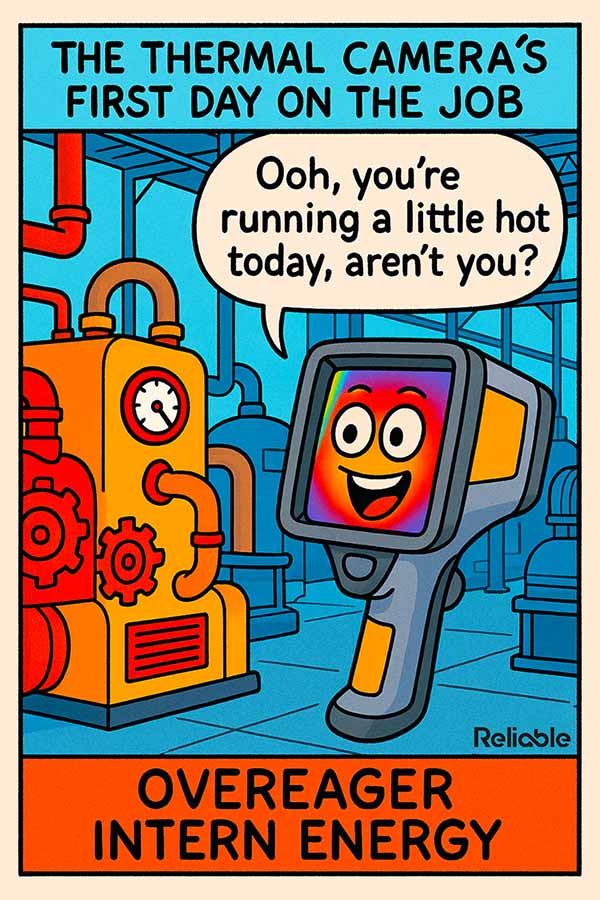

Every piece of rotating equipment, every electrical panel, and every steam trap in your plant is telling you something. The question is whether you’re listening. Thermal imaging for predictive maintenance gives you the ability to hear what your assets are saying before they say it with a catastrophic failure and a six-figure repair bill.
Infrared thermography translates heat signatures into actionable data. A motor bearing running 40°F above its baseline tells a specific story. An electrical connection glowing white-hot in a switchgear panel tells another. Both stories end badly if nobody reads them in time.
Why Thermal Imaging for Predictive Maintenance Works
Heat is the earliest, most reliable indicator of mechanical and electrical distress. Long before vibration patterns shift or oil samples degrade, temperature anomalies appear. That’s what makes infrared inspection so valuable: it catches problems in their infancy.
The ROI case for thermal imaging for predictive maintenance is well documented. The U.S. Department of Energy estimates that every dollar spent on infrared inspection returns between four and ten dollars in avoided repairs, energy savings, and extended equipment life.
A motor bearing running 40°F above baseline has a story to tell. Infrared thermography lets you read it before the ending gets expensive.
The physics are straightforward. Every object with a temperature above absolute zero emits infrared radiation. Thermal cameras detect that radiation and convert it into a visual temperature map. Hot spots, cold spots, and uneven heat distribution all point to specific failure modes.
Traditional vibration analysis and oil sampling remain essential. Thermal imaging complements them by covering assets and failure types those technologies can miss, particularly electrical faults, insulation breakdown, and fluid flow problems.
A 2023 study by the Infrared Training Center found that facilities using structured thermographic inspection programs reduced unplanned electrical failures by 30% in the first year. That number climbed to 52% by year three, as technicians refined their routes and baseline libraries.
What to Inspect (and How Often)
The temptation with a new thermal camera is to scan everything, every day. Resist it. Effective programs prioritize assets by criticality and failure history.
Start with the equipment that hurts the most when it goes down. The best thermal imaging for predictive maintenance programs rank assets by consequence of failure and assign scan frequencies accordingly.
Electrical Systems
Electrical inspections deliver the fastest ROI from any thermographic program. Loose connections, overloaded circuits, and phase imbalances produce clear thermal signatures that are nearly impossible to detect any other way without de-energizing the equipment.
Scan these on a quarterly basis at minimum:
- Switchgear and motor control centers
- Distribution panels and bus ducts
- Transformers (both dry-type and liquid-filled)
- High-voltage cable terminations and splices
For critical feeds (anything where an outage stops production), monthly scans are worth the investment.
Mechanical Equipment
Bearings, couplings, gearboxes, and belt drives all generate excess heat when they’re failing. Thermal imaging catches misalignment, lubrication starvation, and worn components.
Pair mechanical thermal scans with your existing vibration routes. Running both technologies on the same schedule lets technicians cross-reference findings and reduces diagnostic uncertainty.
Running thermal scans and vibration routes on the same schedule lets technicians cross-reference findings and cuts diagnostic uncertainty in half.
Steam systems deserve a mention here, too. Failed steam traps waste enormous amounts of energy, and thermal cameras spot them instantly. A single stuck-open trap can waste $10,000 or more per year in steam losses. Most facilities find 15-20% of their traps are malfunctioning on any given survey.
Building a Thermal Imaging for Predictive Maintenance Program
Buying a camera and handing it to a technician produces data, but translating that data into fewer breakdowns requires program structure.
A functional thermography program requires five elements:
- Trained, certified thermographers (Level I certification at minimum for route-based work)
- Documented inspection routes with defined asset lists and scan intervals
- A baseline library of thermal profiles captured under normal operating conditions
- Clear severity criteria that dictate response timelines for each temperature delta
- Integration with your CMMS so thermal findings generate work orders automatically
The baseline library is the piece most programs skip, and it’s the piece that matters most. A motor running at 165°F could be perfectly healthy or dangerously overheated depending on its design, load, and ambient conditions. Baselines provide the context that separates a routine reading from a genuine red flag.
Good severity criteria follow a tiered model. A connection running 10°F above its baseline gets flagged for the next planned outage. A 40°F delta triggers a work order within the week. Anything above 70°F gets immediate attention. These thresholds should tie directly into your predictive maintenance strategy and escalation protocols.
Common Mistakes That Undermine Thermal Programs
Even well-funded programs stumble on a few predictable errors.
Scanning under low load is the most common. Electrical faults and mechanical stress only produce detectable heat signatures when the equipment is working hard. A switchgear panel scanned at 20% load will look clean even if three connections are about to fail.
Always scan during peak or near-peak operating conditions. If production schedules make that difficult, coordinate with operations to find windows when equipment runs at 80% load or higher.
Ignoring emissivity settings is another frequent mistake. Different materials emit infrared radiation at different rates. Bare aluminum has an emissivity of roughly 0.05; painted steel sits around 0.95.
A camera using default settings on a bare aluminum bus bar will underreport the actual temperature by a wide margin. Technicians need to understand emissivity and adjust for it, or the data becomes unreliable.
A camera using default emissivity on a bare aluminum bus bar will underreport the temperature by a wide margin. That gap between the reading and reality is where failures hide.
The third pitfall is treating thermal scans as standalone events. Trending is where the real value of thermal imaging for predictive maintenance lives. Track temperatures over time, compare them against baselines, and watch for rates of change. A connection creeping upward by 5°F per quarter tells a different story than one that jumped 30°F overnight.
Turning Findings into Action
The best thermal data in the world is worthless if it sits in a report nobody reads. Early failure detection only works when findings flow into the maintenance workflow and generate timely responses.
Integrate your thermographic findings directly into the CMMS. Every anomaly above your severity threshold should automatically generate a work order with the thermal image attached, the temperature delta noted, and a recommended response timeline.
Review thermal trending data in your monthly reliability meetings. Look for repeat offenders: assets that keep showing up with elevated temperatures despite repairs. Those patterns often point to deeper issues like undersized conductors, chronic overloading, or installation defects.
Common indicators worth tracking in your reviews:
- Assets with three or more thermal anomalies in a rolling 12-month window
- Connections where temperature deltas are growing quarter over quarter
- Equipment classes with disproportionately high thermal finding rates
Thermal imaging for predictive maintenance earns its value through consistency: structured routes, disciplined baselines, and tight integration with the work management system. The program around the camera is where the results come from.