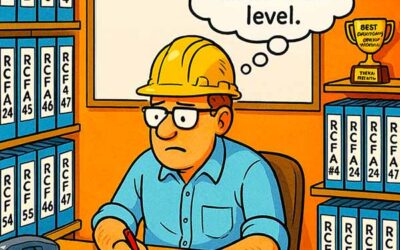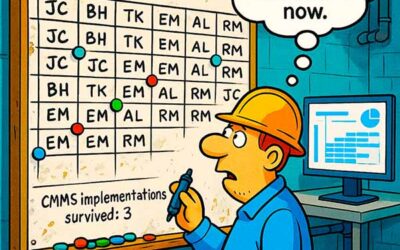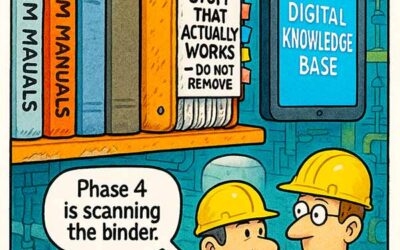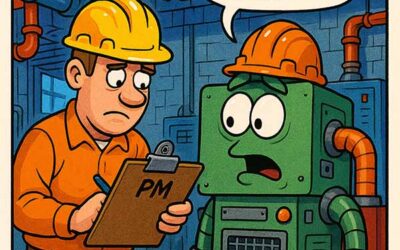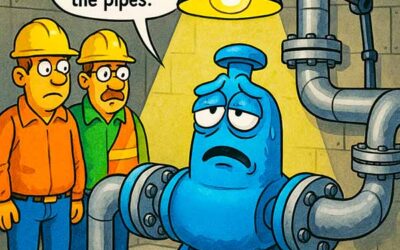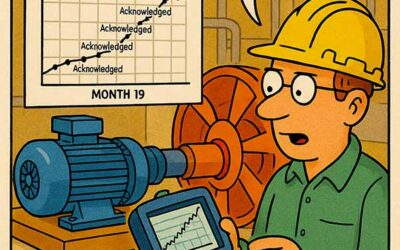
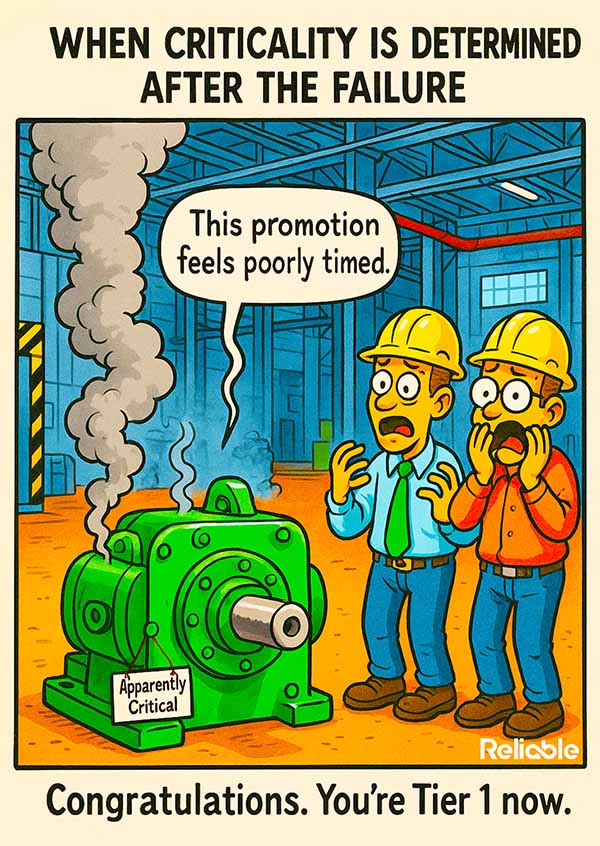

Most plants can tell you which machines are critical, yet many only learn the full list the hard way, one smoking gearbox at a time. Knowing how to rank asset criticality in advance is what separates a maintenance program that aims its effort from one that simply reacts to whatever failed most recently. In many programs, asset criticality describes the consequence of losing an asset function. Some organizations combine likelihood and consequence into a single criticality score; when they do, that combined value is effectively a risk ranking, so the terminology should be defined clearly.
When that ranking is missing, priority gets assigned by whoever shouts loudest or by which failure is freshest in memory. A pump nobody worried about takes down a line, and only then does it get promoted to the top tier in front of an audience of anxious managers. The goal is to make that promotion happen on paper, before the failure writes it in damage.
A good ranking can support more than avoided breakdowns. It gives finance and maintenance a more defensible basis for resource discussions, gives planners another input when jobs compete for the same window, and gives new supervisors a map of which asset losses matter most. Once the tiers are understood, many priority arguments become easier to resolve.
Why Criticality Gets Decided After the Failure
Reactive criticality is seductive because it feels evidence-based. The machine failed, the line stopped, the cost was real, so the ranking now looks obvious. The trouble is that this method only ever ranks the assets that have already hurt you.
Everything still waiting to fail stays invisible under a purely reactive approach. A sound reliability engineering view starts by asking which functional failures would have the greatest consequences. If likelihood or current condition is then added, treat that combination as risk and update it as the probability of failure changes.
A criticality list written after the breakdown is just an incident report wearing a badge it never earned.
There is also a hidden cost to ranking by fire drill. Every asset that gets emergency attention pulls hours away from the planned work that would have prevented the next emergency, so the reactive plant slowly trains itself to stay reactive.
Breaking that loop starts with admitting that memory is a poor risk model. The machine that caused the last major loss deserves attention, especially if it is a repeat offender, but recency alone should not dominate the ranking. Quiet assets with severe safety, environmental, or production consequences still need to remain visible.
Reactive ranking also punishes the wrong people. A crew that spends its week chasing the loudest failure looks busy and even heroic, while the team quietly preventing losses on unglamorous assets goes unnoticed. Deciding criticality in advance rewards prevention by making the stakes visible before the smoke, which is exactly where the leverage lives.
What Asset Criticality Actually Measures
Before ranking anything, a team needs a shared definition of what makes an asset critical. Many practical schemes score consequence across a handful of dimensions. Some methods also add likelihood or condition; if they do, the team should be clear that it is now ranking risk as well as consequence.
- Safety and environmental exposure: what a failure of this asset could do to people, permits, or the surrounding community.
- Production impact: whether the asset has a spare, a bypass, or buffer storage, or whether losing it stops the line outright.
- Repair cost and lead time: how expensive and how slow the recovery would be once the asset actually goes down.
- Optional likelihood or condition factor: use this only if the method intentionally ranks risk, and base it on defensible failure history, condition, duty, or engineering judgment rather than age alone.
Scoring the consequence dimensions on a simple, defined scale gives each asset a consistent criticality result that can be sorted into tiers. If the method multiplies or otherwise combines consequence with likelihood, label and manage the result as a risk score. Consistency and clear definitions matter more than the number of points on the scale.
It helps to weight the dimensions on purpose rather than by accident. Many plants give safety and environmental consequences the highest weight or use an override when policy or regulation requires it. Whatever the method, writing the rules down keeps different teams from scoring similar assets in completely different ways.
How to Rank Asset Criticality Before Anything Breaks
With a definition in hand, how to rank asset criticality becomes a structured workshop rather than a debate. Pull the asset register and gather the people who understand operations, maintenance, engineering, safety, environmental impact, and production constraints. Score each asset against the agreed criteria and document the assumptions behind the result.
For the top tier, go deeper where the risk and complexity justify it. A structured How to Perform FMEA exercise identifies failure modes and their effects, helping the team understand what can fail and what the consequences would be. Criticality helps decide where that deeper analysis deserves attention; it does not replace failure-mode analysis.
Rank the consequences you can imagine now, so the plant never has to learn them from a failure later.
Resist the urge to make everything critical. If nearly every asset lands in the top tier, the ranking will not help allocate scarce attention. Do not force an arbitrary quota, but make the top category selective enough that it changes real decisions.
Write the finished ranking down where it can drive work, inside the asset register and planning system rather than in a spreadsheet that lives on one laptop. Use criticality as one input to work priority, maintenance strategy, spares, and capital decisions alongside condition, redundancy, lead time, likelihood, and economics.
Expect the first pass to feel rough, and let it. The value comes from the conversation as much as the score, because getting operators and technicians to argue openly about which failures would hurt most surfaces knowledge that never makes it into a database. A ranking that started an honest debate is already doing its job.
Turning the Ranking Into Daily Decisions
A ranking that sits in a binder changes nothing. Its whole value lies in the everyday choices it steers, from how a job gets prioritized to how many spares sit on the shelf waiting for a bad day.
- Use criticality to decide where detailed strategy work, inspection rigor, condition monitoring, and planning attention are most justified. Set task type and interval from the failure mode, condition or P-F interval, OEM guidance, and regulatory requirements rather than from the criticality tier alone.
- Use the ranking as one input to spares decisions, along with failure likelihood, part lead time, redundancy, interchangeability, carrying cost, and the consequence of not having the part when it is needed.
- Use criticality as a tiebreaker when otherwise comparable jobs compete for the same window, after immediate safety, environmental, condition, and compliance needs have been addressed.
For selected high-consequence systems, a full How to Perform RCM analysis can turn the operating context and failure consequences into a tailored failure-management strategy. RCM does not simply prescribe more maintenance for critical assets; it evaluates what task, redesign, monitoring, or run-to-failure choice is technically appropriate for each failure mode.
The same ranking should reach beyond the maintenance shop. Operations can use it to understand which asset losses have the greatest production consequence, and procurement can use it as one input when deciding which suppliers or lead times need contingency plans. Shared widely, a criticality ranking becomes a common language for consequence; day-to-day risk decisions then add condition and likelihood.
One caution keeps that language useful: guard against grade inflation over time. As each area champions its own equipment, tiers tend to creep upward until nearly everything looks essential again. A periodic recalibration that forces the plant to sort assets against each other, rather than against a fixed wish list, keeps the top tier meaningful and the effort focused where it truly counts.
Keeping the Criticality Ranking Honest
A criticality ranking is a snapshot of consequence, and plants change. New products can shift which lines matter, a debottlenecking project can turn a comfortable spare into a single point of failure, and a process change can alter safety or environmental consequences. Risk can change more frequently as condition, duty, redundancy, and likelihood change.
Because of that, the ranking needs a defined review cadence and should also be revisited after major process, design, capacity, or operating-context changes. An annual review is common in some organizations, but the correct interval depends on how quickly the plant and its risk profile change.
A criticality ranking you never revisit is just a map of a plant that no longer exists.
Tie the review to real events. When a failure surprises the team, ask whether the consequence was scored correctly and whether the separate condition or risk process should have identified the developing exposure. Use the answer to improve the scoring rules or the risk controls instead of simply promoting the asset because it failed.
It also pays to compare the ranking with outcomes over time. If a lower-criticality asset causes repeated pain, that may indicate a high likelihood of failure or a weak maintenance strategy rather than an incorrect consequence ranking. Rescore the asset when its functional consequences were misunderstood, and adjust the risk or maintenance strategy when likelihood is the real problem.
Done consistently, the ranking becomes a strong foundation for a proactive program. The plant stops discovering consequence in clouds of smoke and starts deciding criticality deliberately, then combines that ranking with current risk to choose where action is needed.