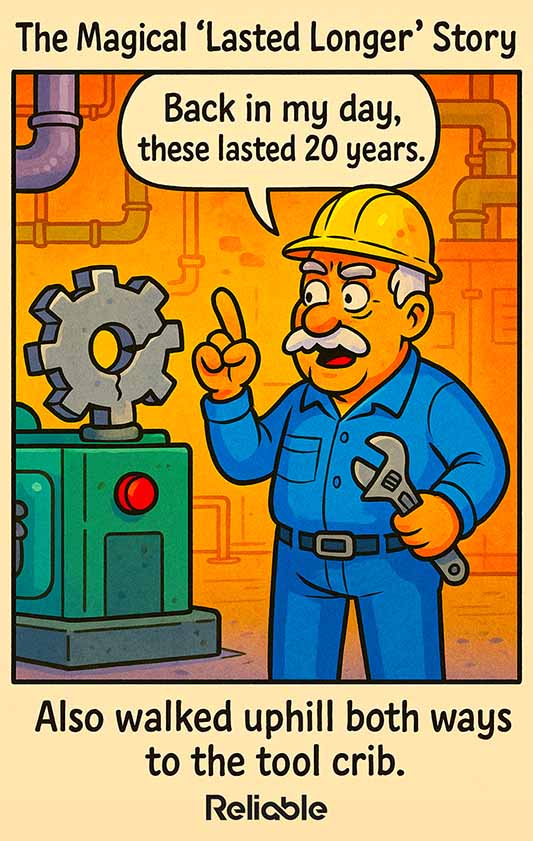

Every maintenance team has heard the claim: equipment used to last decades. The truth is more nuanced. Plenty of modern assets can match or exceed historical lifespans, provided the maintenance program supports them.
Understanding how to extend equipment lifespan starts with a simple admission: many premature failures are preventable. Bearing manufacturers and reliability practitioners commonly report that many bearings fail before reaching their calculated L10 life, with causes often traceable to installation errors, contamination, poor lubrication practices, overloading, or operating conditions that differ from the design assumptions.
Why Equipment Fails Earlier Than It Should
The failure modes that shorten equipment life are well documented. Contamination and improper lubrication are major contributors to premature bearing and component failures, though exact percentages vary by industry, application, and study method. Misalignment and imbalance introduce cyclic stresses that can fatigue components well ahead of schedule.
These are the basics, and they get ignored with alarming regularity.
Field experience and supplier guidance consistently show that proper lubrication and contamination control can significantly extend bearing and component life. Any serious effort to extend equipment lifespan has to start with these fundamentals.
The real problem is institutional. Maintenance teams operate under constant time pressure. When the priority is always the next breakdown, proactive tasks like precision alignment and contamination control get deferred. Each deferral shaves months or years off component life, compounding quietly until something catastrophic happens.
Many bearings fail before reaching their calculated design life, often because of preventable conditions such as contamination, poor lubrication, improper installation, or misalignment.
Equipment longevity requires organizational commitment. The technicians typically know what to do. The system around them needs to give them the time and resources to do it.
One common pattern: a plant buys premium equipment, installs it with minimal attention to alignment and fit, runs it without a structured lubrication program, and then blames the manufacturer when it fails in three years. The equipment may have been capable of lasting far longer. The maintenance program shortened the useful life.
The organizations that consistently extend equipment lifespan treat every installation, every lubrication event, and every inspection as an opportunity to add life to the asset.
How to Extend Equipment Lifespan Through Better Daily Practices
The good news: the fixes are known. They require discipline, not innovation.
Lubrication and Contamination Control
Lubrication-related problems are among the largest contributors to premature equipment failure. Getting this right involves three things.
- Use the correct lubricant for the application, including type, viscosity, and additive package
- Apply it in the correct quantity at the correct interval, based on operating conditions rather than calendar schedules
- Protect it from contamination through proper sealing, storage, and handling
Contamination ingress is a stealth killer. Even small amounts of hard particulate contamination in a hydraulic or lubrication system can dramatically shorten component life. Desiccant breathers, proper storage practices, and sealed transfer containers are practical countermeasures that often pay for themselves many times over.
Strong lubrication programs go further. They track oil cleanliness using ISO 4406 codes, set target cleanliness levels for each system, and audit compliance periodically. This level of rigor may sound excessive until you see fewer sticking valves, cleaner gearboxes, longer bearing life, and fewer lubrication-related downtime events.
Precision Installation and Alignment
A motor installed with excessive offset or angular misalignment can consume coupling, bearing, and seal life much faster than expected. Laser alignment tools have become more accessible over the past decade, and basic technician training can often be completed quickly.
Small amounts of hard particulate contamination in a hydraulic system can significantly reduce component life.
The same principle applies to belt tension, pipe strain, soft foot, and bearing fits. Every shortcut during installation creates a stress multiplier that compounds over the asset’s operating life.
Condition Monitoring and Predictive Tools
Vibration analysis can catch many developing faults weeks or months before failure when routes, sensors, and analysis practices are appropriate. Oil analysis can reveal contamination, lubricant degradation, and wear trends. Infrared thermography identifies abnormal heat patterns from electrical faults, mechanical friction, or process-related issues. Together, these tools can give maintenance teams the lead time to plan repairs before damage becomes severe.
The key word is “lead time.” Knowing how to extend equipment lifespan through condition monitoring means catching problems early enough to intervene before secondary damage cascades through the system. A bearing that gets replaced after a confirmed developing defect usually costs far less than one that seizes and damages a shaft, seal, or housing.
Plants that implement a disciplined predictive maintenance strategy often report longer component life, fewer emergency repairs, and better planning windows. The financial return depends on asset criticality, failure history, execution quality, and how consistently findings are converted into corrective work.
For extending equipment lifespan even further, trained operators add another layer. Operators who listen for unusual sounds, feel for abnormal vibration, and watch for temperature changes catch a surprising number of developing problems. No one knows a machine’s baseline behavior better than the person who runs it eight hours a day.
Building a Program That Extends Equipment Lifespan
Extending equipment life requires a set of daily practices embedded in the maintenance program. A few foundational steps make the biggest difference.
- Standardize installation procedures with documented torque specs, alignment tolerances, and fit requirements
- Build contamination control into every job plan, including clean fittings, sealed containers, and proper workspace prep
- Train technicians in early failure detection techniques so they can spot problems during routine inspections
- Track mean time between failures at the component level to measure whether changes are working
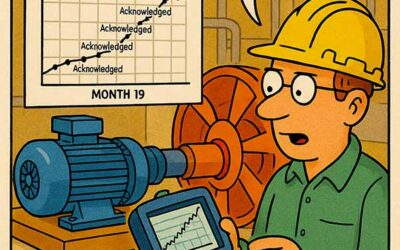
A rising MTBF trend on a specific pump model, for example, suggests that the lubrication or alignment changes may be having the intended effect. A flat or declining trend signals that the team should verify execution quality, operating conditions, repair practices, and failure classification.
Every shortcut during installation creates a stress multiplier that compounds over the asset’s operating life.
Spare parts quality matters too. Sourcing the cheapest replacement bearing or seal often means accepting looser tolerances, inferior metallurgy, and shorter service life. A higher-quality bearing may cost more at the point of purchase, but it can deliver longer installed life when the application, fit, lubrication, sealing, and installation practices are correct. The lifecycle math often favors quality over the lowest purchase price.
Documentation is the unglamorous backbone of equipment longevity. When a technician records the alignment readings, lubrication quantities, and torque values used during an installation, the next technician inherits a baseline. Without that record, every maintenance event starts from scratch, and errors compound.
The best programs also build feedback loops between maintenance and engineering. When a failure analysis reveals a design weakness (undersized bearing, inadequate sealing, insufficient cooling), engineering can specify upgrades that eliminate the failure mode entirely. This is reliability engineering in practice: using data to drive design changes that make the next generation of the asset more durable.
More precise maintenance can deliver longer asset life when the practices are applied consistently and measured honestly. The fundamentals of lubrication, alignment, contamination control, and condition monitoring create opportunities for gains with every maintenance event. Teams that commit to these practices will find that extending equipment lifespan is less about heroic interventions and more about getting the routine work right, every time.