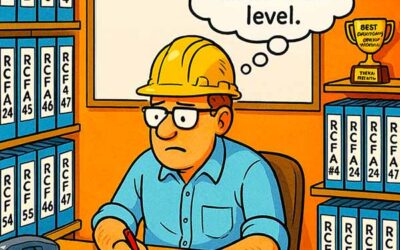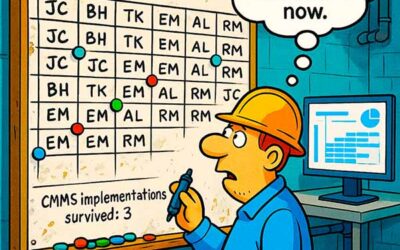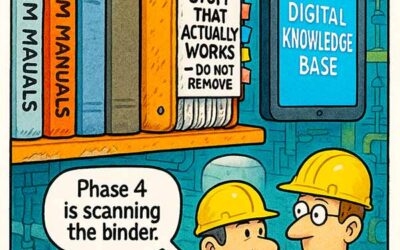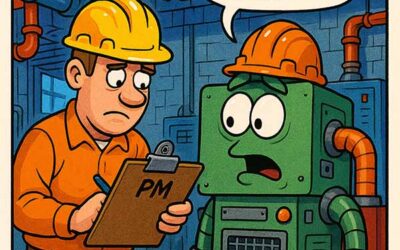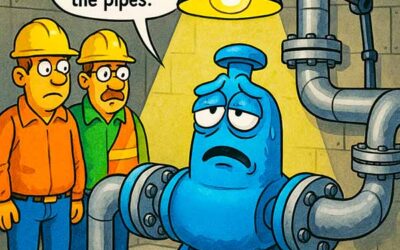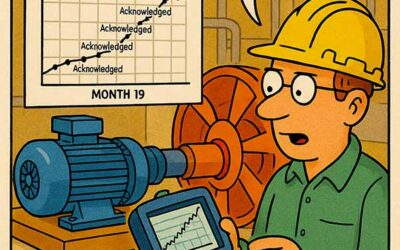


The cartoon drives home a frustrating reality in modern maintenance: the work order might be marked “closed,” but the asset is still leaking, squealing, or limping along. This kind of disconnect between data and reality is more than annoying—it’s dangerous.
False closure records give the illusion of control, masking unresolved defects and eroding the credibility of the entire reliability program.
We need to confront a hard truth: Inaccurate documentation is a form of self-sabotage. If your CMMS says things are fine, but the floor says otherwise, trust the floor. Here’s why this happens, what it causes, and how to fix it.
1. The Root Cause: Misaligned Incentives and Workflow Gaps
Why are faulty work order closures so common? It’s often not laziness—it’s structural. Most plants tie performance metrics (like wrench time or work order closure rate) to KPIs that unintentionally reward premature closure. Add in pressure from operations to get equipment back online fast, and you’ve created a perfect storm for “pencil-whipped” data.
Even when the technician is diligent, communication gaps can lead to premature closures. Was the root cause addressed, or just the symptom? Was follow-up work generated? Was it even clear what the problem was? If any of those steps break down, the CMMS logs a “win” while the plant absorbs another hidden loss.
2. The Ripple Effect: False Positives, Real Failures
When bad info is logged as a success, it corrupts every downstream process. You can’t trust your PM effectiveness analysis, your MTBF numbers, or your defect elimination program if your work orders don’t reflect reality.
Worse, these ghost fixes allow minor issues to snowball into catastrophic failures. That valve that “looks fine on paper” becomes the source of an unplanned shutdown. Now you’re not just dealing with misinformation—you’re paying for it in downtime, repair cost, and lost credibility.
3. Corrective Action: Fix the System, Not Just the Technician
We’ve seen too many initiatives aimed at “holding techs accountable” when the real problem is systemic. Want better work order integrity? Start with the workflow.
- Build in verification steps: a second set of eyes, QA signoffs, or condition monitoring data before closure.
- Require symptom vs. root cause fields in the CMMS.
- Enable and encourage the creation of follow-on work if the fix is temporary.
- Incentivize accuracy, not speed—reward clean, complete, and useful records.
And train for this. Don’t assume technicians instinctively understand how their data feeds into the larger reliability engine. Show them.
4. The Payoff: Truth-Driven Reliability Culture
When your work order data becomes trustworthy, everything improves. Planning becomes precise. Defect elimination gets traction. Predictive technologies have a reality-based baseline to compare against. And best of all, you build a culture where data isn’t just “admin work”—it’s part of the craft.
In the cartoon, the valve is screaming, “But I’m still broken!” That’s your signal. The plant always tells the truth—you just need a system that’s willing to listen.
Bottom Line:
Don’t let the close button become your biggest blind spot. Audit reality, not paperwork. Otherwise, you’re not doing maintenance—you’re just pretending.