
When Culture Kills Reliability Before It Starts
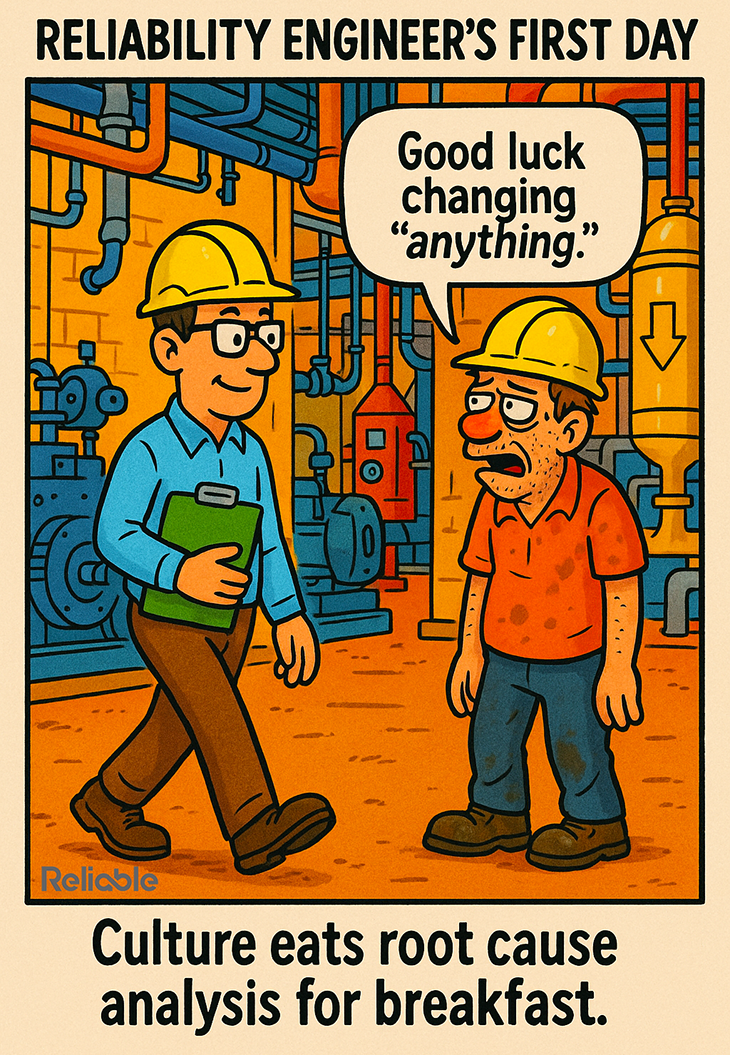
The cartoon paints a familiar and painful picture: a bright-eyed reliability engineer walks onto the plant floor, only to be greeted by a burned-out technician who smirks, “Good luck changing anything.” That one phrase says it all. Culture, not technical strategy, is often the first—and most brutal—failure mode in any reliability initiative.
In the world of asset management, even the most sophisticated tools like Failure Modes and Effects Analysis (FMEA), Reliability-Centered Maintenance (RCM), and Predictive Maintenance (PdM) are powerless if the organization’s culture resists change. This post explores how toxic plant culture and root cause analysis often collide, resulting in initiative fatigue, wasted resources, and frustrated engineers.
The Reality: Toxic Plant Culture and Root Cause Analysis Collide
Reliability tools and analysis frameworks depend on transparency, honesty, and a willingness to question existing assumptions. Toxic plant culture rewards none of these. In environments where saying “we’ve always done it this way” is a survival tactic, reliability engineers walk into a trap.
The core challenge is misalignment between what leadership wants (reduced downtime, lower costs) and what the culture actually enables (status quo, blame deflection, hero-based maintenance). When tribal knowledge and unspoken rules dominate, root cause analysis turns into theater—just another checkbox activity with no corrective teeth.
A toxic plant culture and root cause analysis conflict most when teams fear blame or retribution. This leads to symptoms being documented instead of causes, and corrective actions that don’t correct anything.
Resistance Patterns: Why Root Cause Analysis Often Fails
The engineer in the cartoon is stepping into a social system—one shaped by decades of behaviors, personalities, and priorities. Here are four common resistance patterns that show how toxic plant culture and root cause analysis tend to clash:
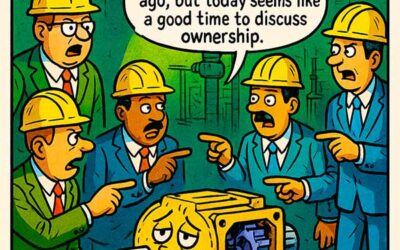
- Blame Avoidance: Team members deflect ownership by pointing to external causes or operators no longer on shift. The focus shifts from problem-solving to political survival.
- Hero Worship: Instead of building systems that prevent failure, the plant culture celebrates individuals who swoop in and “save the day” with duct tape and tribal knowledge.
- Data Withholding: Technicians withhold key insights or observations to maintain perceived job security or simply because they weren’t asked in a way that earned trust.
- Analysis Paralysis: Endless meetings drag on with no decision-making authority present, reinforcing the idea that RCA is a waste of time.
Each of these reflects a failure not of tools or process, but of environment—evidence that toxic plant culture and root cause analysis are fundamentally incompatible without leadership intervention.
Shifting Culture to Enable Root Cause Success
There is no shortcut around culture. If your plant is serious about reliability, you must first acknowledge and address the human systems that run it. Here’s how to make toxic plant culture and root cause analysis work together:
- Publicly Reward Vulnerability: Celebrate when teams identify internal causes of failure. This flips the script on blame and builds trust.
- Democratize the RCA Process: Include operators, maintenance, engineering, and supervisors in the same room. Everyone sees a piece of the puzzle.
- Tie RCA to Action and Accountability: No RCA should end without clearly assigned corrective actions and timelines. Create feedback loops.
- Train in Facilitation, Not Just Methodology: A skilled facilitator can navigate egos, defuse tension, and keep the team focused on facts.
Culture shift starts with leadership signaling that continuous improvement isn’t optional, it’s expected. Until then, root cause analysis will remain a paper tiger.
What This Cartoon Gets Exactly Right
The beauty of the cartoon isn’t just in its humor—it’s in its brutal accuracy. The quote “Good luck changing anything” isn’t hyperbole. It’s a direct translation of what engineers face every day in toxic environments.
Toxic plant culture and root cause analysis perfectly captures this intersection. If you’re trying to improve MTBF, reduce downtime, or justify a reliability budget, start with one hard truth: the culture you allow will determine the failure rate you tolerate.
So before launching another FMEA or RCA workshop, ask yourself: have we earned the right to solve problems here? Or are we still pretending that change doesn’t require permission?