
The Hidden Barrier to Progress: Resistance vs. Reliability Program Adoption
Every maintenance leader dreams of a plant that runs like clockwork, predictable, stable, and proactive. Yet most Reliability-Centered Maintenance (RCM) initiatives never reach that level because they stall at the human barrier.
It’s not sensors, budgets, or training that derail progress; it’s the quiet resistance from people who are comfortable with the old way of working.
The hardest part of reliability isn’t fixing machines, it’s changing minds.
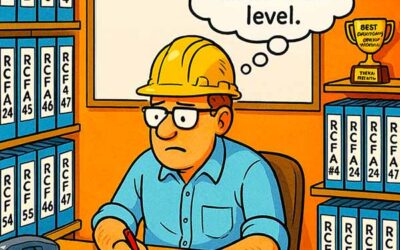
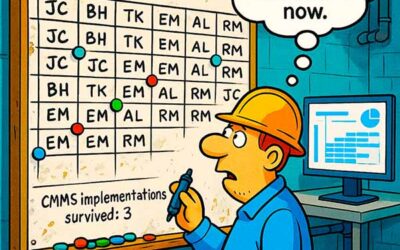
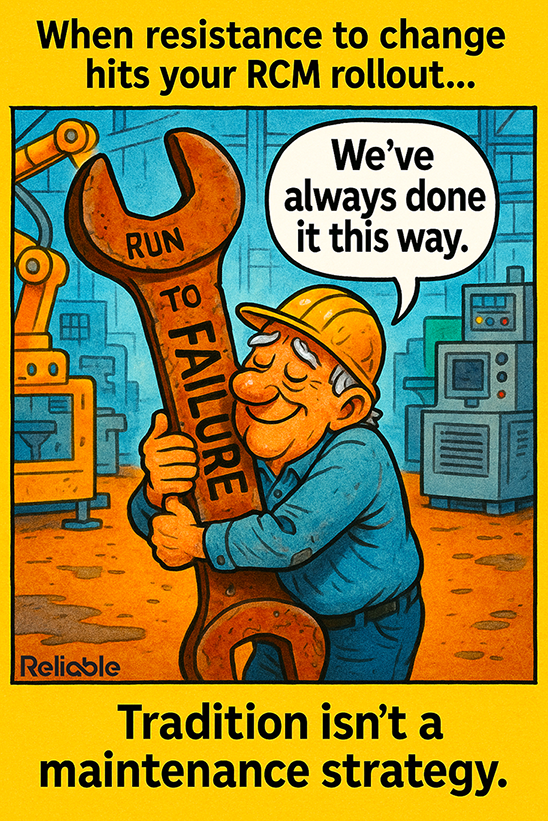
When teams cling to phrases like “We’ve always done it this way,” it’s not stubbornness; it’s familiarity. Tradition becomes a shield against uncertainty. But reliability program adoption requires more than introducing new tools or schedules — it demands a rewire of how an organization thinks about reliability itself.
A successful reliability program doesn’t start with data collection. It begins with belief collection.
Why Reliability Program Adoption Fails in Most Plants
Many reliability programs look perfect on paper but fail in practice. The problem is rarely technical; it’s cultural. People resist not because they dislike improvement, but because they don’t understand why change is necessary or how it benefits them personally.
Common failure points include:
- Top-down implementation. When leadership mandates change without engagement, employees comply superficially but never commit.
- No tangible wins. If technicians don’t see a direct link between reliability actions and reduced breakdowns, motivation fades fast.
- Poor communication. Reliability jargon like “MTBF” or “FMECA” alienates the floor; people need relevance, not acronyms.
- Rewarding the wrong behavior. If the hero who fixes breakdowns gets the praise while the planner who prevents them gets ignored, the wrong culture survives.
In short, reliability program adoption fails when it’s viewed as an engineering project instead of a human one.
The Psychology Behind Reliability Program Adoption
To drive real change, leaders must understand that reliability is as much psychological as mechanical. You’re not just changing workflows, you’re asking people to abandon habits formed over decades.
Here’s how that plays out:
- Loss aversion. People fear losing control, autonomy, or relevance.
- Status quo bias. “It’s worked for years” feels safer than “Let’s try something new.”
- Social proof. Employees mirror peers. If respected veterans dismiss the program, adoption collapses.
- Cognitive overload. Too many changes too quickly lead to confusion and burnout.
Effective adoption of a reliability program acknowledges these realities. It uses behavior-based change management rather than slogans to build ownership and trust.
Four Phases to Drive Reliability Program Adoption
1. Awareness – Make the Why Unmissable
Communicate in stories, not statistics. Show how chronic failures cost time, money, and morale. Use case studies from inside the plant to highlight pain points that reliability can solve.
2. Alignment – Build Emotional Ownership
Create forums where technicians and operators help design the reliability approach. When people build the process, they defend it. Give teams a voice in prioritizing assets, selecting metrics, and defining success.
3. Activation – Deliver Quick, Visible Wins
Pilot on high-impact assets — a compressor, a gearbox, or a critical conveyor. Use those results to showcase measurable improvements in uptime, energy efficiency, or safety. Nothing kills skepticism like proof.
4. Assimilation – Make Reliability a Habit
Once success stories spread, embed reliability into daily operations. Integrate predictive analytics, lubrication inspections, and RCM reviews into standard work. Reinforce them through incentives and leadership modeling.
This cycle transforms reliability from a project into a permanent behavior.
Leadership’s Role in Sustaining Reliability Program Adoption
Leadership determines whether adoption sticks or stalls. The best leaders don’t just announce reliability, they live it.
That means:
- Modeling disciplined maintenance behaviors. Attend reliability reviews, question failure reports, and connect the dots between reliability and business performance.
- Eliminating hypocrisy. Don’t talk about proactive maintenance while cutting PM budgets or overtime for inspections.
- Communicating relentlessly. Share updates weekly. Visibility keeps reliability alive in the organization’s consciousness.
- Investing in learning. Cross-train maintenance and operations staff. Skill diversity prevents silos that destroy adoption momentum.
Remember: leadership doesn’t push reliability down; it lifts reliability by empowering teams to make it their own.
The Role of Data in Reliability Program Adoption
Modern reliability initiatives generate vast amounts of data, vibration trends, oil analysis reports, and thermal imaging logs. Yet data alone doesn’t create reliability.
What matters is how teams use it.
Data must tell a story:
- “Here’s what’s degrading.”
- “Here’s what it means for production.”
- “Here’s how we prevent it next time.”
Dashboards should inspire action, not confusion. Integrate CMMS data with visual communication, color-coded risk heatmaps, asset health trends, and dashboards that connect metrics to business outcomes.
When teams can see the link between their work and measurable plant performance, adoption of the reliability program accelerates dramatically.
Cultural Transformation: From Tradition to Continuous Improvement
Tradition in maintenance is both a comfort and a curse. It holds valuable experience but can also freeze evolution.
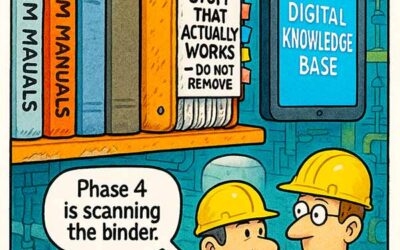
Reliability program adoption is about channeling that experience toward innovation, transforming “tribal knowledge” into standardized reliability processes.
Practical cultural tactics:
- Conduct “RCM refresh weeks” where teams review one legacy process and modernize it.
- Pair veteran craftsmen with younger engineers for cross-generational mentoring.
- Share “failure stories” publicly to celebrate learning, not blame.
- Host monthly reliability stand-downs to discuss wins and lessons learned.
When reliability becomes part of the plant’s identity, not just its documentation, the culture truly changes.
Adoption Is the Hardest and Most Valuable Metric
Software, sensors, or consultants don’t achieve reliability; it’s achieved by adoption. The best-designed systems mean nothing if the workforce doesn’t live them daily.
True reliability program adoption creates a culture where prevention is celebrated, learning is continuous, and tradition is respected but never worshipped.
When people stop saying “We’ve always done it this way” and start asking “How can we make this better?”, reliability becomes self-sustaining and unstoppable.