
The Banner on the Wall
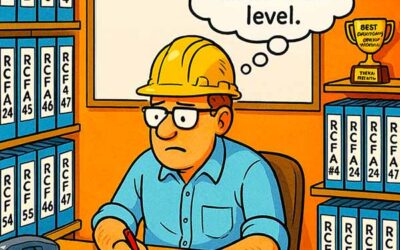
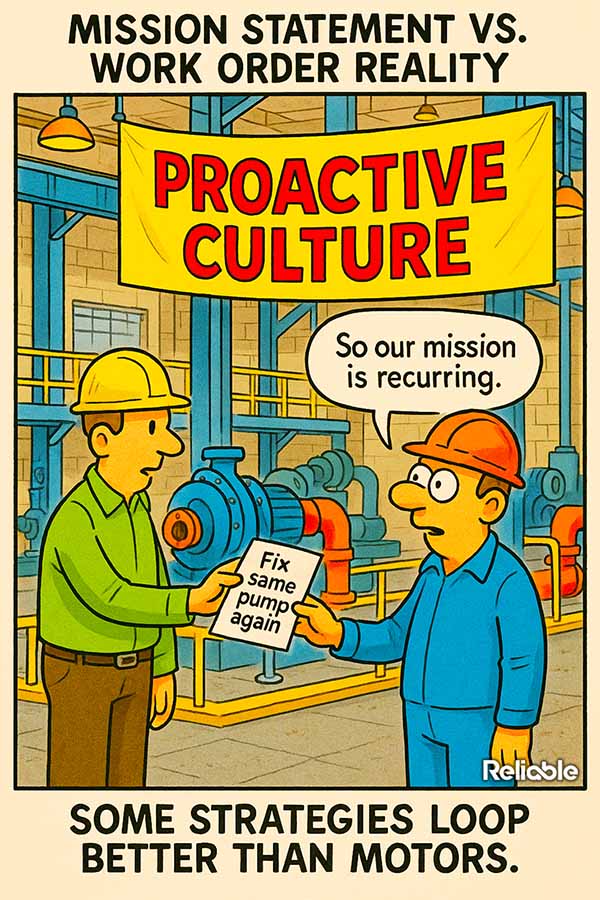
Walk through enough manufacturing facilities and you’ll notice a pattern. There’s a banner somewhere (lobby, break room, above the maintenance shop door) that says something about proactive culture.
World-class maintenance. Reliability-centered thinking. The words vary, but the font is always bold.
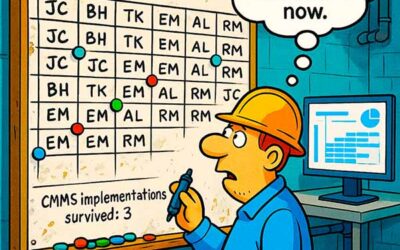
Then you pull up the CMMS and look at the work order history. Eighty percent reactive. The same motors failing on the same schedule.
The banner hasn’t changed in three years, and neither has the breakdown frequency.
This gap between stated culture and operational reality is one of the most persistent problems in industrial maintenance. And it’s worth understanding why it keeps happening, because the causes aren’t laziness or ignorance.
The banner hasn’t changed in three years, and neither has the breakdown frequency. That’s the gap between stated culture and operational reality.
Most plants that get stuck in this loop genuinely want to be proactive. The intent is real. The execution stalls because the systems, incentives, and daily pressures all push in the opposite direction.
Why Reactive Work Keeps Winning
Reactive maintenance has a built-in advantage: urgency. When a machine goes down, everyone scrambles. The fix is visible, immediate, and (briefly) satisfying.
The maintenance tech who gets the line running again at 2 a.m. is a hero. That’s powerful social reinforcement.
Proactive work, by contrast, is invisible when it succeeds. Nobody throws a party because a bearing didn’t fail this quarter.
- Reactive fixes get immediate visibility and praise; preventive work gets questioned as unnecessary
- Production schedules rarely accommodate planned maintenance windows without pushback
- CMMS systems often make it easier to log reactive work orders than to build and schedule preventive routes
- Staffing levels are set for steady-state operation, leaving no capacity for proactive programs
The math is revealing. According to a 2023 survey by Plant Engineering, nearly 60% of facilities still rely on reactive maintenance as their primary strategy.
That number has barely moved in a decade, despite an entire industry of consultants, conferences, and software platforms dedicated to changing it.
The Recurring Work Order Problem
If you want to see where proactive intentions die, look at your recurring work orders. Every plant has them.
The pump that fails every six months. The conveyor belt that needs realignment quarterly. The electrical panel that trips during every heat wave.
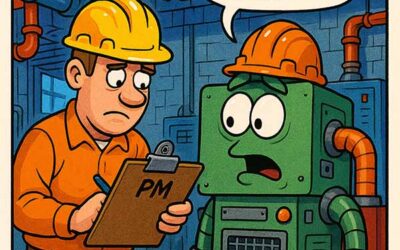
These recurring failures are the clearest evidence of a reactive cycle disguised as normal operations. Each individual repair gets logged, completed, and closed.
Every plant has them: the pump that fails every six months, the conveyor that needs realignment quarterly. Recurring failures are the reactive cycle wearing a process improvement costume.
But nobody steps back to ask why the same failure keeps showing up. Root cause analysis, when it happens at all, often stops at the component level.
“Bearing failed” is a diagnosis. “Bearing failed because the shaft is misaligned because the foundation has settled 3mm over five years” is a root cause. Most plants stop at the first one.
A truly proactive culture would flag that pattern, investigate the root cause, and fix it permanently. In a reactive culture wearing proactive clothing, the team replaces the bearing on schedule and calls it preventive maintenance.
Breaking the Loop
Shifting from reactive to genuinely proactive maintenance requires changes at three levels: data, process, and incentives.
Fix the Data First
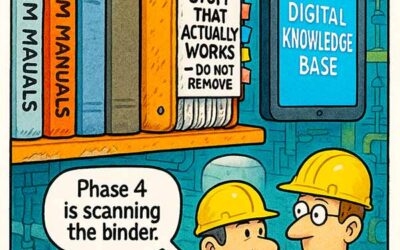
Most CMMS platforms contain years of maintenance history that nobody is mining for patterns. A simple Pareto analysis of your work order data will reveal which assets are consuming the most resources.
- Run quarterly Pareto analyses on work order data to identify top repeat offenders
- Tag every work order as reactive, preventive, or predictive so you can track your actual maintenance mix
- Measure mean time between failures for critical assets and trend it over time
The data doesn’t need to be perfect. It needs to be good enough to show you where the recurring pain lives.
Once you can point to specific assets that are consuming disproportionate maintenance hours, you’ve got the ammunition for a real conversation about priorities. Numbers win arguments that banners can’t.
Redesign the Process
Proactive maintenance needs protected time on the production schedule. If every PM can be bumped by a production request, you don’t have a proactive program.
If every preventive task can be bumped by a production request, you don’t have a proactive program. You have a wish list.
Build root cause analysis into your work order closure process for repeat failures. If the same failure mode appears three times in 12 months, it should automatically trigger an investigation.
Condition monitoring technologies (vibration analysis, thermography, oil analysis) provide the bridge between calendar-based PM and truly predictive work. They let you maintain based on equipment condition rather than arbitrary schedules.
This shift from time-based to condition-based work is where proactive maintenance actually starts to deliver on its promise. You’re intervening because the data says you should, not because the calendar does.
Change What Gets Measured
If your maintenance KPIs reward fast reactive response without equally weighting proactive metrics, you’re incentivizing the behavior you say you want to eliminate.
- Track the ratio of planned versus unplanned work orders as a primary KPI
- Measure PM completion rate and schedule compliance weekly
- Report on recurring failure elimination: how many chronic problems were permanently resolved this quarter
The metrics you choose to display on the shop floor tell your team what actually matters. Put the planned-to-unplanned ratio up there and watch the conversation change.
Culture Follows Systems
The uncomfortable truth about maintenance culture is that it’s downstream of maintenance systems. If the daily reality of the job is reactive firefighting, that’s your culture.
The good news is that systems are changeable. Fix the data, protect the schedule, measure what matters, and the culture will follow.
It won’t happen in a quarter. It probably won’t happen in a year. But it will happen, because people naturally gravitate toward work that feels purposeful rather than perpetually urgent.
The organizations that successfully make this transition share a common trait: they stopped treating proactive maintenance as a philosophy and started treating it as an engineering problem with measurable inputs and outputs.
The poster on the wall can stay. Just make sure the work orders eventually match it.