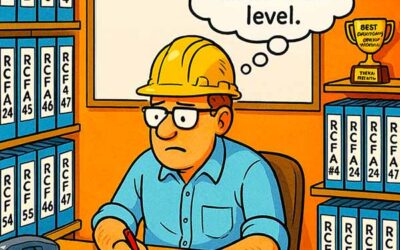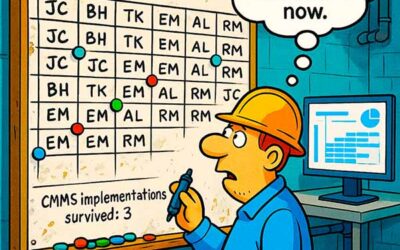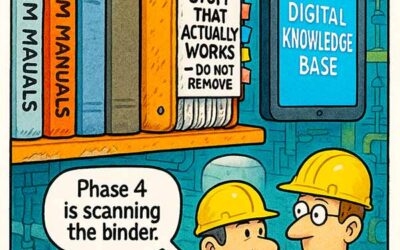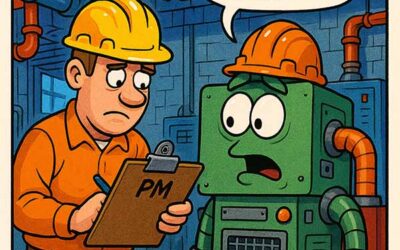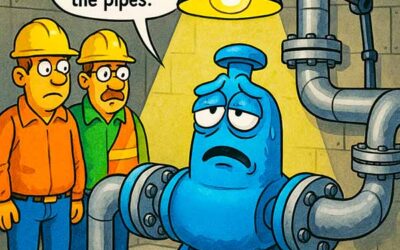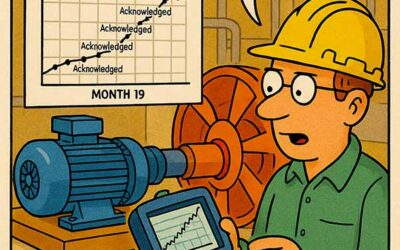


Every maintenance professional has lived this moment: the alarms sound, chaos erupts, and the technician who warned everyone months ago closes their eyes in resigned calm. Their PM recommendation was ignored, and now the plant is paying for it.
This isn’t bad luck, it’s predictable neglect. When preventive maintenance becomes optional, reliability becomes accidental. A preventive maintenance program checklist isn’t just about task tracking; it’s the structure that ensures every recommendation, inspection, and adjustment actually prevents failure rather than merely documenting it afterward.
The best reliability teams don’t just have checklists; they live by them.
Why a Preventive Maintenance Program Checklist Matters
Maintenance teams rarely fail from lack of skill; they fail from lack of structure. Without a clear checklist and accountability loop, PM tasks become suggestions rather than commitments. The checklist creates discipline and a shared operating rhythm that keeps equipment health aligned with business priorities.
A robust preventive maintenance program checklist ensures:
- Consistency: Every PM task is executed the same way by every technician.
- Traceability: Every recommendation is logged, reviewed, and followed up on.
- Accountability: Deferred tasks aren’t forgotten; they’re explained and rescheduled.
- Measurement: PM completion, cost savings, and failure prevention are tracked.
This framework turns maintenance from a reactive cost center into a proactive performance driver. It prevents the all-too-common scenario where the tech becomes the “Oracle of I Told You So,” watching the consequences of inaction unfold.
Core Elements of a Preventive Maintenance Program Checklist
A preventive maintenance checklist should be comprehensive enough to guide every level of the organization—from front-line technicians to senior management. Below are the five pillars that define a practical preventive maintenance program checklist:
A. Asset Identification and Criticality Ranking
Every piece of equipment should be cataloged with an assigned criticality score.
- Rank assets based on safety, production impact, and replacement cost.
- Develop PM task frequency around asset risk, not habit.
- Ensure all assets are visible in your CMMS, no “ghost equipment” left untracked.
B. Task Standardization and Frequency Optimization
Maintenance frequency is not sacred; it’s strategic.
- Write PM procedures with clear objectives and step-by-step methods.
- Review task intervals quarterly to eliminate waste and add value.
- Update intervals using predictive data from oil analysis, vibration, and thermography.
C. Work Order Management and Documentation
Without documentation, PM work doesn’t exist.
- Every PM task must generate a work order with timestamps and responsible parties.
- Require technician notes, meter readings, and photo uploads for verification.
- Include follow-up action fields for detected issues, no “complete and forget” mentality.
D. Communication and Feedback Loop
The PM checklist should force communication between operations and maintenance.
- Schedule weekly review meetings for overdue or deferred PMs.
- Escalate critical deferrals to management within 24 hours.
- Create a formal sign-off process for closed recommendations.
E. Metrics, KPIs, and Continuous Improvement
Track what matters most. Common KPIs include:
- PM Compliance (%)
- Mean Time Between Failures (MTBF)
- Preventive-to-Corrective Maintenance Ratio
- PM Cost Savings per Asset
Each metric closes the loop between activity and outcome, proving whether the program is actually working.
Using the Preventive Maintenance Program Checklist to Drive Culture
Culture is the hidden force that makes or breaks reliability. You can have the perfect checklist—but if people treat it like paperwork, it fails. The goal is to embed it into daily behavior.
- Visualize the checklist in maintenance rooms or dashboards to show progress.
- Publicly track compliance so everyone sees who’s owning reliability.
- Recognize preventive wins – celebrate the issues caught before failure.
- Integrate the checklist with your CMMS to automate scheduling and compliance reports.
The best programs also involve production. Operators play a critical role in early detection. Train them to use the checklist’s simplified “operator care” version, basic inspections, lubrication checks, and feedback on abnormal sounds or smells.
When everyone contributes, reliability becomes a shared value rather than just a maintenance goal.
Keeping the Preventive Maintenance Program Checklist Dynamic
Reliability isn’t static, and your checklist shouldn’t be either. The worst thing you can do is let it go stale while your plant evolves.
To keep it effective:
- Audit quarterly: Review task completion rates, feedback loops, and missed PMs.
- Use predictive analytics: Adjust PMs based on vibration, oil, or thermography data.
- Eliminate redundancy: If a PM adds no measurable value, replace it.
- Add learnings from RCFA: When failures occur, feed the insights back into the checklist.
A living checklist evolves with data. Over time, it reflects the actual failure modes and behaviors of your specific assets, not just textbook expectations.
Transforming ‘I Told You So’ Into ‘We Solved It’
When ignored recommendations become crises, technicians lose trust, and management loses credibility. Turning this around means transforming PM reviews into collaborative post-mortems:
- Log every ignored recommendation and the resulting failure.
- Calculate the financial and downtime cost of inaction.
- Present that data in leadership reviews, not to assign blame, but to prove the ROI of prevention.
This practice builds organizational memory. It converts pain into prevention. Over time, teams shift from finger-pointing to future-proofing.
Every checklist item is a decision: prevent now or pay later. Plants that treat their preventive maintenance program checklist as a living system, not a static form, end up saving millions in unplanned downtime, lost production, and frustration.
Reliability isn’t about predicting failure. It’s about eliminating surprise.
When your team listens to its own preventive guidance, the only fires you’ll see are in the training videos.