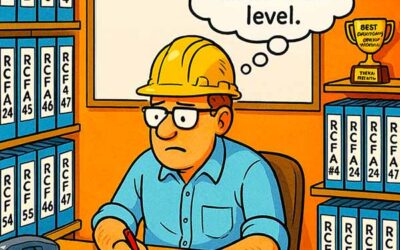
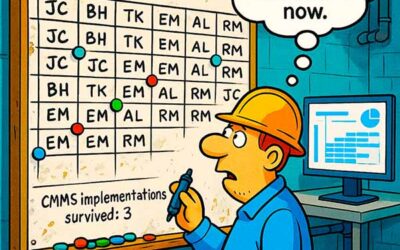
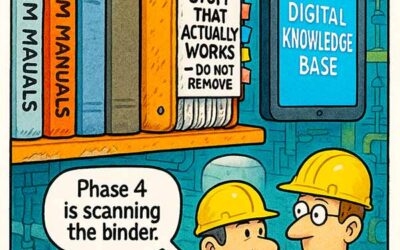
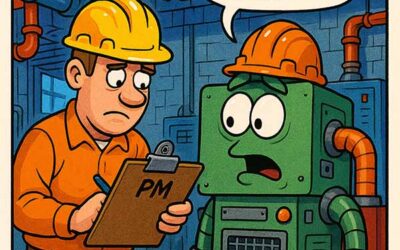
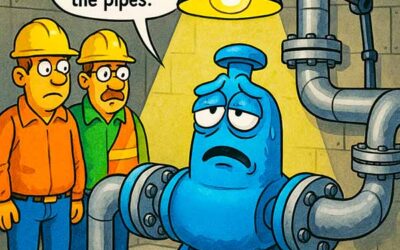
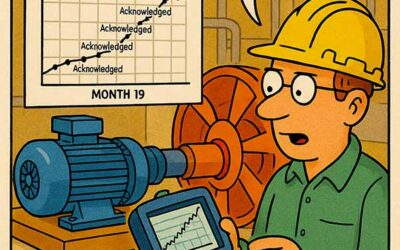
The cartoon of a thermal camera missing from maintenance and spotted in accounting says it all. Tools that should be preventing breakdowns are instead warming up someone’s lunch. The humor lands because it mirrors real life, expensive diagnostic gear sits idle or misplaced, while machines quietly cook themselves toward failure.
Preventive maintenance infrared inspections are one of the most potent, underused practices in modern reliability. They provide early visibility into equipment distress, enabling plants to address minor issues before they escalate into costly shutdowns. Yet too many facilities treat thermography as a “special project” rather than an integral part of maintenance.
Why Preventive Maintenance Infrared Inspections Matter
Every machine emits a heat signature. When a component begins to fail, friction, resistance, or insulation breakdown causes that signature to change. Preventive maintenance infrared inspections capture subtle temperature shifts before they lead to mechanical seizure, arcing, or catastrophic loss.
Thermal anomalies don’t lie. They tell the story of how energy is wasted, where inefficiencies hide, and which components are about to fail. Unlike vibration or oil analysis, infrared inspections require no contact, downtime, or disassembly, making them an ideal frontline tool.
Common findings from preventive maintenance infrared inspections include:
- Overheated electrical connections: Loose lugs, oxidized contacts, or unbalanced phases.
- Mechanical wear: Misaligned couplings, failing bearings, and frictional drag.
- Insulation loss: Heat escaping from pipes, valves, or heat exchangers.
- Energy inefficiency: Hot motors, undersized conductors, or poorly ventilated panels.
When performed routinely, these inspections evolve from snapshots into trendlines that map asset health across months or years.
The Hidden Cost of Neglected Inspections
A misplaced or unused thermal camera isn’t just a punchline; it’s a profit leak. Every missed inspection represents a lost opportunity to detect problems early. Consider the cumulative cost of neglect:
- Electrical risks: A loose busbar connection can escalate from minor resistance to arcing, leading to fire or outage.
- Mechanical degradation: Bearing temperatures rise gradually before audible noise appears. Miss that signal, and you’re facing hours of unplanned downtime.
- Safety exposure: Overheated components increase fire hazards and arc-flash risk, endangering personnel.
A $7,000 infrared camera gathering dust might seem insignificant until you compare it to a $100,000 unplanned outage. In most plants, the ROI on preventive maintenance infrared inspections isn’t theoretical; it’s proven in every avoided failure.
Even minor deviations matter. A 10°C rise in electrical connection temperature can double the failure rate. That’s why infrared inspections aren’t about pictures—they’re about pattern recognition, accountability, and timely response.
Embedding Preventive Maintenance Infrared Inspections into Routine Work
Having a camera isn’t a strategy. Reliability is built when inspections become part of standard work, not ad-hoc activities. Embedding preventive maintenance infrared inspections into daily operations requires both process discipline and leadership buy-in.
Key steps to institutionalize the practice:
- Create standardized routes. Assign recurring thermal inspections by system—electrical, mechanical, utilities—and link them to asset hierarchies in the CMMS.
- Track inspection frequency. High-load assets should be scanned monthly or quarterly, while lower-criticality assets may fit annual routes.
- Build baseline libraries. Document normal operating temperatures for reference. Trending deviations are far more reliable than reacting to one-off anomalies.
- Assign responsibility. Make inspection performance part of technician KPIs to ensure tools don’t vanish into “temporary custody.”
- Integrate findings. Feed inspection data into work orders so repairs are triggered directly from thermal anomalies.
Plants that operationalize infrared inspections this way don’t just collect images; they create a data-driven predictive maintenance system that continuously improves.
From Thermal Images to Predictive Intelligence
Preventive maintenance infrared inspections provide rich data, but the real value comes from interpretation. A skilled technician can read a thermal gradient like a doctor reads an ECG.
Key competencies include:
- Recognizing emissivity errors and adjusting for material type.
- Distinguishing reflection artifacts from genuine hot spots.
- Correlating heat patterns with load, environmental factors, and duty cycles.
- Using consistent color palettes to prevent misinterpretation.
Modern systems enhance this with AI-assisted thermal analytics. Software can automatically flag deviations from baseline temperatures, prioritize risk levels, and recommend actions. When infrared data is merged with vibration, current draw, or oil analysis metrics, the plant gains a 360° view of asset health, bridging the gap between condition monitoring and reliability engineering.
You can’t manage what you don’t measure, and in maintenance, heat is measurement gold.
Building Skills and Sustaining Results
Technology alone won’t sustain a program. Technicians need both formal certification and field experience. Certified Thermographer Level I and II programs teach not just how to capture images, but also how to interpret them in an operational context.
Training essentials for plant success:
- Calibrate equipment regularly and verify accuracy before inspections.
- Perform scans under normal load whenever possible.
- Avoid drafts or reflective surfaces that distort readings.
- Document temperature deltas and qualitative observations in standardized templates.
Periodic audits ensure consistency. Many plants pair experienced thermographers with new hires to transfer skills, maintaining accuracy and discipline as staff evolves. Sustained success comes from embedding learning, not just buying tools.
The Business Case for Reliability
Management responds to numbers, not anecdotes. That’s why the financial argument for preventive maintenance infrared inspections must be documented clearly.
Quantify benefits like:
- Reduction in unplanned electrical or mechanical failures.
- Avoided downtime costs by asset class.
- Improvements in mean time between failures (MTBF).
- Lower energy consumption from corrected inefficiencies.
Some organizations report ROI ratios as high as 10:1, meaning every dollar invested in thermographic inspection returns ten in avoided losses. More importantly, the credibility of the maintenance team rises when they can show proof that foresight pays dividends.
The Humor Behind a Hard Truth
The cartoon shows a thermal camera being misused, but it captures a universal maintenance truth: tools are only as valuable as the systems that use them. A missing camera today is a missed early warning tomorrow.
Preventive maintenance infrared inspections turn that dynamic around. They bring discipline to reliability: structure, insight, and proof. Plants that commit to them stop chasing symptoms and start controlling causes.
Closing Thoughts
Preventive maintenance infrared inspections are not a luxury; they’re a necessity in any reliability-driven operation. When properly executed, they merge science and intuition: using invisible heat signatures to predict visible failures.
Every inspection adds to a growing picture of asset health, helping maintenance teams see patterns before breakdowns strike. The cartoon makes us laugh, but it also reminds us that every misused tool, every skipped route, and every unscanned panel are blind spots in plant reliability.
Infrared inspections close that gap quietly, efficiently, and consistently, one scan at a time.