
When Preventive Maintenance Becomes a Scavenger Hunt
Preventive maintenance (PM) is only as effective as the data driving it. Yet, in many plants, techs still hunt down ghost assets that don’t exist, exist in theory only, or are mislabeled. This breakdown in asset identification erodes trust in the system and wastes time—both costly in high-stakes industrial environments. This post explores the hard truth: poor preventive maintenance asset identification leads to failure before the work begins.
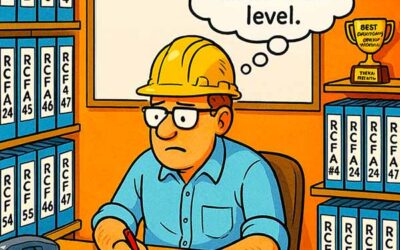
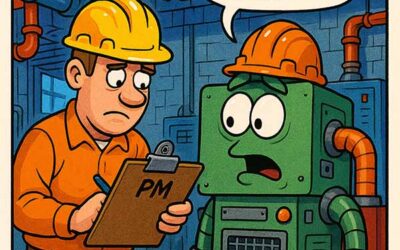
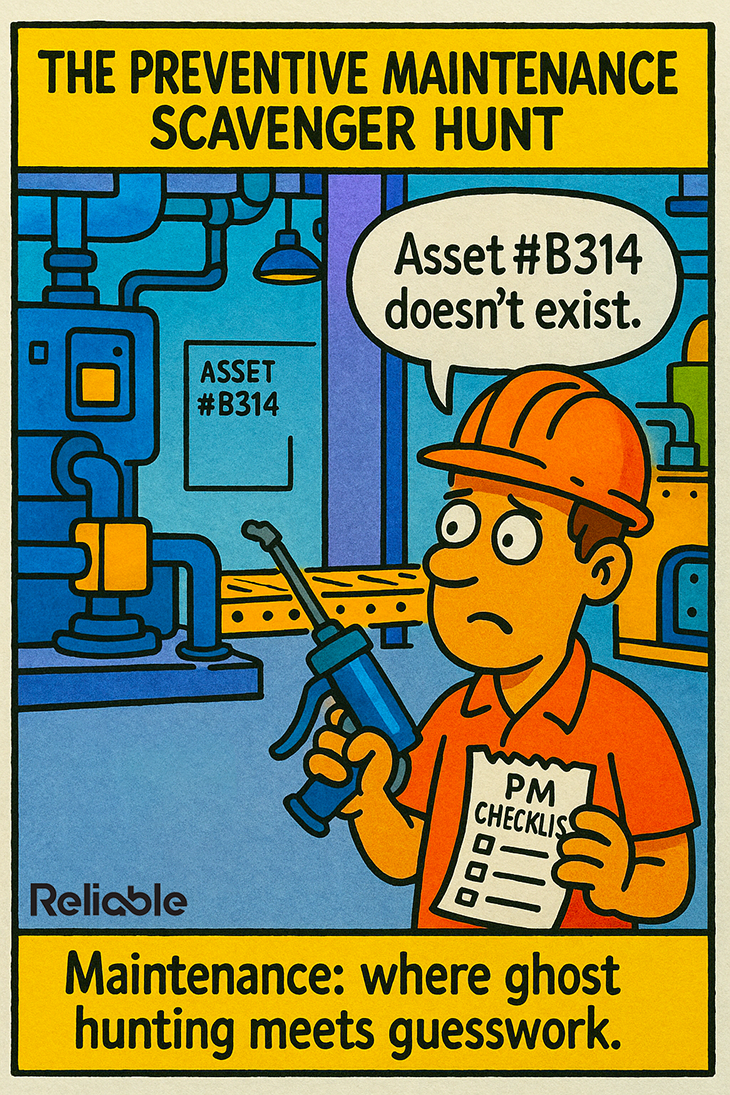
When a PM checklist sends a technician to “Asset #B314,” but the asset can’t be found—or worse, never existed—it’s more than an inconvenience. It reflects a systemic flaw in how we document and manage equipment. Maintenance becomes an exercise in ghost hunting, and reliability suffers.
The Hidden Cost of Poor Asset Identification
Technicians don’t just waste time; they lose faith in the system. If a PM task can’t be executed because the asset can’t be located or properly identified, the maintenance process devolves into an exercise in guesswork. This undermines two key objectives: operational efficiency and asset longevity.
The irony? Plants spend thousands on PM programs but fail to validate their asset registries. Without accurate preventive maintenance asset identification, PM software becomes a glorified to-do list with no grounding in physical reality.
Worse yet, auditors and planners rely on these same inaccurate databases for planning and compliance. If asset data is junk, so are your KPIs, MTBF stats, and reliability predictions.
Strategies to Improve Preventive Maintenance Asset Identification
Fixing this doesn’t require a total CMMS overhaul. It starts with a structured audit of your asset hierarchy and location mapping. Walkdowns, RFID tagging, digital twins, and barcode systems all play a role—but only if combined with process discipline.
Use real-world verification. Cross-reference the CMMS asset registry with what’s actually on the floor. Physically walk it. Tag it. Photograph it.
Use consistent asset naming conventions. Inconsistent labels across systems (CMMS, PLCs, SCADA) create friction and error. Standardize codes and link IDs to location and function.
Invest in geolocation or visual management tools. AR overlays, QR scanning apps, and floorplan-based software reduce the guesswork and make asset discovery fast and intuitive.
When preventive maintenance asset identification is robust, your PMs are no longer just box-checking exercises. They become meaningful reliability activities.
The Human Factor: Empowering Techs to Speak Up
Here’s where reliability culture comes in. When techs report “ghost assets” or mislabels, treat it as a system improvement opportunity, not a nuisance. Empower them to flag errors and initiate corrections through easy CMMS workflows.
Too often, misidentified assets persist for years because feedback loops are broken. No one wants to fill out a form or chase down the planner. But every time someone shrugs and skips a task because “Asset #B314 doesn’t exist,” the system gets a little less reliable.
Preventive maintenance asset identification isn’t just about database accuracy—it’s about enabling the humans in the loop to trust what the system tells them to do.
From Ghosts to Gains: What Better Asset ID Unlocks
Solving this problem yields immediate payoffs:
- Higher PM completion rates
- Shorter wrench times
- Fewer emergency work orders
- Cleaner failure data
- Greater technician trust in digital systems
In short, solid preventive maintenance asset identification makes your PM program real. Not theoretical. Not ghostly. Real.
It turns your maintenance program from reactive ritual to strategic reliability enabler. Fix the map. Find the assets. Then fix the machines.