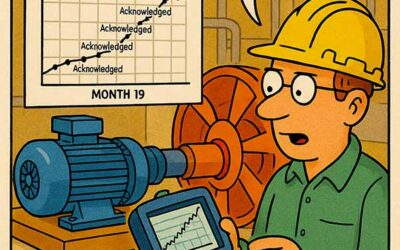


Predictive maintenance false alarms can quickly erode confidence in even the most sophisticated reliability programs. When every alert seems urgent, teams waste valuable time investigating issues that never existed. Instead of enabling proactive maintenance, unreliable alerts push organizations back toward firefighting and skepticism.
To truly benefit from predictive maintenance, plants must not only collect accurate data but also interpret it with intelligence and context. The goal is to ensure every alarm justifies the attention it demands. False alarms aren’t just technical errors; they are cultural setbacks that diminish trust in digital transformation.
1. Understanding Predictive Maintenance False Alarms
Predictive maintenance false alarms occur when condition monitoring systems – vibration sensors, infrared cameras, or AI-based analytics – signal faults that aren’t actually happening. These events create frustration, waste resources, and weaken operator engagement.
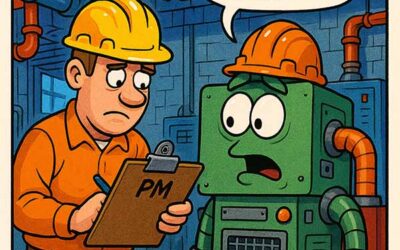
False alarms often stem from systemic factors rather than singular mistakes. For instance, vibration sensors installed near external machinery may detect interference, or algorithms might misclassify temporary operating fluctuations as critical failures. A pump start-up vibration spike could look identical to bearing damage if context isn’t considered.
Every false alarm chips away at trust – not in the technology, but in how it’s applied and understood.
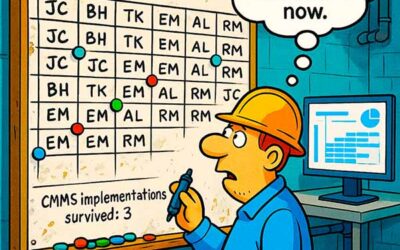
When organizations experience too many false alarms, they face a dual threat: technicians stop trusting alerts, and leadership starts questioning the ROI of predictive technologies. The problem is rarely the tools themselves but how those tools are configured, interpreted, and maintained over time.
2. Common Causes of Predictive Maintenance False Alarms
False alarms typically result from a mix of data, system, and human factors:
- Improper sensor calibration – Misaligned or over-sensitive sensors can read normal operations as anomalies.
- Environmental interference – Noise, vibration coupling, or electrical interference can mimic actual faults.
- Threshold generalization – Static alarm limits applied across different machines ignore individual asset behavior.
- Data without context – Systems that don’t integrate process conditions (temperature, load, speed) produce incomplete conclusions.
- Algorithmic drift – Machine learning models degrade over time if they aren’t retrained with updated data.
Each false alarm is a learning opportunity. Instead of dismissing them, reliability teams should dissect their root cause, update the model, and refine alarm logic. Treating false alarms as valuable feedback strengthens both the predictive system and organizational learning.
3. The Cost and Cultural Impact of Predictive Maintenance False Alarms
The financial impact of predictive maintenance false alarms is measurable: wasted inspection time, halted production, and unplanned downtime from unnecessary interventions. However, the cultural cost is often greater.
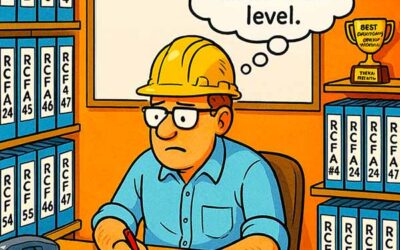
When technicians repeatedly respond to false alarms, they begin ignoring real ones—a phenomenon known as alert fatigue. Once that mindset sets in, a genuine failure can go unnoticed until it becomes catastrophic. The credibility of predictive analytics then suffers company-wide.
False alarms also discourage collaboration between data analysts and maintenance teams. Analysts may blame noisy data, while field personnel blame flawed models. Breaking this cycle requires a shared understanding: predictive maintenance is a living system that needs constant tuning, verification, and communication between disciplines.
4. Reducing Predictive Maintenance False Alarms Through Better Design
Organizations can significantly reduce predictive maintenance false alarms by taking a structured approach to validation and optimization:
- Baseline and trend each asset individually. Establish what “normal” looks like under multiple load and speed conditions before setting any thresholds.
- Adopt multi-sensor verification. Confirm anomalies through multiple sensor types – vibration, ultrasound, and oil analysis – to filter false positives.
- Implement adaptive thresholds. Dynamic alarm limits that evolve with process changes dramatically reduce false triggers.
- Regularly retrain AI and ML models. Predictive models must evolve as new failure data is collected; static models lose accuracy over time.
- Integrate process data with condition data. Contextual inputs such as temperature, load, and duty cycle transform raw data into actionable intelligence.
- Establish an alarm accuracy KPI. Track the ratio of true to false alarms monthly, treating it as a critical reliability metric.
- Collaborate across teams. Data scientists, reliability engineers, and operators should jointly review alarm histories to align thresholds and interpretations.
When these practices become routine, the number of false alarms drops sharply, and the team’s confidence in predictive maintenance grows.
5. The Human Role in Interpreting Predictive Maintenance False Alarms
Even with perfect algorithms, human intuition remains irreplaceable. Experienced technicians can discern patterns that software may overlook, such as sound changes, odors, or tactile cues. These qualitative insights complement quantitative data.
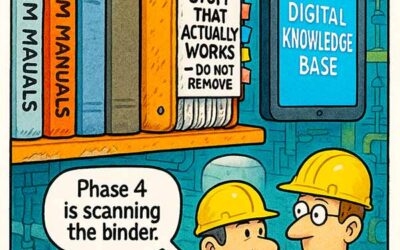
Human oversight should not be seen as a flaw in predictive systems but as a layer of wisdom that bridges data and action. By training teams to interpret alarms in context and encouraging cross-disciplinary feedback, plants develop a more innovative, self-correcting reliability culture.
When a false alarm occurs, leaders should ask: What did we learn? Each one refines the system, improving the following alert. Over time, this creates a continuous improvement cycle—one where people and technology learn from each other rather than compete.
6. Turning Predictive Maintenance False Alarms Into Reliability Insights
False alarms can highlight weaknesses in sensor placement, data integration, or model design. By categorizing and reviewing false alarms quarterly, teams can prioritize systemic improvements. For instance:
- If 40% of false alarms originate from one asset type, its monitoring strategy may need redesign.
- If multiple sensors report identical false alerts, the issue might lie in signal interference or incorrect threshold logic.
- If human verification frequently overrides digital alerts, retraining algorithms with verified data will boost precision.
This disciplined approach converts false alarms from frustration into insight. Instead of ignoring errors, the team mines them for reliability intelligence that strengthens predictive accuracy in the long term.
Predictive maintenance false alarms are not failures; they’re signals of an evolving system learning to understand its environment. The best maintenance organizations recognize that perfection isn’t the goal; precision is.
By combining sensor data, contextual analytics, and human experience, teams can dramatically reduce false positives and improve confidence in every alert. The journey toward reliable predictive maintenance requires continuous feedback, validation, and trust between machines and the people who interpret them.
When every alert is credible, predictive maintenance becomes more than a technology; it becomes a trusted partner in reliability.