

The CMMS Isn’t Broken—Your Inputs Are
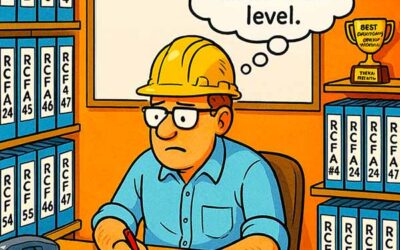
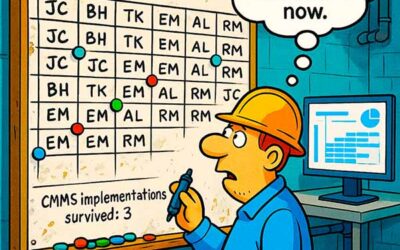
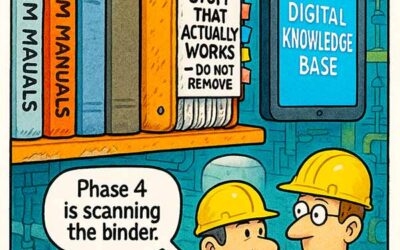
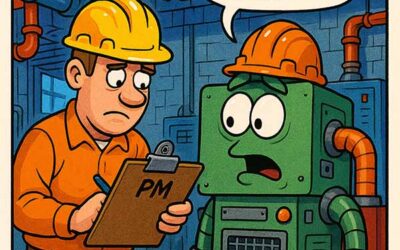
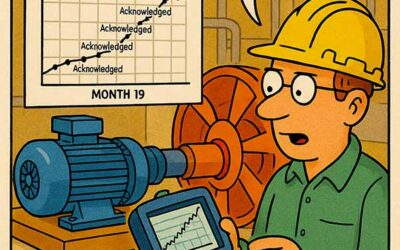
The cartoon captures a planner’s shocked realization that CMMS work orders read like bad punchlines: “Fix thing,” “It’s doing that again,” and “Is it supposed to sound like that?” Welcome to the maintenance version of a choose-your-own-adventure novel—with no satisfying ending. This isn’t a system failure; it’s a human failure in data discipline.
A Computerized Maintenance Management System (CMMS) is only as good as the data you feed it. If planners and technicians aren’t entering clear, consistent, and useful information, then what you’re left with is a database of frustration—not intelligence.
You can’t extract KPIs, root causes, or PM optimization from “fix thing.” At best, that’s tribal knowledge buried in digital concrete. At worst, it’s planned inefficiency.
Garbage In = Chaos Out
We often talk about the importance of clean oil, aligned shafts, and vibration thresholds. But clean data? That’s the elephant in the reliability room. You can’t prioritize or schedule effectively when the source material is riddled with vague descriptions, missing part numbers, or incomplete failure modes.
If the CMMS doesn’t specify the asset, problem, condition, cause, and corrective action clearly, how do you expect planners to create meaningful job plans? Or procurement to order the right parts? Or analysts to find repeat failures?
Poor data isn’t just a paperwork issue—it becomes a cultural and operational tax. Bad inputs from the shop floor cascade up to planning delays, downtime extensions, and reactive maintenance loops. Eventually, everyone from storeroom staff to upper management suffers from a reliability hangover that started with careless keystrokes.
Start with the End in Mind
Want to reverse the chaos? Treat work order entry as the beginning of your failure analysis—not the end of a maintenance task. Every technician should be trained (and incentivized) to document key data fields properly: asset ID, failure codes, symptoms, root cause, action taken.
Don’t leave it to interpretation. Standardize terminology. Use drop-down fields. Audit entries weekly. Create templates for common issues. Provide feedback loops when vague data is entered. This isn’t bureaucracy—it’s reliability engineering in action.
And for planners and supervisors, the message is clear: you’re not “just doing admin.” You’re building the operational memory of the plant. The data you allow or ignore becomes the foundation of your future maintenance strategy—or its Achilles’ heel.
Conclusion
CMMS isn’t a magical solution—it’s a mirror. And if the reflection looks like chaos, check what you’re feeding it. Garbage in means chaos out. Want smarter planning? Then start by elevating your work order data quality. The future of your reliability program depends on it.