

The Hidden Blender Inside Every Hydraulic System
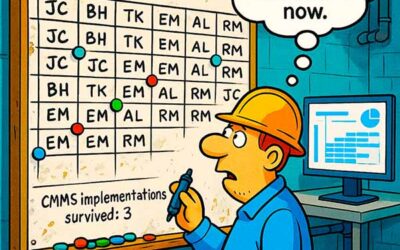
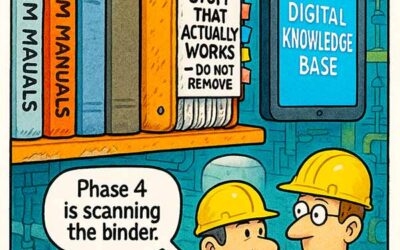
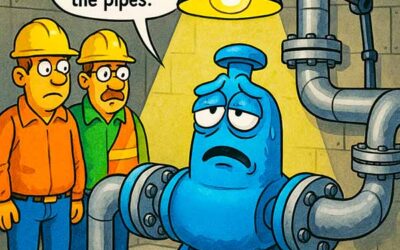
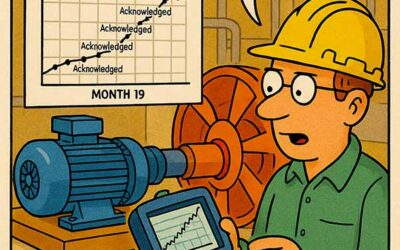
That cartoon might draw a laugh, but behind the humor lies one of the costliest and most overlooked maintenance problems in industry. In countless plants, lubrication and hydraulic systems quietly churn away like industrial blenders, mixing metal wear particles, dirt, and oxidation sludge into the very oil meant to protect them.
When filters aren’t replaced on time, reservoirs remain unsealed, and oil analysis results go unreviewed, oil contamination in hydraulic systems turns precision machinery into a slow-motion disaster. Pumps lose pressure, valves stick, and actuators begin drifting. It’s not just dirty oil, it’s a system eating itself from the inside out.
Contamination doesn’t shout, it whispers through every sticking valve and drifting actuator.
Hydraulic oil is meant to lubricate, transmit power, and dissipate heat. But when it becomes saturated with contaminants, it transforms from protector to predator. Each delay in filtration, each missed sample, allows microscopic particles to multiply, circulating endlessly until catastrophic failure becomes inevitable.
Preventing that outcome doesn’t require miracles; it requires diligence, measurement, and a systematic approach to contamination control.
Understanding Oil Contamination in Hydraulic Systems
Before you can control contamination, you must understand how it infiltrates your system and why it persists. Hydraulic fluid contamination occurs through three primary mechanisms: ingress, generation, and neglect.
Ingress
Contaminants enter from the outside environment – dust, moisture, and air – through seals, vents, or improperly sealed filler ports. Humidity condenses inside reservoirs overnight, especially when temperatures fluctuate. Every time a reservoir “breathes,” it pulls in airborne particles that quickly find their way into precision components.
Generation
Even the cleanest system generates internal contamination. Metal-to-metal contact, micro-welding, and corrosion release fine particles that circulate through pumps and valves. Hydraulic systems also produce oxidation byproducts as oil ages and reacts with heat and oxygen. These byproducts create varnish, a sticky film that clogs valve spools and interferes with clearances.
Neglect
This is where human factors amplify mechanical issues. Filters are replaced by calendar date rather than condition, desiccant breathers remain unchanged long after saturation, and oil samples are pulled from dead zones rather than from active flow lines. Over time, contamination levels climb, and the damage becomes self-perpetuating.
To grasp the scale of this problem, consider this: particles as small as 4 microns – about one-tenth the diameter of a human hair – can cause wear in hydraulic systems. Yet many operators assume oil that “looks clean” is clean. That assumption is a multimillion-dollar mistake.
The True Cost of Oil Contamination in Hydraulic Systems
Contamination’s impact extends far beyond component damage. It undermines entire reliability programs by increasing operating temperatures, shortening fluid life, and destabilizing control systems. Let’s break down the key costs:
Performance Degradation
As particles accumulate, hydraulic efficiency plummets. Valves begin to stick, pumps lose volumetric efficiency, and flow rates fluctuate. Systems that once held a steady 3,000 psi can no longer maintain pressure without excessive heat buildup.
Component Wear
Every contaminant particle becomes a cutting tool. Over time, scarring on pump gears and actuator rods leads to leaks and loss of control. Even tiny abrasions reduce the lifespan of precision components by 50% or more.
Energy Waste
Contaminated oil increases system friction, forcing pumps to work harder to maintain flow. This added workload translates directly into higher energy consumption and reduced power transmission efficiency.
Operational Downtime
The ultimate cost is lost production. When a hydraulic press or control system fails, downtime ripples across the entire process chain. Emergency repairs, expedited parts, and overtime labor costs can easily surpass the price of a proper contamination control program.
In fact, studies show that 80–90% of hydraulic failures are directly linked to fluid contamination. If your plant spends heavily on reactive maintenance, odds are you’re paying for particles you can’t see.
Proven Methods to Control Oil Contamination in Hydraulic Systems
The most reliable plants treat contamination control as a science, not a guess. A structured contamination control program combines filtration, exclusion, detection, and accountability.
Filtration
- Use high-efficiency filters with beta ratios (βx ≥ 200) to ensure consistent particle removal.
- Apply multiple stages of filtration: pressure, return-line, and off-line (kidney-loop).
- Replace filters based on differential pressure readings, not calendar intervals.
- Test new oil before use. Fresh oil often exceeds acceptable cleanliness levels right out of the drum.
Exclusion
- Fit desiccant breathers and high-quality seals to prevent airborne particles and moisture ingress.
- Use closed-loop oil transfer systems with dedicated containers, eliminating the risk of cross-contamination.
- Avoid open-top funnels and cloth rags, both of which introduce fibers and dust.
- Store oil indoors at stable temperatures and label containers clearly to prevent mix-ups.
Detection
- Conduct regular oil analysis with focus on particle count (ISO 4406), water content (Karl Fischer), and elemental spectroscopy for wear metals.
- Use trending rather than snapshot data; patterns reveal early-stage degradation long before visible symptoms appear.
- Integrate results into your CMMS or reliability dashboard for easy tracking.
Accountability
Assign clear ownership. Someone must be responsible for maintaining cleanliness standards, reviewing reports, and verifying corrective actions. Treat contamination control as a KPI tied to reliability performance, not a background task.
Sustaining Reliability Through Clean Oil Management
Clean oil is not a one-time achievement; it’s an ongoing discipline that requires collaboration between operations, maintenance, and engineering. Sustainable cleanliness is achieved through routine, integration, and culture.
- Routine: Set inspection and sampling frequencies based on criticality, not convenience. High-value systems should be checked weekly or monthly.
- Integration: Tie oil analysis data into condition monitoring systems. Rising particle counts often correlate with vibration or temperature trends, helping identify root causes faster.
- Culture: Reinforce the message that “clean oil equals reliable operation.” Train every technician and operator to recognize contamination risks during routine tasks—such as topping up, hose connections, or filter changes.
Progressive plants also adopt predictive tools – like online particle counters or real-time oil condition sensors – to maintain 24/7 visibility into system health. Combined with AI-driven maintenance platforms, these tools allow plants to detect contamination spikes within hours, not weeks.
When maintenance teams see oil cleanliness as a competitive advantage, downtime becomes predictable, and equipment life extends dramatically.
Implementing an Oil Cleanliness Program That Works
Launching a contamination control initiative requires practical steps and measurable targets:
- Assess baseline cleanliness: Sample key systems to establish current ISO 4406 codes.
- Define targets: Match cleanliness codes to component sensitivity (e.g., servo valves require 16/14/11 or better).
- Upgrade filtration hardware: Replace underperforming filters and retrofit breathers or quick-connect fittings.
- Train personnel: Create short workshops explaining sampling procedures, filter changes, and data interpretation.
- Audit quarterly: Review oil analysis trends and verify improvements.
Plants that follow this structured approach often report a 30–50% reduction in hydraulic failures within the first year, and a significant boost in mean time between failures (MTBF).
The Takeaway
Neglecting filters and oil analysis is like leaving a blender running in your hydraulic system; every component becomes part of the mixture. The good news is that oil contamination in hydraulic systems is entirely preventable.
By treating fluid cleanliness as a precision standard rather than a maintenance chore, plants can lower costs, extend equipment life, and improve efficiency. Clean oil leads to smoother control, lower energy consumption, and fewer surprises.
Next time you walk past a filter cart or sample port, think about what’s flowing inside your system. It’s not just oil, it’s the lifeblood of your operation. Keep it clean, and your machines will reward you with years of reliable service.