Behind almost every maintenance shop lies a “temporary” motor storage area that’s become permanent. Rows of spares sit beneath plastic tarps or inside rusting containers, each one a silent liability waiting to surface. Months turn into years, seasons add condensation cycles, and by the time that spare is needed, its fate is sealed.
The real tragedy? These failures are preventable. Most motors die not from overload or poor design, but from how they’re stored between uses. Applying motor storage best practices transforms forgotten equipment into reliable, ready-to-run assets and eliminates the waste that undermines plant uptime and budgets.
Why Stored Motors Fail Before They Run
A stationary motor is still vulnerable to dynamic decay. Temperature swings pull humid air in and out of housings. Moisture condenses on windings and bearings. Dust infiltrates covers. The result is a slow but certain degradation of electrical insulation, lubrication, and metal integrity.
When the day comes to reinstall, the damage is already done: bearing pitting, insulation breakdown, and unbalanced rotors make the spare fail before it completes a single shift.
Common Causes of Motor Storage Failures
- Condensation and trapped humidity – corroding windings and housings.
- Static bearing load – false brinelling (fretting corrosion) from micro-movements under static load.
- Improper sealing – moisture, rodents, and contaminants enter the frame.
- Concrete contact – moisture migrates through the frame from the floor, leading to corrosion.
- Lack of documentation – lost test results, rotation dates, and storage duration.
Each factor chips away at the motor’s integrity. The good news: these are not mysteries; they’re maintenance oversights that can be corrected with discipline and structure.
The Foundation of Motor Storage Best Practices
Implementing motor storage best practices begins with a mindset shift: idle equipment still requires maintenance. Just because it’s not running doesn’t mean it’s safe to ignore. Treating storage as an active process ensures that motors stay preserved, predictable, and ready for deployment.
1. Control the Environment
The single most important principle: keep motors dry and stable. Store in a clean, temperature-controlled area. If outdoor storage is unavoidable, use weatherproof housings with ventilation and desiccants. Avoid wrapping motors in plastic tarps; they trap condensation and accelerate rust.
- Maintain relative humidity below 60% (ideally 50–55%) and temperature between 10–30°C.
- Keep motors elevated on pallets or racks, never directly on concrete.
- Inspect after rainfall or temperature swings.
- Use space heaters or cabinet dehumidifiers for long-term storage.
- Monitor with calibrated hygrometers and color-changing desiccants.
2. Rotate Shafts Regularly
Static bearings fail silently.
Revised practice: Rotate the motor shaft through several complete revolutions (minimum 10–20 turns) every 2–4 weeks to redistribute lubricant and prevent false brinelling.
For storage periods exceeding six months, perform weekly shaft rotation (or bi-weekly in climate-controlled conditions).
Document each rotation in a log, including the date and initials. This simple habit prevents costly bearing damage later.
3. Maintain Dry Windings
Windings absorb moisture over time. Test insulation resistance at intervals appropriate to the environment, monthly for harsh conditions, quarterly for climate-controlled storage.
Install thermostatically controlled space heaters in the terminal box (5–10W per cubic foot per NEMA MG-1) to keep windings 5–10°C above ambient dew point. Never energize the windings directly for heating—this can cause localized insulation damage.
Acceptance criteria (per IEEE 43-2013):
IR = (Rated Voltage ÷ 1000) + 1 MΩ at 40°C, corrected for temperature. Trending is more important than absolute values: Investigate any declining trends.
4. Protect All Openings
Seal conduit entries, terminal boxes, and shaft ends using desiccant breathers, not solid plugs. This allows pressure equalization while blocking moisture and contaminants.
Inspect and replace desiccant when saturation indicators change color. Avoid fully sealed systems that trap internal condensation.
Remove or protect couplings and shaft keys to prevent corrosion and accidental binding—cover exposed shafts with rust-inhibiting material or vapor-phase inhibitors.
5. Tag, Track, and Test
Every stored motor should carry a legible tag with:
- Serial number and horsepower
- Date received
- Last shaft rotation date
- Last insulation test results
- Next scheduled inspection
Use a digital system to log data and send automated alerts for overdue checks. Include photo documentation to track surface condition visually and changes over time.
Integrating Preventive Maintenance Into Storage
Your preventive maintenance program shouldn’t stop at active assets. Stored equipment deserves its own checklist. A short inspection can prevent an extended outage.
Monthly Checks
- Inspect for condensation, rust, and rodent intrusion.
- Verify the condition of tarps, seals, and pallets.
- Rotate shafts and record completion.
Quarterly Checks
- Test insulation resistance and compare trends.
- Clean and reapply protective coatings to exposed metal.
- Inspect seals and desiccant indicators.
Annual Checks
- Remove terminal box covers and verify heater operation.
- Inspect grease condition; re-grease only if lubricant is depleted, contaminated, or hardened.
- Do not re-grease sealed bearings.
- Inspect humidity control systems and building ventilation.
- Check motor nameplates: clean, repaint, or replace if corroded or unreadable.
Additional Long-Term Storage Guidance
For motors stored longer than six months, apply enhanced preservation:
- Weekly shaft rotation (or bi-weekly in climate-controlled conditions)
- Monthly insulation resistance testing
- Continuous heater operation
- Bearing locking devices for large motors (>100 HP typically) to prevent unwanted shaft rotation from external vibration
- Inspection of shaft grounding brushes
Storage beyond 24 months requires manufacturer-specific preservation procedures, including possible pre-commissioning inspection and testing by qualified technicians or the manufacturer. Long-term-stored motors may require partial disassembly, relubrication, or cleaning before installation.
How Motor Storage Best Practices Pay Off
The ROI is measurable. Plants that adopt structured motor storage best practices report significantly reduced startup failures and extended service life, consistent with EASA and IEEE findings. Motors once prone to early failure can remain service-ready for years.
Tangible Benefits of Proper Storage
- Longer motor life through corrosion and insulation protection
- Reduced downtime with ready-to-run spares
- Improved auditability supporting ISO and quality systems
- Increased confidence in spare reliability
Avoiding the “Pre-Seasoned” Motor
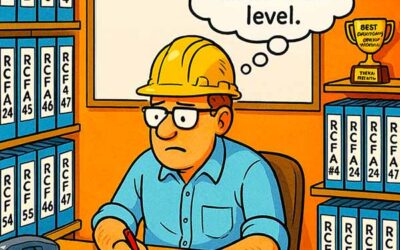
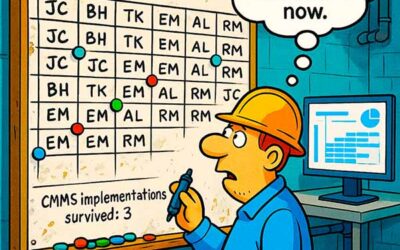
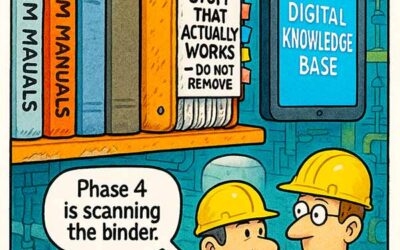
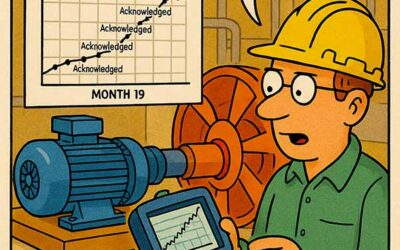
The cartoon’s humor —motors sitting outdoors “pre-seasoning” in the rain —captures a painful truth. Every maintenance leader has seen it: good equipment destroyed by bad storage. The fix isn’t complex, but it requires ownership.
Stop thinking of storage as passive protection and start viewing it as preventive maintenance in disguise. When handled properly, even long-term spares stay as ready and dependable as the day they were installed.
Reliability Starts Before the Motor Turns
Reliability doesn’t begin with commissioning; it starts the moment the motor is received, labeled, and stored. A controlled storage process keeps every spare ready to perform when production demands it.
By embedding motor storage best practices into your maintenance strategy, you transform spare motors from forgotten stock into reliable insurance policies. The next time a breakdown occurs, the replacement won’t just fit; it’ll run flawlessly.
Because reliability isn’t luck; it’s preparation, process, and precision, even in storage.
References:
EASA AR100 – Recommended Practice for Repair of Rotating Electrical Apparatus
IEEE 43-2013 – Recommended Practice for Testing Insulation Resistance
NEMA MG-1 – Motors and Generators