

Motor Current Monitoring for Motors: Your Early-Warning Siren
Motor current analysis is often the first to speak up when machines start misbehaving. While other diagnostic tools like vibration and thermography may catch issues as they escalate, motor current monitoring for motors identifies subtle changes in electrical behavior long before physical symptoms emerge. Think of it as the plant’s most proactive tattletale—always watching, always reporting.
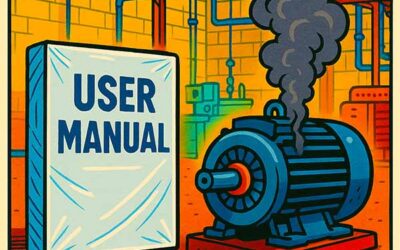
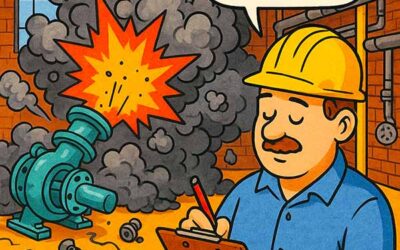
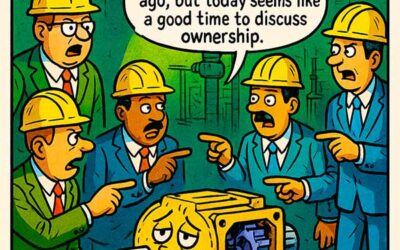
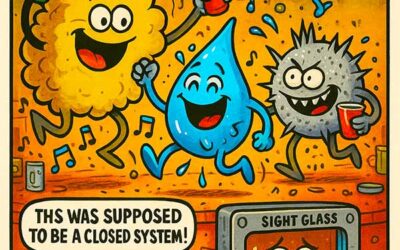
The cartoon perfectly captures this dynamic: Vibration and thermography want to “play it cool,” but motor current is already raising alarms. That’s not an exaggeration—electrical anomalies often precede mechanical failure. And ignoring those early warnings can turn a minor issue into a catastrophic event.
The Science Behind Motor Current Monitoring for Motors
Motor current monitoring for motors detects fluctuations in amperage that signal abnormalities like overloads, phase imbalance, rotor bar defects, or insulation breakdown. Unlike vibration sensors or thermal cameras, which respond to mechanical effects, current sensors highlight electrical inefficiencies—the root causes of many failures.
When a motor draws 20% more current than normal, it’s not just working harder; it’s suffering. The increased draw may point to misalignment, bearing degradation, voltage imbalance, or mechanical binding. These conditions stress the motor, increase heat, and accelerate insulation wear.
Electrical signatures don’t lie—they’re mathematically precise and available in real time. Tools like Motor Current Signature Analysis (MCSA) or smart drives can trend these values continuously. With minimal installation and no need for direct mechanical contact, motor current monitoring is an ideal front-line diagnostic tool.
Why Vibration and Thermography Sometimes Lag Behind
Vibration analysis and thermography are essential tools, but they’re often reactive rather than proactive. By the time vibration levels spike or a hotspot appears on a thermal image, mechanical damage is usually well underway.
Motor current monitoring for motors provides earlier indicators by sensing increased loading or inefficiencies as they begin. For instance, a clogged impeller may not trigger vibration changes right away—but it’ll make the motor draw more current immediately.
This doesn’t mean current monitoring replaces other methods. It enhances them. Together, they form a layered defense. But in terms of early detection, motor current is often first on the scene.
Common Missteps in Motor Current Monitoring
Many plants install smart drives and assume that’s enough. But without proper baselining, trending, and threshold setting, valuable data goes unnoticed. Here are a few common pitfalls:
- No Baseline: Failing to establish what “normal” current looks like means you’ll miss the deviations.
- No Trending: One-off readings are snapshots; trends show progression. Look for gradual increases.
- No Alarms: Smart systems should flag when thresholds are exceeded—ideally before failure conditions develop.
- No Integration: Current data should be integrated with vibration and thermal data for holistic analysis.
Motor current monitoring for motors is only as good as its application. It’s a powerful tool, but it needs context, interpretation, and action.
Turning the Narc Into a Hero
Let’s reframe motor current monitoring as an ally, not a snitch. It’s not tattling—it’s helping. Like a smoke alarm, it warns you before the fire starts.
In modern reliability programs, motor current data is fed into dashboards and analytics platforms to provide real-time health insights. Paired with AI and machine learning, these signals can even predict failure windows and recommend interventions.
Start with a few simple steps:
- Use existing VFD or smart drive current data.
- Establish motor-specific baselines.
- Set thresholds based on load profiles.
- Integrate with your CMMS or PdM platform.
Motor current monitoring for motors should be at the front of your diagnostic stack. It’s fast, non-invasive, and brutally honest. And when it says something’s wrong—it probably is.