

You’ve heard of condition monitoring. You’ve used vibration, thermography, maybe even ultrasound. But if you’re ignoring motor current analysis (MCA), you’re missing one of the most powerful, underutilized diagnostic methods in the industrial reliability toolbox.
Motor current analysis doesn’t need a shutdown, doesn’t require direct mechanical access, and doesn’t care about dust, guards, or proximity issues. All it needs is the motor running—and it’ll tell you exactly what’s going on inside.
Let’s break down why this “first date” with your motor can get intimate fast.
Why Motor Current Analysis Works When Other Methods Don’t
Traditional methods rely on physical access and direct interaction. Vibration sensors must be placed on housings. Ultrasound often requires open access points. Infrared thermography needs line-of-sight. But motor current analysis? All it needs is access to the motor’s electrical lines.
Here’s why that matters:
- No need to shut down the motor
- No risk to operators from moving parts or rotating assemblies
- No dependency on sensor placement accuracy
MCA uses voltage and current signals—already flowing through your system—to assess the internal mechanical and electrical health of the motor. That means faster data, safer collection, and less prep work.
The Benefits of Motor Current Analysis in Real-World Settings
Let’s talk outcomes. The benefits of motor current analysis show up quickly in production environments, especially where motors are mission-critical or hard to access.
1. Early fault detection
MCA can identify rotor bar issues, air gap irregularities, insulation breakdown, and power quality problems before they create noticeable symptoms. Many of these issues don’t show up in vibration signatures until it’s too late.
2. Non-invasive, on-the-fly diagnostics
It works without disassembly. That means you can test in minutes, not hours. No downtime, no tools, no risk.
3. Deep data trends
MCA provides consistent, repeatable signatures that are easy to baseline and trend over time—perfect for predictive strategies and CMMS integration.
4. Dual insight: mechanical and electrical
Few tools can analyze both the electrical power signature and mechanical interactions in a motor-driven system. MCA sees both worlds.
Where and When to Use MCA for Maximum Reliability Impact
Understanding the benefits of motor current analysis means knowing how to deploy it strategically—not just occasionally. Here’s where it adds the most value:
- Post-installation commissioning: Use MCA to capture a performance baseline for new or rebuilt motors. This creates a fingerprint you can compare against over time.
- Routine PdM cycles: Build MCA into monthly or quarterly predictive routes for critical motors. If you’re already doing vibration analysis, MCA adds a complementary lens that can confirm or clarify findings.
- Before planned shutdowns: Let MCA guide your maintenance planning. It will tell you which motors need repair and which ones don’t, so you don’t waste time.
- When troubleshooting anomalies: If you see tripped breakers, erratic VFD behavior, or unexplained heat, MCA can isolate the source—often when other methods can’t.
How to Operationalize MCA Across Your Maintenance Program
To get the full ROI, motor current analysis must be embedded in your reliability culture. It’s not a one-time test—it’s a continuous diagnostic capability.
Train your techs to understand signature patterns like sidebands, noise floors, and amplitude modulation. A well-trained team can detect subtle changes before they lead to breakdowns.
Automate trending through your CMMS or PdM system. Capture every MCA reading and watch for deviation from baseline values. Over time, you’ll build predictive intelligence that helps prevent failures.
Integrate MCA with RCA (root cause analysis): Use motor current signatures as evidence in failure investigations. Many electrical faults are misdiagnosed as mechanical. MCA helps close that gap.
Don’t isolate MCA—pair it with thermography, vibration, and oil analysis for full-spectrum diagnostics. In modern reliability programs, redundancy is a strength. MCA strengthens your signal.
Final Thoughts: The Hidden Power of Listening to Your Motors
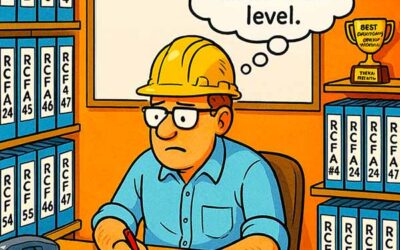
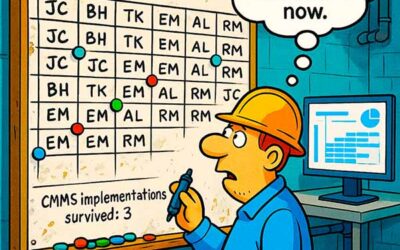
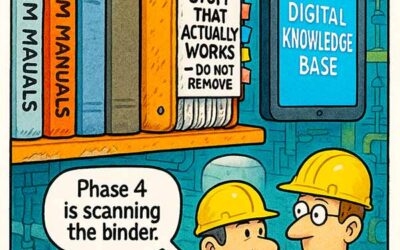
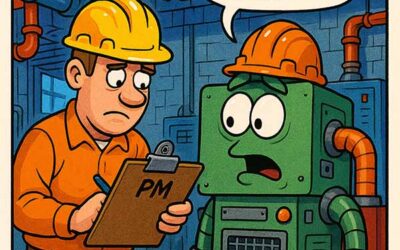
The cartoon gets it right. MCA gets intimate fast—because it doesn’t just observe, it listens. It interprets. It understands.
The benefits of motor current analysis go far beyond just checking current draw. It’s about seeing inside a machine without opening it up. It’s about moving from reactive to predictive. And in many cases, it’s about saving motors from failure long before anyone even thinks to investigate.
If you’re serious about reliability, MCA isn’t optional. It’s essential.