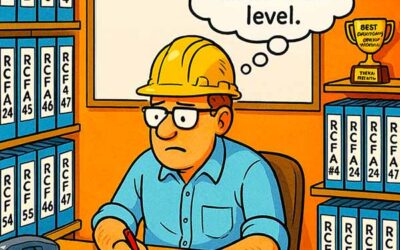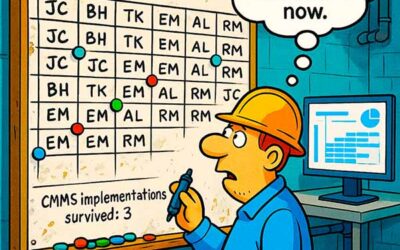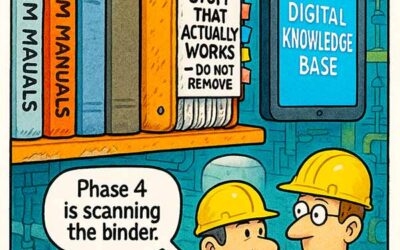

Walk any plant during a shift change and the real maintenance communication best practices reveal themselves, usually over a handheld radio and a hallway conversation rather than the official system. The information that keeps equipment running moves fast, informally, and often without a trace. It works until the moment someone needs to know what happened and finds nothing written down.
The gap between how crews actually communicate and what the system captures is where reliability quietly leaks. A missed handoff, an unlogged temporary repair, or a verbal warning that never reached the next shift can create rework, safety exposure, or avoidable downtime. Strong communication practices close that gap without turning documentation into a second job.
Maintenance Communication Best Practices That Survive a Busy Shift
The first practice is deciding what actually has to be captured. Trying to document every word spoken on a radio is likely to make the system harder to use. A short, agreed list of what must be recorded in the appropriate system, such as temporary repairs, deferred work, asset condition, and any safety-relevant information required by site procedures, keeps the burden realistic and the record useful. The point is to protect the facts that matter and let routine conversation stay verbal.
Once the list is clear, the capture should happen close to the work. A technician who can log a note from the field, by phone or tablet where site rules allow it, records it while the detail is still fresh. Asking people to reconstruct a shift much later can lose context and accuracy. The closer the note lands to the moment of work, the more complete it is likely to be.
The system of record reflects reality only when logging the work is practical enough to happen during normal operations.
Consistency turns scattered notes into maintenance documentation the plant can search, which is how a pump that keeps getting nursed along becomes visible instead of folklore. When every technician records a temporary repair the same way, patterns finally surface.
This all falls apart if leadership ignores the record. When supervisors pull their information from the system rather than the grapevine, crews quickly learn that logging a note has an audience and a purpose worth the effort. A record that leaders read becomes a record that technicians keep.
Why the Official System Loses to the Radio
Informal channels win for understandable reasons. A radio call is immediate, it reaches everyone listening on the channel, and it asks little of the sender beyond speaking. The official system, by contrast, can demand logins, fields, and clicks that feel like friction in the middle of a live job. People tend to use the channel that costs them the least effort in the moment, and the radio often wins that contest.
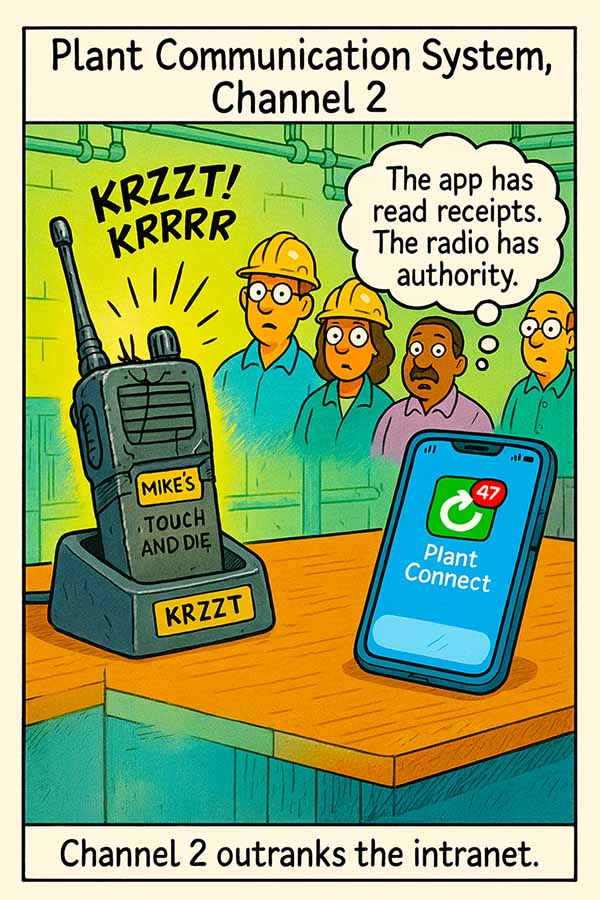
The radio also carries social authority. A veteran’s voice can settle a question faster than a form, and read receipts on an app mean little when a machine is down and a decision is needed now. Much of the plant still runs on trust built face-to-face.
- Speaking can be faster than typing, especially with gloves on or when hands must stay on the work.
- A radio can reach everyone monitoring the channel at once, while a logged note waits to be read.
- Tribal knowledge lives in people, so asking a coworker may feel faster than searching a database.
- The official tool often feels built for managers to report upward, rather than for technicians to use.
Understanding why the radio wins points straight to the fix. The goal is a record that borrows the radio’s speed while adding the memory the radio lacks, so the plant keeps the immediacy and finally gains a history it can trust. That reframing keeps the tool from becoming one more thing the floor quietly works around.
Closing the Gap Between Talk and the Record
Closing the gap starts with shrinking the distance between saying something and saving it. Voice-to-text notes, quick mobile forms, and a handful of required fields can turn a short field observation into a searchable entry that outlives the shift, provided the tools fit site safety and cybersecurity rules. Small reductions in friction can materially improve what gets captured.
Shift handovers deserve special attention because important risk information often changes hands there. A structured handoff template, tied into the plant’s cmms implementation or another designated system of record, gives the next crew a reliable starting point covering open work, equipment on watch, temporary conditions, and safety concerns required by site procedure.
A temporary repair or unresolved condition that lives only in one technician’s memory is easy for the next shift to miss or rediscover the hard way.
Feedback keeps the loop alive. When a logged observation leads to a scheduled job, and the technician who raised it hears about the outcome, the record stops feeling like a chore and starts feeling like a channel that actually works. Closing that loop helps earn a crew’s trust in the system.
Over time these habits compound into something valuable. A plant that captures its communication builds a history it can mine for recurring problems, and the informal channels become a complement to the record rather than a substitute for it.
Making the Practices Stick
New communication habits fade if they depend on enthusiasm alone. They hold when they are built into the daily routine, reinforced by supervisors, and supported by tools that respect a technician’s limited time on a shift. Durable practices are the ones that ask a little and return a lot.
Measurement helps here as well. Tracking how many shifts close with a complete handover, or how often temporary repairs get logged in the designated system, shows whether the practices are being followed. Those measures should be paired with outcome checks, such as missed handoffs or repeat work, rather than treated as proof of communication quality by themselves.
- A short daily handover that names open work, watch items, and safety concerns.
- One agreed system of record for temporary repairs and deferred work, with safety information handled according to site requirements.
- Supervisors who read the record and visibly act on what they find there.
- Regular pruning of fields and steps that no longer earn their keep.
Plants that get this right treat communication as part of the maintenance system, worth the same design attention as a work order or a spare-parts process. The reward is a floor that can still move quickly while leaving a record the next shift can trust.