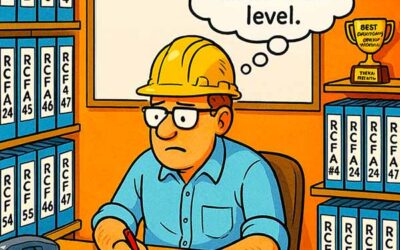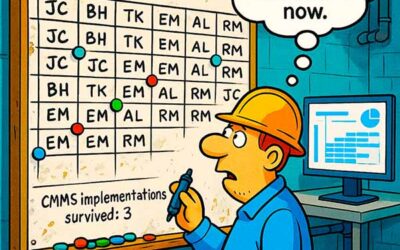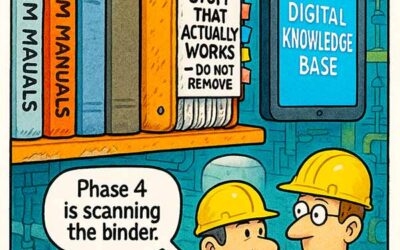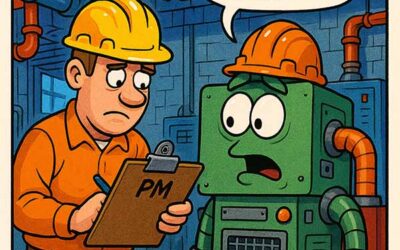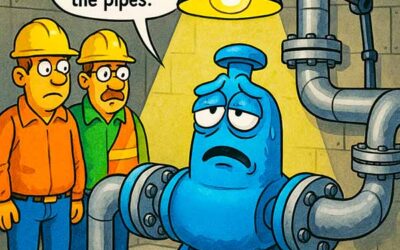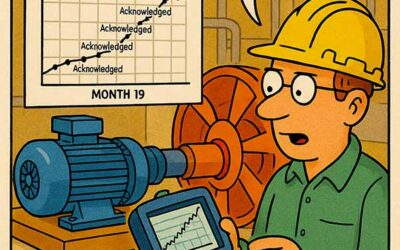


When leaders celebrate the late-night restart, the urgent patch, or the heroic “save,” they unintentionally reinforce the kind of reactive behavior that keeps plants stuck in fire-fighting mode. Hero stories feel satisfying in the moment, but they often obscure the conditions that allowed the failure mode to mature in the first place.
The key is shifting leadership conversations from admiring the fix to examining the conditions, decisions, detection capabilities, and tradeoffs that surrounded the failure. These 30 conversation starters help redirect attention toward system-level learning, without assuming that every failure was preventable or that prevention is always economically justified.
Conversation Starters When Heroics Overshadow Real Reliability Work
- “What part of this incident could have been detected earlier with better condition monitoring or review?”
- “If this fix was impressive, what failure mechanism set the stage for it?”
- “How much of today’s emergency cost was technically avoidable, and how much was inherent risk?”
- “What data or inspection frequency would have given us earlier insight into this degradation?”
- “If this failure happens again, what would we wish we had done differently upstream?”
- “Which condition indicators – vibration, oil analysis, temperature, amperage – did we miss or never establish?”
- “What element of our maintenance strategy allowed this failure mode to progress unnoticed?”
- “What change would make this fix the last time we need to respond to this failure mode?”
- “Which upstream decision or tradeoff created the downstream urgency?”
- “Which PM or PdM task needs adjustment based on what today revealed?”
- “If we mapped this on the P-F curve, when could this failure mode have first been detectable, and what monitoring would that have required?”
- “What earlier warning signs or condition indicators could have revealed this degradation sooner, and what monitoring interval would have been needed?”
- “How could we redesign or modify this asset to reduce the likelihood of recurrence?”
- “Did this event reveal a skills gap, a process gap, or an ownership gap?”
- “Where else in the plant might this same failure mechanism be quietly developing?”
- “Which task in our PM or PdM program was meant to detect this—and why didn’t it?”
- “Does this incident indicate a strategy issue, an execution issue, or an operational upset?”
- “What would a high-performing facility learn or adjust from this same event?”
- “If we analyze the cost of the failure – not the fix – what insights emerge?”
- “What breakdown in governance or decision-making allowed this failure mode to mature?”
- “What decision months ago influenced today’s outcome?”
- “If resources weren’t a constraint, what preventive measure would we add first, and would it still be justified economically?”
- “Which criticality ranking best reflects the actual consequences of this failure?”
- “What constraint kept us from addressing this sooner: workload, information, tools, or awareness?”
- “What is the smallest upstream change that would have meaningfully reduced this failure risk?”
- “Does our workflow reward proactive work, or only reaction?”
- “What does this incident say about backlog quality, not just backlog size?”
- “Which PdM thresholds or PM intervals should be recalibrated after this?”
- “If we couldn’t celebrate the fix, what upstream improvement would we celebrate instead?”
- “Was this truly a preventable failure, or is run-to-failure actually the appropriate strategy for this asset?”
Heroic fixes are tempting to celebrate because they feel tangible and dramatic, but emergency work itself is not always evidence of a broken maintenance strategy. Some failures stem from random distributions, process upsets, environmental variations, or economically justifiable run-to-failure decisions. Others, however, are clear indicators of gaps in detection capability, PM/PdM design, governance, or upstream decision-making. The value comes from distinguishing between these categories.
These conversation starters help leaders shift from glorifying the rescue to examining the system. They promote learning, not blame. They acknowledge both the realities of inherent reliability limits and the vast opportunities for better detection, earlier awareness, and smarter strategy. Used consistently, they help move the organization from celebrating the heroic fix to investing in the quiet work that reduces the need for heroics in the first place.