The Kaizen Paradox: When Success Ends Improvement
Every manufacturing organization that embraces Kaizen dreams of achieving a culture of relentless improvement – a workplace where small, daily changes compound into significant gains in productivity, safety, and reliability. Yet, over time, even the most well-intentioned programs hit a strange wall: improvement fatigue. Teams that once chased inefficiencies with passion begin to feel “done.”
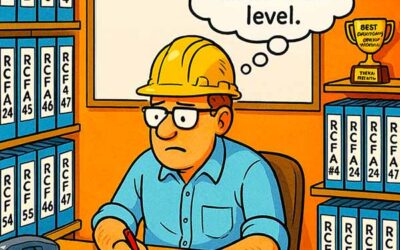
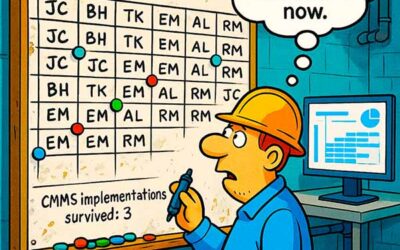
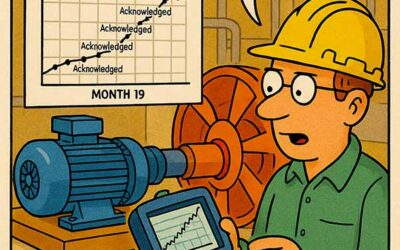
That’s the irony at the heart of this cartoon – a team proudly celebrates the end of their Kaizen journey with a sign declaring “No More Kaizen Events.” It’s a tongue-in-cheek reminder that success can breed complacency. Many plants eventually reach a point where they’ve solved the easy problems, and improvement feels more complex, slower, and less exciting. The system that once made them excellent now resists change.
This phenomenon isn’t unique to Kaizen; it’s cultural. Organizations begin to see continuous improvement as an event, not a mindset. Once the checklist is complete and the charts look stable, the discipline of learning fades. But continuous improvement has no finish line. True excellence lies not in perfection but in the refusal to stop progressing – and that’s where Kaizen event best practices become essential.
Kaizen Event Best Practices: Avoiding the Plateau
Kaizen events, when done right, deliver dramatic transformations, shorter lead times, improved quality, reduced waste, and higher morale. But too often, organizations treat them like one-time campaigns. The secret to sustainable success lies in following Kaizen event best practices that embed improvement into daily habits.
1. Start with Strategic Alignment
Every improvement must support an overarching business objective. Without alignment, teams optimize locally but harm the system globally, for example, speeding one process while creating bottlenecks downstream. Each Kaizen should clearly link to measurable business goals like OEE, maintenance cost reduction, or customer satisfaction. When people understand why an event matters, participation becomes commitment.
2. Measure What Matters
Improvement without metrics is theater. Before launching an event, establish baselines and define clear success indicators. Afterward, use leading and lagging metrics to confirm that gains persist. A few examples include reduced tool change time, improved schedule compliance, and lower unplanned downtime. Long-term success depends on verification and feedback, not celebration alone.
3. Ensure Post-Event Follow-Through
A major breakdown in most Kaizen programs happens right after the applause. Teams complete their event, document results, and return to “normal.” The improvements slowly decay because no one is responsible for sustainment. The best organizations treat follow-through as sacred, with standard work updates, Gemba audits, and daily leader checks to ensure adherence. Sustaining change is more complicated than creating it, and Kaizen event best practices exist precisely to keep it alive.
4. Integrate into Daily Management
Continuous improvement should merge seamlessly with daily operations. Create a rhythm where short problem-solving sessions, data reviews, and operator input drive micro-Kaizens weekly. The goal isn’t to hold more events but to create a culture where every employee looks for one slight improvement every day.
When these Kaizen event best practices become embedded in standard work, the organization’s improvement engine runs continuously – even without formal events.
How Continuous Improvement Turns into Continuous Complacency
Many companies fall into the trap of confusing stability with success. After years of workshops, training, and lean boards, leaders begin to believe the system has matured – that they’ve “arrived.” But the moment improvement becomes optional, entropy begins.
This decline follows a predictable pattern:
- Stage 1 – Enthusiasm: Teams engage fully; visual boards fill with action items; small wins stack quickly.
- Stage 2 – Fatigue: The same people attend every event. Leadership attention drifts. Kaizen becomes a checkbox.
- Stage 3 – Complacency: Improvement is replaced by maintenance. No one asks hard questions anymore.
Once this cycle sets in, metrics stagnate, creativity fades, and talent disengages. Continuous improvement dies quietly – not from failure, but from comfort.
To break this cycle, leaders must reignite curiosity and purpose. Improvement should be seen as exploration, not correction. Instead of asking, “What’s broken?” the better question is, “What could be better?” Kaizen event best practices teach teams to focus not just on eliminating waste, but on learning—understanding cause-and-effect relationships that strengthen the entire system.
Continuous improvement isn’t about reaching a final state; it’s about staying in motion.
Reviving Stalled Kaizen Programs with Intentional Design
When improvement energy fades, most organizations overcorrect – they launch new initiatives, rename programs, or bring in consultants. But the best turnarounds happen through simplification, not reinvention. Revive a fading Kaizen culture by going back to fundamentals.
1. Go to the Gemba
Real improvement doesn’t happen in conference rooms. Leaders must regularly visit the Gemba – the place where value is created – and observe work firsthand. Engage operators in conversation, ask questions, and look for friction points. Problems rarely reveal themselves through dashboards; they live in the flow of real work.
2. Shorter, Faster Cycles
Instead of multi-day workshops, shift to rapid, focused micro-Kaizens. These small bursts of improvement keep teams engaged, create visible wins, and prevent analysis paralysis. When improvement becomes part of the weekly rhythm, it feels achievable and energizing.
3. Recognize Real Results
Reward outcomes, not participation. Publicly share stories of teams that achieved measurable impact: reduced rework, improved uptime, or safety milestones. Recognition reinforces behavior far more effectively than slogans or posters.
4. Empower Ownership
Top-down improvement creates dependency. True Kaizen thrives when the front line owns both the problem and the solution. Provide employees with tools, authority, and time to act on their ideas. Ownership turns engagement into accountability.
When these Kaizen event best practices take root, the culture self-sustains. Leaders coach, operators lead, and improvement becomes the default operating mode, not an initiative.
Conclusion: The Real Meaning of Continuous
Kaizen means “change for the better,” but its power lies in continuity, not perfection. The humorous idea of “improving ourselves right out of improving” illustrates a fundamental misunderstanding of continuous improvement, suggesting it never ends.
The truth is, the best organizations never stop asking questions. They view problems as opportunities, not annoyances. They build systems that outlast leadership changes and economic cycles. And they live by one core principle: there’s always a better way.
When you master Kaizen event best practices, you don’t need to hold more Kaizen events because every day becomes one. Improvement transforms from an activity into a habit, from an initiative into a way of life. That’s the ultimate success: when Kaizen becomes invisible because it’s everywhere.