How Washdown Procedures Destroy Bearings When Seal Integrity Fails
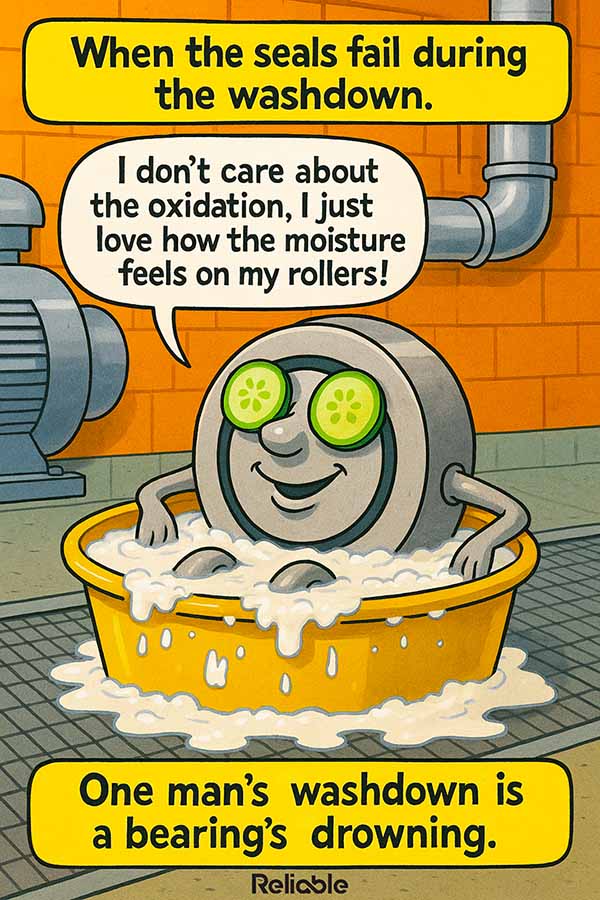
In food and beverage plants, pharmaceutical facilities, and any operation that demands strict hygiene, washdown is a fact of life. High-pressure water, caustic chemicals, and foaming agents blast equipment surfaces clean on a daily (sometimes hourly) basis.
The machinery handles it. Until it doesn't.
The weak link in most washdown environments is the seal. When seals degrade, water and cleaning chemicals find their way into bearing housings, gear boxes, and motor internals. What follows is a predictable chain of events: corrosion, oxidation, lubricant contamination, and premature failure.
What Happens Inside a Compromised Bearing
Bearings are precision components manufactured to tolerances measured in microns. They're designed to operate in a controlled environment where lubricant stays in and contaminants stay out. Seals are the barrier that makes this possible.
When a seal fails during washdown, water enters the bearing housing and mixes with the lubricant. The resulting emulsion loses its load-carrying capacity almost immediately. Instead of a smooth film separating metal surfaces, you get a thin, contaminated slurry that accelerates wear.
A seal that looks intact can still be failing. Micro-cracks and hardened lip edges allow water ingress that's invisible until the bearing is already compromised.
The damage doesn't stop at lubrication breakdown. Water triggers oxidation on the bearing's rolling elements and raceways. These microscopic pits act as stress concentrators, creating initiation points for spalling and fatigue cracking. A bearing that should last 40,000 hours can fail in 4,000 when moisture is present.
In severe cases, the water also carries dissolved cleaning chemicals (sodium hydroxide, peracetic acid, chlorinated alkaline solutions) into the housing. These chemicals are far more aggressive than water alone and can attack both the bearing steel and the lubricant additives designed to protect it.
The physical evidence of moisture damage is unmistakable once you've seen it. Pull a compromised bearing apart and you'll find reddish-brown discoloration on the raceways, pitting on the rolling elements, and a milky, emulsified grease that's lost all protective value.
Why Seals Fail in Washdown Environments
Seal failure in washdown applications is rarely sudden. It's a gradual degradation driven by several overlapping factors.
Temperature cycling is one of the biggest culprits. During production, equipment runs hot. During washdown, cold water hits those same surfaces. The repeated thermal expansion and contraction fatigues seal materials, creating micro-cracks that grow over time.
Chemical attack is another major factor. Many standard seal materials (nitrile, for example) have limited resistance to the aggressive chemicals used in sanitary washdown. Exposure to caustic cleaners hardens the seal lip, reducing its ability to flex and maintain contact with the shaft.
Common contributors to seal degradation during washdown include:
High-pressure spray directed at seal faces, which forces water past lips designed for splash resistance, not direct impingement.
Chemical incompatibility between seal elastomers and cleaning agents, leading to swelling, hardening, or cracking of the seal material over weeks or months.
Shaft wear grooves that develop under the seal lip over time, creating a channel for water to bypass even a new seal.
Improper seal installation, including reversed lip orientation that directs contaminants inward instead of outward.
Any one of these factors can compromise a seal. In most washdown environments, you're dealing with all four simultaneously.
One milliliter of water in a bearing housing can reduce bearing life by up to 48%. In a washdown environment, you're often dealing with far more than that.
The Oxidation Problem
Once water reaches the bearing, oxidation becomes inevitable. Steel bearing components react with water and dissolved oxygen to form iron oxide. This corrosion is especially aggressive in bearings because the rolling contact continuously exposes fresh metal to the corrosive environment.
The oxidation products themselves are abrasive. As they flake off and circulate through the lubricant, they score the raceways and rolling elements, creating more surface damage that accelerates further corrosion. It's a feedback loop that only ends with bearing replacement.
Oil analysis can detect this process early. Elevated iron counts in lubricant samples, combined with high moisture readings, are a clear signal that seal integrity has been compromised. Plants running regular oil analysis programs can catch these trends before the bearing reaches a critical state.
The timing window matters here. From initial water ingress to visible spalling, you might have anywhere from two weeks to three months depending on load, speed, and contamination severity. That's your window to act, and condition monitoring is the tool that opens it.
Protecting Bearings in Washdown Applications
The good news: seal failure during washdown is preventable. The solutions aren't exotic or expensive, but they do require deliberate planning and consistent execution.
Start with seal selection. Standard contact seals aren't adequate for direct washdown exposure. Look for designs specifically rated for high-pressure wash, including:
Double-lip or triple-lip seals with integrated flingers that deflect water before it reaches the primary sealing surface.
Seals made from FKM (Viton) or EPDM compounds that resist both high temperatures and aggressive cleaning chemicals.
Bearing isolators that use a labyrinth path to prevent water ingress without relying on contact between the seal and shaft.
Beyond seal selection, washdown procedure itself matters enormously. Many plants blast equipment with high-pressure spray at close range because it's faster. That approach drives water past seals designed for ambient splash exposure.
Procedure Changes That Make a Difference
Training washdown crews to maintain appropriate spray distances (typically 12 to 18 inches for most seal types) and avoid directing spray at seal faces can dramatically reduce water ingress. It's one of the cheapest reliability improvements available, and it requires zero capital expenditure.
Condition monitoring also plays a critical role in catching seal failures before they become bearing failures:
Routine oil analysis with moisture testing (Karl Fischer method) can detect water contamination at levels as low as 100 ppm, well before physical damage begins.
Vibration monitoring on washdown-exposed equipment should include baseline checks before and after washdown cycles to identify sudden changes in bearing condition.
Hands-on inspection of seal faces during scheduled maintenance, looking for lip wear, chemical discoloration, and elastomer hardening that signals the next failure.
Plants that combine proper seal selection, controlled washdown procedures, and active condition monitoring consistently see bearing life improvements of 200% to 400% compared to facilities that treat seals as commodity parts.
The best seal protection programs treat washdown as a known attack vector, with inspections, upgrades, and monitoring built into the maintenance schedule.
Washdown will always be part of the process in hygiene-sensitive industries. The water, the chemicals, the pressure: none of that is optional. But bearing failures don't have to be part of the process too.
Seals are small, inexpensive components that protect some of the most critical rotating assets in your plant. Treating them as the first line of defense (rather than an afterthought) is one of the highest-return investments in any washdown reliability program. A $30 seal protects a $3,000 bearing. The math speaks for itself.