

The Hidden Cost of Maintenance Backlog
Every maintenance manager knows the feeling: dozens of overdue work orders piling up, technicians rushing from one “urgent” fix to the next, and planners constantly re-shuffling priorities. The maintenance backlog is more than a number; it’s a measure of operational debt. The longer it grows, the harder it becomes to deliver reliability.
In many plants, backlog growth signals systemic breakdowns: poor planning accuracy, reactive maintenance dominance, or overcommitted labor. Understanding how to reduce maintenance backlog starts with redefining what progress actually means. Completing more work doesn’t guarantee improvement; doing the right job does.
Quantify Reality Before Declaring Progress
Before attacking the backlog, measure it honestly. Most organizations understate their actual workload by ignoring inspections, condition-based work, and deferred tasks that never made it into the CMMS. Calculate backlog in crew-weeks, the number of full-time maintenance crews needed to complete all pending work.
Backlog doesn’t reveal how hard your team works; it exposes how poorly your system prioritizes.
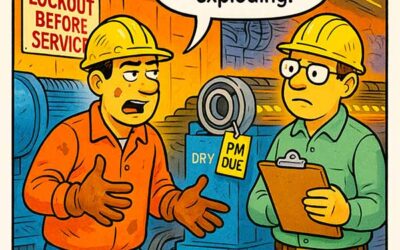
If you discover 72 crew-weeks of backlog (as in the cartoon), the problem isn’t your people, it’s your process. Reducing backlog requires tightening planning accuracy, eliminating non-value tasks, and prioritizing by risk and consequence, not convenience. The first step in how to reduce maintenance backlog is to face the data with complete transparency.
Prioritize by Asset Criticality and Risk
When every job screams urgency, nothing truly is. A structured risk-based prioritization system channels labor where it matters most. Classify assets by criticality —safety, environmental, and production impact —and then align work orders accordingly.
A pump in a redundant system may wait; a critical compressor feeding an entire line cannot. Use Failure Modes and Effects Analysis (FMEA) to determine which work actually reduces risk versus which merely fills time. Plants that master this discipline often see backlog reduction by 30–50% within a year, without adding staff.
This targeted approach is the essence of reducing maintenance backlog; it converts chaos into controlled progress.
Strengthen Planning and Scheduling Discipline
A well-planned job takes half the time of an unplanned one. Yet in many facilities, planners spend most of their week expediting emergencies instead of planning future work—the result: a self-perpetuating reactive cycle.
Break that loop with a frozen weekly schedule. Lock in 80% of planned work for the week and resist changes unless an actual emergency occurs. Then, track schedule compliance to ensure planned labor hours translate into executed work. Over time, as urgent jobs decrease, your backlog will naturally compress.
A stable weekly schedule is the backbone of reliability – without it, every plan becomes just another reaction.
Digital tools like CMMS analytics and visual scheduling dashboards can reveal bottlenecks, forecast labor demand, and optimize job sequencing, all crucial for efficiently reducing maintenance backlog.
Build Cross-Functional Ownership
Maintenance cannot win the backlog battle alone. Operations must share accountability. Many reactive failures stem from poor operating practices, running equipment to failure, deferring inspections, or bypassing early warning signs.
Create joint production-maintenance meetings where both sides review backlog trends, planned outages, and asset health metrics. When production leaders understand that deferred maintenance today becomes lost output tomorrow, alignment improves.
Reward teams not for firefighting, but for backlog stability and proactive interventions. Culture change, more than manpower, is the final ingredient in how to reduce maintenance backlog sustainably.
Conclusion: Progress Is Earned, Not Announced
Backlog control is not about catching up; it’s about staying ahead. Measuring success requires more than tracking completed work orders. It demands evaluating whether maintenance actions extend asset life, prevent downtime, and reduce the total cost of ownership.
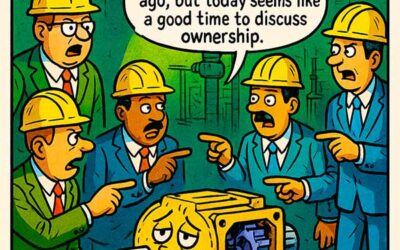
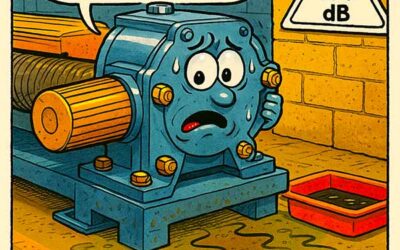
The cartoon’s humor hides a hard truth: “Progress” without measurable impact is an illusion. In high-performing organizations, backlog reduction is a byproduct of disciplined planning, risk-based prioritization, and cross-functional accountability.
When those elements align, progress becomes measurable, and reliability becomes inevitable.