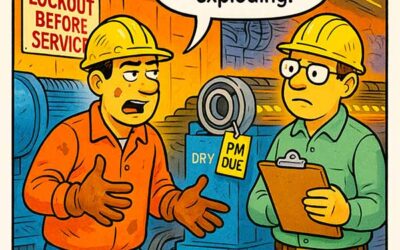


Every experienced operator knows the moment something changes. A pump that ran smooth for two years starts vibrating just a little differently. A motor that used to hum now whines. These observations matter, and understanding how operator feedback improves maintenance outcomes is one of the most practical steps any plant can take toward fewer breakdowns and lower repair costs.
Operators spend eight to twelve hours a day within arm’s reach of their equipment. They hear it, feel it, smell it. That constant proximity gives them a baseline that no monthly inspection route can replicate. When a bearing starts to degrade, the operator often notices the temperature shift or the subtle change in sound days or even weeks before a scheduled condition monitoring reading picks it up.
The challenge has never been whether operators have useful information. They do. The challenge is getting that information captured, transmitted, and acted on before the window of opportunity closes.
How Operator Feedback Improves Maintenance Outcomes on the Plant Floor
Operators bring a unique perspective that analysts and planners simply can’t replicate from a desk or a data screen. They’re the first humans to interact with a developing failure, and their sensory input covers ground that instruments sometimes miss.
What Operators Actually Notice
The range of useful observations is wide. Operators routinely catch things like unusual sounds (grinding, squealing, knocking), unexpected temperature changes on housings or piping, new vibrations felt through handrails or flooring, changes in product quality or flow rates, oil leaks or discoloration at drain ports, and unusual smells (burnt insulation, overheated lubricant, chemical off-gassing).
A skilled operator who says, “That gearbox on Line 4 started making a clicking sound at the start of second shift,” has just provided a failure mode, a location, a timeline, and an operating context. That’s four data points in one sentence.
A skilled operator who reports a clicking sound on a specific gearbox has provided a failure mode, a location, a timeline, and an operating context in one sentence.
This type of frontline intelligence cuts the diagnostic time for analysts considerably. Instead of scanning dozens of spectra looking for anomalies, the vibration analyst can go straight to the suspect machine, collect targeted data, and confirm or rule out the developing problem within hours.
The Numbers Behind Operator-Driven Detection
Plants that formally track how failures are first detected consistently find that operators are the initial source for 25 to 40 percent of condition-based work orders. In facilities with mature operator care programs, that number can climb above 50 percent.
A 2022 benchmarking study across 14 pulp and paper mills found that sites with structured operator feedback programs experienced 18 percent fewer unplanned shutdowns compared to sites relying solely on instrument-based detection. The cost difference was significant: roughly $1.2 million annually in avoided emergency repairs per site.
When Analytical Data Meets Operator Intuition
Operator observations and analytical maintenance data (vibration spectra, oil analysis results, thermographic images, ultrasonic readings) serve different but complementary roles. The operator provides the early warning. The analyst provides the diagnosis and prognosis.
Consider a real-world example. An operator on a packaging line notices that a conveyor drive motor feels warmer than usual during a routine walk-around. She logs the observation. The condition monitoring technician responds by collecting a vibration spectrum and a thermal image the next day.
The spectrum shows elevated amplitude at bearing defect frequencies. The thermal scan confirms the motor’s drive-end bearing is running 22 degrees Fahrenheit above its historical baseline. Oil analysis on the gearbox downstream reveals elevated iron and copper particles.
The operator provides the early warning. The analyst provides the diagnosis and prognosis. Together, they close the gap between sensing a problem and solving it.
With all three data points converging, the planner schedules a bearing replacement and gearbox inspection during the next planned downtime window, four days away. Without the operator’s initial observation, the bearing defect might not have been caught until the next quarterly vibration route, three weeks later. By then, secondary damage to the gearbox could have tripled the repair cost.
This kind of collaboration, where how operator feedback improves maintenance outcomes becomes visible in real dollars, is what separates reactive plants from proactive ones.
Practical Systems for Capturing Operator Input
Good intentions don’t capture data. You need systems. The most effective plants use a combination of structured tools that make it easy for operators to report what they see without slowing down their primary job.
Structured Walk-Down Forms
Walk-down checklists give operators a repeatable framework for daily or per-shift equipment checks. The best forms are short (one page or less), equipment-specific, and organized by sensory category.
A typical walk-down form for a centrifugal pump might include the following checks:
- Listen for changes in sound (bearing noise, cavitation, seal squeal)
- Feel for excessive vibration at the bearing housing
- Check the mechanical seal area for leakage
- Verify suction and discharge pressure gauge readings
- Confirm lube oil level and color through the sight glass
- Note any unusual odors near the motor or coupling guard
These forms work best when they include a space for free-text comments. The checklist catches routine observations; the comments field captures the unexpected.
Digital Reporting Tools
Mobile apps and tablet-based reporting platforms have made operator feedback faster and more traceable. The best tools allow operators to log an observation in under 30 seconds: tap the asset, select a symptom category, add a brief note, and submit. Some platforms attach GPS coordinates and timestamps automatically.
The real value of digital tools is integration. When an operator’s report flows directly into the CMMS as a notification or work request, it enters the same workflow as instrument-based alerts. Nothing falls through the cracks. Nothing dies on a clipboard.
When an operator’s report flows directly into the CMMS as a notification, it enters the same workflow as instrument-based alerts. Nothing falls through the cracks.
Plants using digital operator reporting tools have documented a 30 to 45 percent increase in early-stage defect identification compared to paper-based systems. The reason is simple: lower friction means more reports. This is one of the clearest examples of how operator feedback improves maintenance outcomes at scale.
Shift Handover Notes
Shift handovers are an underused goldmine. When the outgoing operator tells the incoming operator, “Keep an eye on that compressor; it tripped on high temperature twice last night,” that’s critical maintenance intelligence. Structured handover logs (whether digital or paper) preserve these observations so they don’t evaporate between shifts.
Effective handover notes for maintenance purposes should include the following elements:
- Equipment that behaved abnormally during the shift
- Any temporary operational changes (bypasses, reduced speeds, manual overrides)
- Pending maintenance work that affects operations
- Safety observations related to equipment condition
When maintenance planners review these handover logs daily, they gain a rolling picture of equipment health that supplements the formal condition monitoring program.
Barriers to Operator Feedback and How to Remove Them
If capturing operator input were easy, every plant would already be doing it well. Several common barriers get in the way.
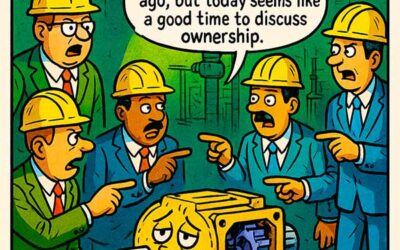
Barrier one: operators feel their input gets ignored. This is the biggest killer. When an operator takes time to report a concern and hears nothing back, the message is clear: don’t bother. The fix is a closed-loop feedback system. Every operator report should receive an acknowledgment and, eventually, a disposition (work order created, monitoring increased, or observation noted with rationale for no action).
Barrier two: the reporting process takes too long. If filling out a form or logging into a system takes more than a minute, compliance drops fast. Streamline the tools. Reduce required fields to the essentials: asset, symptom, severity, and a short comment.
Barrier three: analysts and operators speak different languages. An operator says, “It sounds rough.” An analyst thinks in frequencies and amplitudes. Bridging this gap requires joint training sessions where operators learn basic failure modes and analysts learn to translate operator language into diagnostic leads. Even a quarterly lunch-and-learn session where the vibration analyst walks through a recent catch (and credits the operator who flagged it first) builds trust and shared vocabulary.
Every operator report should receive an acknowledgment and a disposition. Closed-loop feedback is what keeps operators engaged and reporting.
Barrier four: there’s no clear ownership. Someone in the reliability or maintenance planning group needs to own the operator feedback process. That means reviewing incoming reports daily, routing them to the right analyst or planner, and tracking response times. Without an owner, the process drifts.
Measurable Results from Integrated Feedback Programs
Plants that formalize how operator feedback improves maintenance outcomes see gains across multiple metrics. The results are consistent across industries, from oil refining to food processing to power generation.
Typical outcomes include a 15 to 30 percent reduction in unplanned downtime within the first 12 months. Mean time between failures for critical assets often increases by 20 percent or more. Emergency maintenance labor hours drop because problems are caught earlier, when repairs are simpler and faster. Spare parts costs decrease as secondary damage becomes less common.
One chemical plant in the Gulf Coast region documented a specific case: after implementing a formal operator observation program, they caught a developing bearing failure on a reactor agitator three weeks before the next scheduled vibration route. The cost of the planned repair was $4,200. The estimated cost of a run-to-failure scenario (including lost production, emergency labor, and collateral damage to the seal and coupling) was $87,000.
That single catch, initiated by an operator who noticed the agitator “didn’t sound right,” delivered a 20-to-1 return on the entire annual cost of the operator feedback program. Cases like this make the argument for how operator feedback improves maintenance outcomes almost impossible to ignore.
Making Operator Feedback a Permanent Part of the System
The key to sustaining these programs is treating operator feedback as data, not opinion. It belongs in the CMMS, in the condition monitoring workflow, and in the reliability engineer’s weekly review.
Train operators on what to look for, give them fast and simple tools to report it, close the loop with acknowledgment and action, and celebrate the catches publicly. When an operator’s observation prevents a $50,000 failure, everyone in the plant should know about it.
Understanding how operator feedback improves maintenance outcomes changes the dynamic between operations and maintenance. It moves the relationship from adversarial (“Why is my machine down?”) to collaborative (“Here’s what I noticed; can you check it out?”). That shift pays dividends for years.
The equipment is already talking. Operators are already listening. The only question is whether your systems are set up to capture what they hear and turn it into action before the window closes.