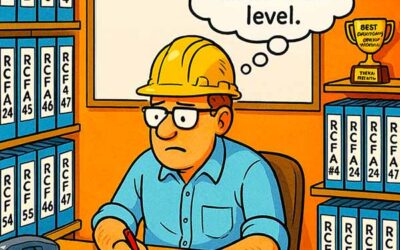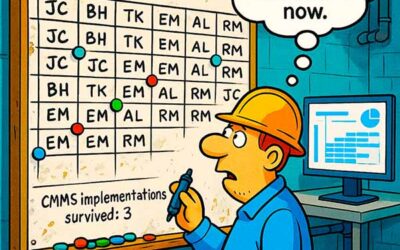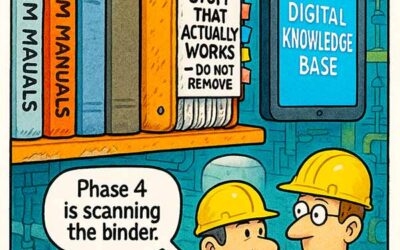

Sooner or later, a plant has to confront how to capture tribal knowledge in maintenance, and it often becomes urgent when a veteran technician hands in a retirement notice. Decades of hard-won judgment about how a specific machine behaves, what a certain noise means, and which steps in a procedure actually matter are suddenly on a countdown.
The data in the system rarely tells that story on its own. What it stores is history, while the person carries the interpretation that makes the history mean something. A plant that loses the interpreter keeps the records and loses the meaning.
The tension is real between the analytics a reliability program runs on and the experience that lives on the floor. An FMEA can rank failure modes and a statistical model can fit a failure-time distribution, but neither automatically captures local operating context, such as a pump that runs hotter every summer because of its location and duty.
Bringing those two forms of knowledge together is what separates a program that looks rigorous from one that holds up in the plant. Data and experience each reveal things the other can miss, and strong programs treat both as evidence that still has to be checked against the asset and its operating context.
How to Capture Tribal Knowledge in Maintenance Before People Leave
The starting point is admitting that most of this knowledge was never written down, because it never needed to be. The people who hold it solve problems by instinct built over years, and instinct resists documentation. Capturing it takes a deliberate effort to slow experts down and ask them to explain what feels obvious to them. The hardest part is that experts often cannot say what they know until a specific problem pulls it out of them.
Interviews are a direct method, and they often work best when structured questions are combined with concrete repair stories. Asking a technician to walk through several difficult repairs on a critical asset can surface reasoning, decision points, and warning signs a checklist would miss. The record of that thinking becomes maintenance documentation the rest of the team can learn from. A well-told repair story can also make the reasoning easier to remember than a dry list of steps.
The knowledge worth capturing is usually the knowledge an expert has stopped noticing they use.
Timing matters more than plants expect. Knowledge captured under the pressure of a looming retirement can be thinner than knowledge gathered during normal work. Plants that do this well begin well before a departure, treating capture as a routine habit rather than an emergency scramble. An expert with time to reflect can usually provide richer detail than one clearing out a locker.
Structure keeps the effort from wandering. Focusing first on critical assets and the failure modes with the greatest consequence or recurring burden aims the work where the payoff is likely to be largest. Trying to capture everything at once can dilute the effort and make the resulting record harder to use.
Why Data Models Need Frontline Experience
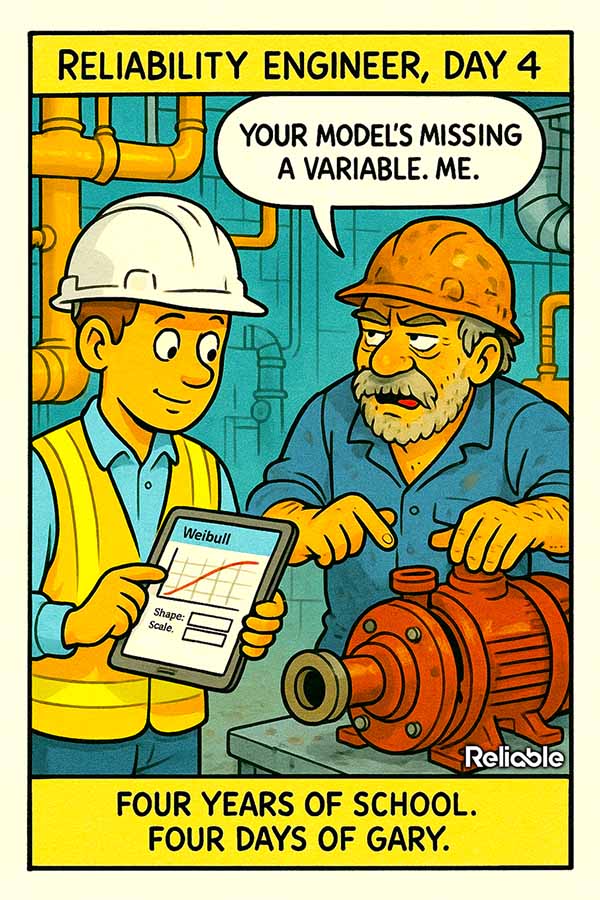
A reliability model is only as good as the assumptions and data behind it, and frontline experience is one place those assumptions get tested. A new reliability engineer with a clean tablet can produce an elegant analysis that quietly misses a variable everyone on the crew already knows about. The math can be sound while the premise is incomplete, and conversations on the floor can help catch that.
This is where a newer engineer can earn credibility. Sitting with the people who run and fix the equipment before presenting conclusions can expose assumptions, add missing context, and improve trust in the analysis. The experience on the floor is a form of evidence the system may never have captured, and a strong reliability engineer learns to collect and test it. Time spent walking the plant and asking questions often pays back in analyses that hold up better under scrutiny.
- Context the data lacks, like operating conditions that shift with the season or the shift.
- Failure precursors or operating context that experienced hands may recognize before a configured sensor alarm is triggered.
- Workarounds and quirks specific to one machine that no generic procedure records.
- A reality check on assumptions that look clean on paper but break down in the field.
The exchange runs both ways. The engineer gains context, and the technician sees their experience taken seriously and turned into something the whole plant can use. That participation can strengthen adoption because the people doing the work can see where their knowledge changed the procedure, analysis, or decision.
Newer engineers can be tempted to prove the analysis on its own merits. In practice, a model that has been challenged against operating reality and reviewed with the crew is usually easier to trust than one defended alone in a meeting room.
Turning Experience Into Something the System Can Hold
Captured knowledge has value only if it lands somewhere people will actually find it. A binder of interview notes on a shelf has limited value, so the real work is embedding what was learned into the tools and routines crews already use every day. The measure of success is whether a technician can benefit from the knowledge without hunting for it.
Procedures are a natural home for much of it. A revised job plan that includes the warning signs a veteran watched for, or the sequence that avoids a known problem, carries the knowledge forward without asking anyone to read a separate report, and the expert’s human judgment gets encoded into the routine. The procedure should also distinguish proven requirements from personal preference so unsafe or obsolete workarounds are not institutionalized.
Knowledge that lives only in a document nobody opens has been archived rather than captured.
Failure histories and asset notes in the maintenance system are another anchor. Tagging a recurring issue with the context an expert provided turns a bare work order into a lesson the next technician can act on without starting from scratch. History becomes searchable, and repeated problems stop hiding in plain sight.
The best encoding is nearly invisible in daily use. When the knowledge shows up as a better procedure, a more meaningful alert, or clearer asset and failure-mode context, people benefit from it without ever realizing it came from a colleague who retired two years ago. The knowledge keeps working long after the person who held it has moved on.
Building Capture Into Everyday Work
A one-time knowledge drive fades about as fast as the enthusiasm behind it. Lasting capture comes from small habits woven into normal maintenance, so the record grows a little with every difficult job the crew works through. Consistency beats intensity when the goal is a history that outlasts any single push.
Post-job debriefs are a strong engine for this. A five-minute conversation after a tough repair, captured in a few structured notes, can accumulate into a useful history over a year without becoming a separate project competing for time. The best capture rides along with work that was going to happen anyway.
- Short debriefs after significant repairs, recorded where the next technician will look.
- Mentoring pairings that move judgment from veterans to newer hands during real work.
- Simple prompts in the work order to note what was learned, not only what was done.
- Periodic reviews that fold verified lessons into procedures, job plans, and asset or failure-mode records.
Mentoring deserves particular emphasis because some knowledge transfers best in person. Watching an expert diagnose a fault, and asking why at each step, can convey context that a written interview may not fully capture on its own. Some lessons are easier to understand when the fault and the evidence are visible in real time.
Leaders set the tone for all of this. When a manager asks what a repair taught the team, and records the answer, capture becomes a normal expectation on the floor rather than an optional extra nobody has time for.
Making Tribal Knowledge a Reliability Asset
Handled well, captured experience stops being a liability tied only to individuals and becomes an asset available to the plant. The knowledge that once left with every retirement can instead strengthen procedures, analyses, and training over time.
This changes how a plant weathers turnover. A departure still hurts, yet the plant can retain more of the reasoning that made the person valuable, and a new hire can climb the learning curve faster because proven lessons are recorded and searchable.
A plant that captures experience consistently can turn more retirements into deliberate knowledge transfers instead of quiet losses.
The payoff reaches the reliability program directly. Models informed by frontline reality can make better predictions, failure-mode assessments can better reflect how assets actually behave, and the analysis is more likely to match the plant that people on the floor recognize.
The effort required is real, but it can be modest compared with repeatedly relearning the same lessons. Capturing tribal knowledge helps a plant avoid paying that tuition again with every wave of departures.