

Introduction: When Success Becomes Its Own Worst Enemy
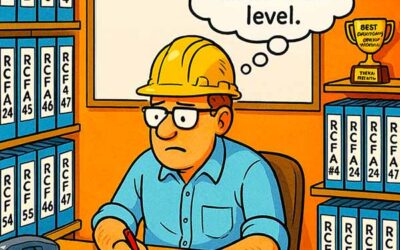
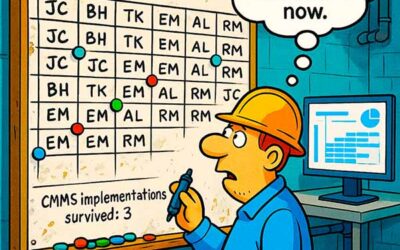
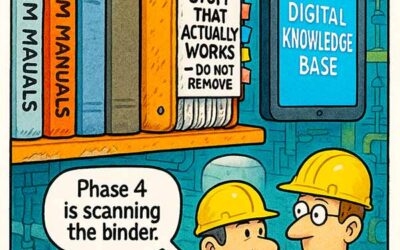
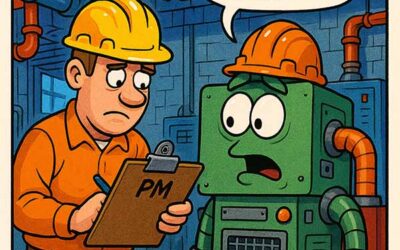
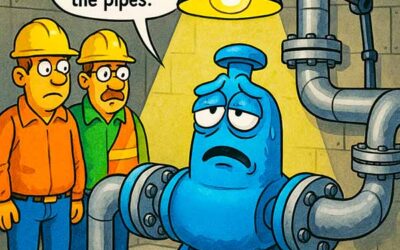
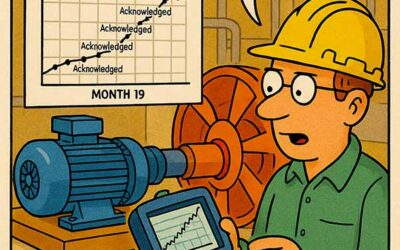
When equipment runs flawlessly, management starts to forget what failure feels like. Preventive maintenance teams often face this paradox—their success breeds skepticism. The cartoon nails the irony: after implementing a solid preventive maintenance program, the machine performs flawlessly, and management begins to ask, “Do we even need maintenance anymore?”
This mindset is dangerous but common. Reliability professionals know that the moment leadership begins questioning the need for maintenance is the moment the system is most vulnerable. This article examines the benefits of preventive maintenance programs, why their effectiveness often erodes organizational support, and how reliability leaders can sustain investment and belief in proactive care, especially when everything seems to be running fine.
1. Understanding the True Benefits of Preventive Maintenance Programs
The benefits of preventive maintenance programs extend well beyond avoiding downtime. They transform reactive operations into stable, predictable systems. Equipment that used to fail randomly now behaves consistently. Operators stop firefighting and start optimizing.
Key benefits include:
- Reduced unplanned downtime: By addressing wear and degradation early, catastrophic failures are prevented.
- Extended equipment life: Proper lubrication, alignment, and inspections delay obsolescence.
- Improved product quality: Stable machines produce consistent outputs, reducing defects and rework.
- Increased safety: Fewer emergency repairs mean fewer hazards, especially in high-risk environments.
- Cost efficiency: Planned work is always cheaper than emergency work, both in labor and materials.
Preventive maintenance introduces reliability as a habit. Inspections reveal subtle shifts before they become system-level problems. Energy consumption decreases as mechanical efficiency improves. It’s not just about fewer breakdowns; it’s about creating an environment where the unexpected becomes rare and controllable.
2. Why Preventive Maintenance Success Creates Its Own Skeptics
Paradoxically, the better a maintenance program performs, the more invisible its value becomes. When equipment stops failing, management sees stability but forgets the disciplined actions that sustain it.
This is where the benefits of preventive maintenance programs collide with corporate short-termism. Executives, pressured by cost targets, may see the program’s success as justification to reduce funding or shift resources. “We haven’t had a failure in years, why keep spending?” they argue.
In truth, preventive maintenance is like an immune system. You don’t cancel your health plan just because you haven’t been sick. The moment you stop the healthy habits—regular lubrication, vibration checks, oil analysis, inspections- the decay begins silently. By the time symptoms appear, it’s too late for cheap fixes.
The lesson: maintenance success must be communicated constantly. If you don’t show the value, leadership assumes there isn’t any.
3. Making the Business Case: Turning Reliability into ROI
The most effective reliability leaders translate technical wins into financial outcomes. Instead of talking about fewer failures, they talk about cost avoidance, productivity gains, and asset ROI.
The benefits of preventive maintenance programs are measurable, but only if you track them deliberately. Start with metrics like:
- Mean Time Between Failures (MTBF) and Mean Time To Repair (MTTR) improvements.
- Reduction in emergency work orders and overtime hours.
- Inventory optimization from predictable part usage.
- Increased OEE (Overall Equipment Effectiveness) through uptime and performance stability.
For example, if a $40,000 gearbox lasts 12 years instead of 8 due to consistent lubrication and temperature management, that’s not maintenance cost, that’s capital efficiency. Similarly, every avoided unplanned shutdown translates to thousands in prevented production loss.
To sustain executive support, reliability teams must use financial storytelling: tie technical data to profit protection. Speak their language, cash flow, ROI, and risk mitigation, not just “uptime” and “PM completion rates.”
4. Sustaining Organizational Buy-In for Preventive Maintenance
Even the strongest program will erode if leadership or culture loses faith in it. Preventive maintenance is not self-sustaining; it’s a discipline that must be nurtured, reinforced, and visible.
Strategies to preserve commitment include:
- Visualize success: Use dashboards to show reliability KPIs improving over time. Graphs showing uptime, cost avoidance, and production stability make abstract benefits tangible.
- Integrate operators: Engage them in basic autonomous maintenance: cleaning, lubricating, and inspecting their equipment. This builds ownership and pride.
- Tell the story of avoided failures: Every saved bearing or pump replacement prevented by early detection deserves recognition. These stories remind management that silence equals success.
- Benchmark performance: Compare pre- and post-program data quarterly to quantify gains in reliability and safety.
- Educate continuously: Rotate maintenance and reliability wins into staff meetings, newsletters, and training sessions.
When people stop seeing failures, they assume the system doesn’t need attention. The best leaders combat that by making reliability visible through metrics, culture, and recognition.
5. Building a Culture of Reliability Beyond the Program
The final stage of maturity is cultural. The benefits of preventive maintenance programs last only as long as the culture supports them. True reliability cultures treat maintenance not as a department but as a shared mindset across operations, engineering, and leadership.
Preventive maintenance should align directly with business goals:
- Safety – because fewer emergency interventions mean lower risk.
- Quality – because controlled systems yield consistent outputs.
- Profitability – because reliability stabilizes throughput and margins.
When preventive maintenance becomes routine, like brushing your teeth, it stops feeling like overhead and starts feeling like professionalism. Plants that reach this stage rarely revert. The culture enforces discipline even when budgets tighten or leadership changes.
Conclusion: Reliability Is Earned Daily
Preventive maintenance is the quiet hero of industrial performance. When it’s done right, everything looks effortless, and that’s the trap. Success makes reliability invisible, and invisibility invites neglect.
The cartoon captures this irony perfectly. Maintenance teams finally achieve operational stability, only to have leadership question their purpose. But the truth is clear: the benefits of preventive maintenance programs compound only when the discipline is sustained.
Reliability is not an event; it’s a behavior. The moment you stop practicing it, entropy returns. Maintenance isn’t a cost to eliminate; it’s the investment that keeps every other investment productive.