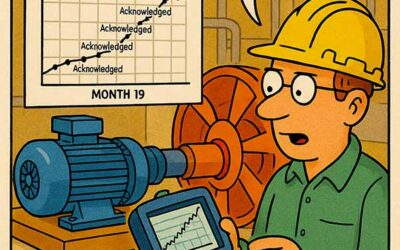


In reliability management, few mistakes are as damaging as declaring that every asset is critical. While it may sound safe, treating all assets equally makes it impossible to set clear priorities. Without an asset criticality assessment, maintenance teams drown in noise, wasting scarce resources and leaving real risks unchecked. Equal priority quickly becomes zero priority.
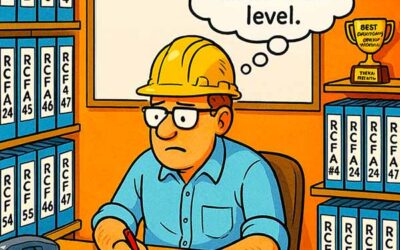
This cartoon captures the absurdity perfectly: a manager proudly shows a chart claiming 100% of assets are critical, believing the problem is solved. In reality, the problem just began. Let’s explore why asset criticality assessment is indispensable for reliability-driven organizations.
Why Asset Criticality Assessment Is Essential
An asset criticality assessment is a structured process that ranks equipment based on its impact on safety, the environment, production, and cost. The logic is straightforward: not every pump, motor, or conveyor is equally essential. Some failures stop production lines, while others are inconvenient but tolerable.
By identifying high-risk assets, teams can:
- Focus predictive and preventive maintenance where it matters most.
- Improve budget allocation for spares and repairs.
- Build smarter inspection intervals.
- Communicate priorities clearly across operations, finance, and leadership.
Skipping this step creates chaos. Instead of data-driven reliability, plants operate on guesswork, firefighting, and overextended crews.
Example: Imagine a plant with 3,000 assets. Without an asset criticality assessment, every motor receives the same preventive maintenance schedule. In practice, only 300 of those motors are production stoppers. The other 2,700 consume technician time that could have been invested in the high-impact group; the result: wasted labor, wasted spares, and hidden risk exposure.
Common Mistakes When Skipping Criticality Assessment
When organizations avoid a proper asset criticality assessment, predictable problems emerge:
- Everything gets treated the same, which really means nothing gets prioritized.
- Over-maintenance of low-impact assets while critical machines run to failure.
- Budget spread too thin, leading to frequent stockouts and emergency orders.
- Ineffective root cause analysis, because high-risk events aren’t distinguished from low-impact ones.
- Leadership frustration, as KPIs fail to improve despite increased spending.
Another consequence is cultural. When technicians see resources spent evenly across trivial and mission-critical equipment, they lose trust in the system. Reliability becomes an academic exercise rather than a genuine business driver.
Case Insight: A large chemical manufacturer once declared “all pumps critical” to simplify decision-making. Within a year, the storeroom had ballooned with unnecessary spares, but when a truly critical pump failed, the needed spare part was unavailable. Millions were lost in downtime. The lesson was painful but clear: equal treatment equals blind risk.
Steps to Perform a Strong Asset Criticality Assessment
A proper asset criticality assessment doesn’t have to be overwhelming. A structured approach includes:
- Define criteria – safety, environmental impact, production loss, repair cost, and regulatory compliance.
- Score assets – assign values (e.g., 1–5) for each criterion.
- Weight categories – align with business goals; for example, safety may carry a higher weight than cost.
- Rank results – generate a criticality matrix that separates assets into high, medium, and low categories.
- Link to strategy – connect rankings directly to maintenance plans, spare parts stocking, and inspection intervals.
This process transforms decision-making. Instead of firefighting, you direct effort where it pays back most, protecting uptime, safety, and financial health.
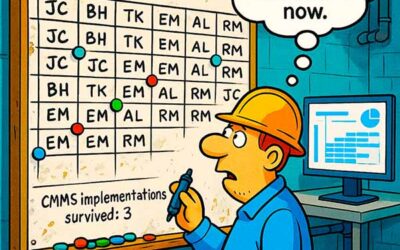
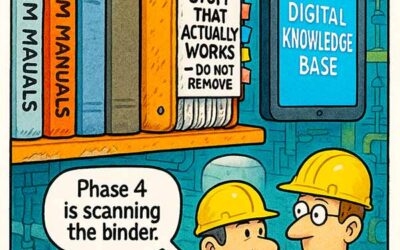
Pro Tip: Don’t let the assessment sit in a binder. Integrate it into your CMMS or asset management system. That way, every work order, spare part request, and planning session reflects the criticality ranking.
The Payoff: Reliability, Uptime, and Smarter Investment
The value of asset criticality assessment shows up across the organization:
- Maintenance efficiency: technicians spend less time on low-value tasks and more on the assets that drive performance.
- Budget optimization: procurement knows which spares must be stocked and which can be ordered as needed.
- Improved uptime: critical assets receive predictive technologies, while non-critical ones rely on simpler maintenance strategies.
- Stronger communication: leadership sees clear risk-based justification for maintenance spending.
Organizations that embrace asset criticality assessment often see double-digit gains in uptime, leaner storerooms, and fewer surprise outages. More importantly, they gain trust from operators, finance, and executives who finally see maintenance aligned with real business risk.
Speculative Outlook: As AI and IoT sensors proliferate, asset criticality assessment will continue to grow in importance. Predictive analytics requires a hierarchy to function effectively. Without ranking, algorithms flood teams with alerts. With ranking, those alerts align with strategy, turning data into actionable reliability.
Final Thought
Declaring that everything is critical may feel safe, but it’s actually dangerous. Reliability leaders know that focus is everything. Without a proper asset criticality assessment, maintenance programs stumble into inefficiency, waste, and hidden risk. By ranking assets and aligning maintenance strategies with business impact, organizations escape the trap of equal priority and achieve meaningful reliability gains.