The New Reality of Reliability in Thermal Power Generation Systems
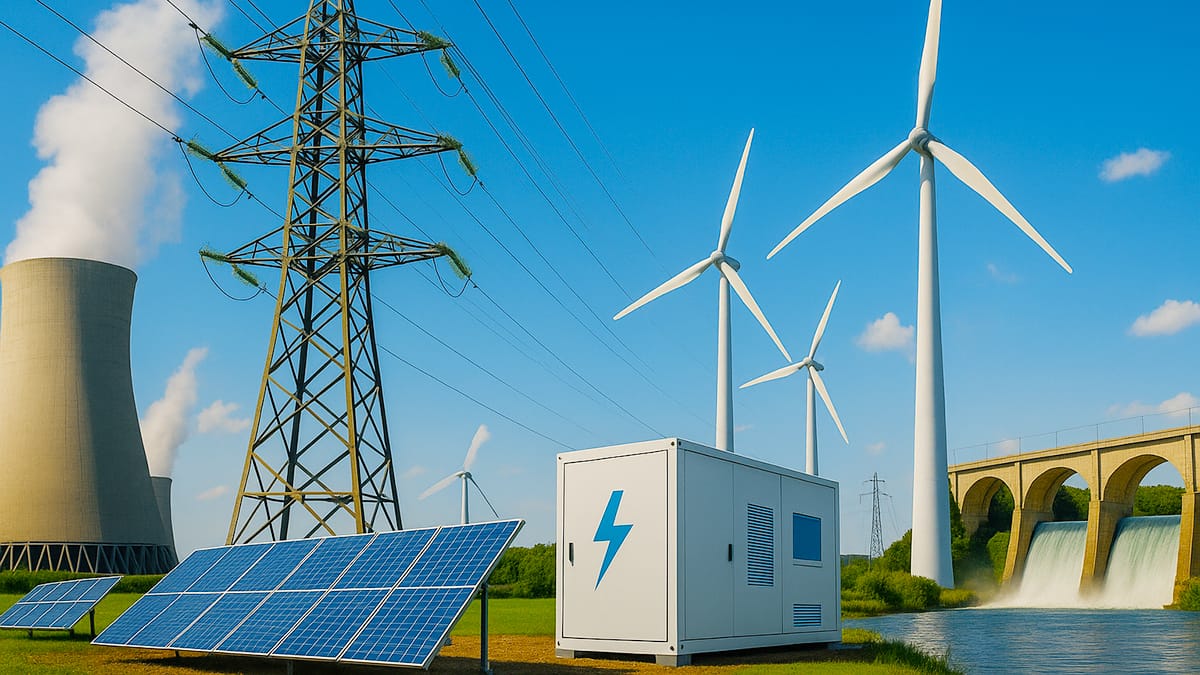
Over the past three decades, the utility-scale generation mix has shifted dramatically, from a landscape dominated by steady baseload coal and nuclear units toward fleets of flexible gas turbines and, more recently, inverter-based renewables. This evolution has profoundly increased the frequency of start-stop cycling for thermal power plants.
Coal and nuclear stations built for continuous operation have been forced into load-following roles, and gas-fired plants often now cycle daily to balance variable wind and solar. This article reviews the progression in three eras (pre-deregulation, post-deregulation with gas expansion, and the renewables era) and examines how each stage altered the operating patterns of coal, nuclear, and gas units in the U.S. and Europe.
We also discuss the consequences of intensified cycling on equipment performance and reliability, including increased wear-and-tear, higher maintenance costs, and new failure mechanisms. The trends reflect industry findings such as those of Joswig et al. (2015), underscoring that modern grid requirements demand unprecedented flexibility from thermal generators.
Pre-Deregulation Era (1996 and Earlier)
In the decades leading up to the mid-1990s, most electric power systems operated under regulated, vertically-integrated utilities. Generation was scheduled to meet predictable demand patterns, and large coal-fired and nuclear power plants provided the bulk of energy as baseload units.
These stations were designed to run continuously at high capacity factors, with shutdowns typically only for maintenance or refueling. Unplanned start-stop cycles were infrequent. In fact, a typical coal unit of that era might only undergo on the order of ten or fewer start-ups per year.
Nuclear plants, with even less flexibility, often ran at full output for 18-24 months straight before refueling outages, meaning perhaps one start/stop cycle in a year or more. The prevailing operational strategy was to avoid thermal cycling stresses altogether by keeping these units online and at a stable load around the clock.
Before deregulation, load following and peaking needs were handled by more agile resources such as gas- or oil-fired combustion turbines and hydroelectric plants. These peaking units could start faster but were comparatively expensive to run, so they were used sparingly during daily peak hours or emergencies.
Overall, the grid of the pre-1996 era had clear delineations: coal and nuclear shouldered steady output, while a small portion of fast-reacting generators handled demand swings. This meant minimal cycling duty for the large thermal fleet. The implicit assumption in power planning was that nuclear would always serve as a steady baseload, and gas turbines (along with hydro) would provide flexibility for fluctuations.
Coal plants fell somewhere in between—capable of some load adjustments, but generally not expected to shut down daily or even weekly.
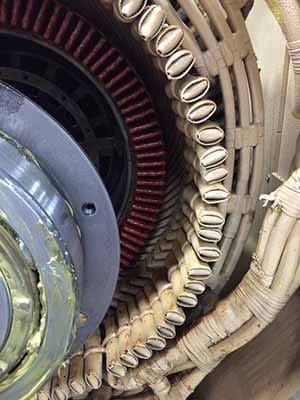
This paradigm kept mechanical and thermal stress on baseload plant equipment relatively low. Thick-walled components in boilers and steam turbines were rarely cooled and reheated, avoiding the fatigue damage that frequent temperature cycling can induce. Generator rotors and stators operated at steady-state temperatures for long stretches.
In short, the pre-deregulation operating mode prioritized reliability and efficiency through continuous operation, and the start-stop cycle count for a baseload coal unit was a small fraction of what it would later become. However, this would soon change with shifts in policy and technology that began in the late 1990s.
Post-Deregulation & Gas Expansion (late 1990s–2000s)
The late 1990s ushered in electricity market reforms in many regions (e.g., the U.S., UK, and parts of Europe) that fundamentally changed how power plants were dispatched. Deregulation and competitive wholesale markets meant generators now responded to price signals rather than centrally planned schedules.
At the same time, advancements in combustion turbine technology and ample fuel supply led to a boom in natural gas-fired generation. Combined-cycle gas turbine (CCGT) plants with high efficiency and moderate startup times became the new workhorses of many systems. This “dash for gas” was especially pronounced in the UK, where roughly 20 GW of gas capacity was built in the 1990s–early 2000s, catapulting gas from near-zero to about 40% of electricity supply by 1999 (while coal generation fell by over 60% in that period).
In the United States, independent power producers similarly added dozens of CCGT plants by the early 2000s, and by the end of the decade, natural gas was challenging coal as the dominant generation source.
Gas turbines brought a level of flexibility that allowed more frequent cycling of the thermal fleet. Unlike massive coal boilers that require many hours to heat up, an open-cycle gas turbine can reach full output in 10–15 minutes, and a combined-cycle plant can start and ramp to load in a matter of hours or less.
This enabled new operating patterns: for example, shutting down gas-fired units overnight when demand (and market prices) was low, then restarting in the morning peak. Coal plants, which previously might run all night at reduced load, increasingly faced full shutdown on weekends or off-peak days if market economics favored cheaper gas or if demand dipped.
In industry terms, “two-shifting” (daily startup and shutdown) became more common for coal units in competitive markets. Some coal stations began to operate on an intermediate basis—online during high-demand weekdays and offline at night or on Sundays—resulting in dozens of starts per year instead of only a handful under the old regime.
During the 2000s, overall capacity factors for coal fleets declined in regions with significant gas expansion. For instance, U.S. coal plant capacity factors, which had been consistently high in the 1980s and 90s, started dropping as gas generation picked up. Owners of coal plants, facing lower utilization, cycled units on and off to avoid operating at uneconomic times.
Nuclear plants, on the other hand, generally remained on baseload duty due to their low marginal costs and operational constraints; in deregulated markets, they were seldom turned off outside of refueling outages. One exception was in parts of Europe (notably France), where the nuclear fleet was so large a share of generation that the operator developed techniques for load-following with nuclear. Even there, nuclear cycling was limited to modulating output rather than frequent shutdowns, given the reactor physics and fuel management challenges.
The gas expansion era thus saw coal and gas roles flip in flexibility: gas CCGTs took on more intermediate and peaking roles, often cycling daily, while coal units had to adapt to more starts/stops or risk being edged out. By the late 2000s, many coal plants worldwide were cycling more than their original designers anticipated.
A typical large coal unit might have experienced perhaps 20–50 start-stop cycles annually in this period (depending on region and market conditions), compared to near continuous operation in earlier decades. Each start-up and shutdown introduced thermal transients that incrementally aged the equipment. Still, the extent of cycling in the 2000s remained modest compared to what was on the horizon with the rapid growth of wind and solar generation in the next decade.
Renewables Era (2010s–Present)
The 2010s brought a surge of inverter-based renewable capacity, especially wind and solar photovoltaic (PV), onto grids in the U.S. and Europe. These resources are variable and weather-dependent, with near-zero operating costs, which means they displace conventional generation whenever available.
The net effect has been a profound increase in the variability of net load that must be met by traditional thermal plants. Thermal generators now not only cycle in response to daily demand patterns but also to the swings of renewable output. This era has dramatically accelerated the start-stop cycling of coal and gas plants, while further diminishing the role of inflexible baseload operation.
Coal-Fired Plants
In regions with high renewable penetration, coal plants have largely shifted from baseload to seasonal or load-following duty. Many coal units that remain operational are cycled on and off to balance multi-day wind patterns or daily solar peaks. For example, in parts of the U.S. Midwest and Plains (Kansas, Oklahoma, Iowa, etc.), wind generation growth in the 2010s caused coal plants to cycle far more frequently.
By 2018 U.S. coal fleet capacity factors averaged just 54%, down from 74% in 2008, indicating much more idle time and startups. States with especially large wind fleets saw dramatic changes, with coal units offline during windy periods and running at minimum loads or turned off overnight.
In Europe, Germany’s Energiewende provides a striking illustration: at times, the combined fluctuations of wind and solar require conventional generation to adjust by tens of gigawatts within hours. German coal stations that once ran steadily are now forced to ramp output down to as low as 20% of capacity and even shut down when renewable output surges.
Some have demonstrated ramping capabilities of 3–5% of full load per minute to accommodate fast-changing net load. This depth of turndown and ramp-rate flexibility was rarely needed in the past. Ultimately, many older coal plants found frequent cycling unsustainable economically and technologically—leading to a wave of accelerated coal retirements in the 2010s. Those that remain in service are often retrofitted and operated more like peaking units than baseload plants.
Gas-Fired Plants
Natural gas combined-cycle and combustion turbine plants have become the go-to flexible resources in the renewables era. Their role expanded from intermediate load in the 2000s to balancing the intra-day swings caused by solar and the sudden ramps caused by wind speed changes.
Modern combined-cycle plants are now engineered for rapid startup (some “fast start” CCGTs can reach full load in 30 minutes) and frequent cycling, even multiple starts per day. For instance, Siemens introduced “Flex-Plant” CCGTs capable of daily on-off cycling with minimal maintenance penalty, and one large H-class plant in Germany has been routinely started each morning and shut off at night since 2012.
In California and parts of Europe, the midday solar output causes net load to plunge in the late morning and then steeply rise in the late afternoon (the famous “duck curve”). To manage this, gas plants often shut down or drop to very low output during the solar peak hours and then rapidly ramp up in the evening.
The result can be two start-stop cycles in a single day for some units. Across many markets, it is now common for combined-cycle gas stations to see on the order of hundreds of starts per year. An analysis of a Texas grid-balancing gas plant in 2013, for example, recorded nine starts in six days – a pace that extrapolates to about 500 starts annually.
While that is an extreme case, it underscores the new normal: gas units designed in earlier decades for weekly cycling are now expected to handle daily or even more frequent cycling as the primary buffers for renewable variability.
Nuclear Plants
Nuclear power, where it remains, is generally still operated as close to full output as possible, given its high capital cost and low fuel cost. In the U.S., nuclear units in competitive markets have maintained near 90% capacity factors by running at steady output and ceding flexibility duty to gas plants.
However, in countries like France (and formerly Germany, prior to its nuclear phase-out), nuclear plants have been used for limited load-following to manage variability. French PWR reactors are designed with some flexibility; they can reduce power to follow daily demand troughs and ramps, albeit within constraints.
Still, nuclear cycling remains relatively infrequent compared to coal or gas. The renewables era has not seen nuclear units doing daily on-off cycling – instead, if oversupply occurs, grid operators typically curtail renewable output first or adjust exports, resorting to nuclear output reduction only when absolutely necessary.
One notable trend in Europe is that the need for flexible response has sometimes exceeded what the nuclear fleet can offer, reinforcing reliance on gas and remaining coal plants to perform the cycling. Overall, nuclear’s role in this era highlights the contrast: while these units mostly stay in baseload mode, the system around them has evolved to be far more dynamic and variable.
Crucially, the growth of renewables has blurred the once-clear division between “baseload” and “peaking” plants. Many coal and CCGT plants now operate as fluctuating resources rather than steady suppliers. A 2015 industry analysis noted that the balance between base load and cycling generation was shifting dramatically in high-renewable systems.
For instance, using California as an example, it showed that the minimum continuous generation (the “steady baseload” level) on the system shrank by about 6 GW from 2013 to a projected 2020 scenario, meaning 6 GW of capacity that formerly ran constantly would need to operate in a flexible, on/off mode instead.
In other words, a portion of plants that were once baseload had to convert to cycling duty to integrate renewables. This trend has been observed across multiple markets: the steady demand for thermal generators is eroding, and the remaining demand must be met by units that can ramp and cycle at a moment’s notice.
Consequences of Increased Cycling on Performance and Reliability
Running coal, gas, and even nuclear plants in a start-stop or load-following mode introduces significant engineering and maintenance challenges. Thermal power plants are complex systems designed originally with an expectation of relatively stable operation. When that mode is replaced by frequent cycling, several adverse effects on equipment and performance emerge:
Thermal Stress and Fatigue: Each startup and shutdown subjects components like boiler tubing, steam headers, turbine rotors, casings, and thick piping to large temperature swings. Metals expand and contract, inducing cyclic thermal stresses. Over time, this causes creep-fatigue damage such as cracking in high-temperature sections and welds. The National Renewable Energy Laboratory has noted that every time a unit is heated and cooled, critical components experience “unavoidably large thermal and pressure stresses,” and while damage may not be immediately obvious, repeated cycling will eventually lead to increased failure rates. In effect, cycling consumes a portion of the plant’s useful life each time; one study equated a single large thermal cycle to several hours’ worth of normal steady operation in terms of wear-and-tear on materials.
Increased Forced Outages and Maintenance: Greater strain on components translates to more unexpected equipment failures and the need for repairs. Industry data has shown a correlation between higher number of starts per year and rising forced outage rates for thermal units. As one example, analysis of U.S. coal plants over decades found that as annual start counts went up, so did equivalent forced outage rate (EFOR), reflecting deteriorating reliability. Plant owners are forced to perform more frequent inspections, component replacements, and overhaul activities to keep cycling units safe and online. Boiler tube leaks, turbine blade failures, and generator electrical faults can all become more common. These maintenance costs add up: a coal plant that cycles heavily can incur millions of dollars per year in additional O&M expenses and shortened component life. Repairs or redesigns that were rarely needed under baseload operation (e.g. replacing cracked superheater headers or repairing turbine rotor steeples) might be required several times over a unit’s life if it transitions to frequent cycling duty.
Efficiency and Emissions Penalty: Cycling operations often force plants to run at less efficient loads or to repeatedly consume fuel during start-ups without producing power. A coal unit, for instance, must burn extra fuel to heat back up each time it is started, effectively incurring a “start-up cost” in fuel and auxiliary power. Likewise, operating at low load (to avoid shutdown) can result in suboptimal combustion and higher heat rates. All of this means higher fuel usage per MWh and increased emissions of CO₂ and other pollutants per unit of electricity generated. Additionally, emission control systems (like SCRs for NOx or scrubbers for SO₂) might not perform as well at low loads or during transients, potentially causing compliance issues. Thus, cycling plants face an economic double-hit: they run fewer hours (lower revenue) but have higher costs and lower efficiency during those hours. This challenge has been noted by operators worldwide—cycling a large coal plant can be so costly that some units opt to stay offline unless absolutely needed, which in turn affects grid resource adequacy.
Mechanical Wear and Transient Forces: Beyond thermal effects, the mechanical systems in generators and turbines suffer from the stop-and-go duty. Large steam turbines have many moving parts (valves, seals, bearings) that experience differential expansion and contraction; frequent start-stop can lead to problems like rotor bowing or vibration issues until the unit stabilizes. In the generator itself, rapid load changes and energization cycles impose electromechanical forces on the stator windings and core. Stator end-windings, which extend beyond the iron core in a generator, are one vulnerable area. They must be firmly braced to withstand electromagnetic forces that surge during synchronization and load swings. Under frequent cycling, end-winding support structures can loosen or suffer insulation degradation. Industry reports have highlighted end-winding blocking and tie failures as a symptom of high cycling duty, as the support materials fatigue over many thermal and load cycles. If not addressed, this can eventually cause insulation failure or even electrical faults in the generator. Other rotating equipment, such as feedwater pumps and fans, also sees more start-stop wear (for example, motor drivers experiencing high inrush currents and thermal stresses on each start).
Grid Reliability Implications: Ironically, while cycling is necessary to integrate renewables, it can introduce reliability concerns of its own. The more often plants are turned on and off, the greater the risk that a unit may fail to start when called upon, or be unavailable due to a forced outage during a critical period. The North American Electric Reliability Corporation (NERC) has warned that in systems with high renewable penetration, conventional resources may need to cycle multiple times per day, but if a plant’s minimum down-time is too long, it might not be able to restart in time for the next peak. In other words, heavy cycling can reduce the effective flexibility if units can’t reliably turn back on. Moreover, increased wear raises the possibility of units tripping offline unexpectedly during operation, which could coincide with periods of high renewable volatility and strain grid stability. Operators have responded by improving maintenance strategies and investing in newer technology (for instance, upgrading older control systems for more graceful startups, or installing monitoring equipment to predict failures). Nonetheless, ensuring that a power system remains reliable with a heavily-cycled thermal fleet is an ongoing challenge. It has prompted calls for market mechanisms to compensate flexible resources for the hidden costs of cycling, and for revised operating procedures to manage the “cycling fatigue” of the dispatchable fleet.
In summary, the wear-and-tear from increased cycling is now a major factor in thermal plant operation and economics. As Joswig, Steins, & Weidner (2015) noted, modern turbine generators are being pushed into new flexible operating regimes far beyond their original design intent, necessitating design considerations like stronger end-winding bracing and updated operational standards.
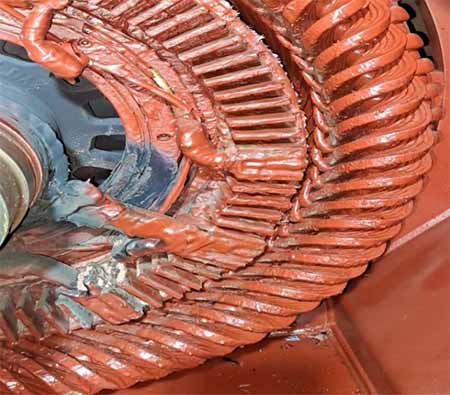
The end-windings issue is just one example among many: from boiler thermal cycles to turbine stress and generator vibration, every part of a plant feels the impact of stop-start operation. The industry has responded with various strategies (e.g. modified startup procedures, equipment retrofits, online monitoring, and adjusted maintenance intervals) to mitigate damage. Plant engineers and asset managers must weigh the costs: more frequent overhauls and component replacements versus the revenue gained by keeping a unit available for cycling duty.
Conclusion
Since 1996, utility-scale power generation has undergone a transformation that fundamentally altered how thermal power plants are operated. In the pre-deregulation era, coal and nuclear units set the pace with steady, around-the-clock generation and minimal cycling, while gas turbines filled peak gaps.
The introduction of competitive markets in the late 1990s and the rapid expansion of efficient gas-fired capacity made flexibility a prized attribute; gas plants routinely cycled on/off to follow load, and coal plants began to operate more intermittently than before. Entering the 2010s, the rise of wind and solar – inverter-based resources with variable output – pushed the need for flexibility to unprecedented levels.
To maintain supply-demand balance, many thermal units that were once considered baseload now perform like nimble balancing assets, ramping down and starting up in response to renewable availability. The number of start-stop cycles for a given plant today can be an order of magnitude higher than in the 1990s.
This evolution has not been without consequences. Increased cycling duty accelerates equipment wear, erodes reliability, and adds financial and technical burdens to plant operation. Issues such as thermal fatigue, higher forced outage rates, reduced efficiency, and specific component failures (like generator end-winding deterioration and boiler tube cracks) are direct results of forcing traditionally steady-state machines into a flexible operating mode.
Both in the U.S. and Europe, the trend is similar – from the coal units in Germany throttling back to accommodate wind, to gas turbines in Texas and California firing up on a daily basis to meet solar-driven ramping needs, the legacy thermal fleet has become the safety net for a renewables-heavy grid, at a tangible cost to its longevity.
Moving forward, the power industry is actively seeking ways to reconcile this conflict between efficiency, longevity, and flexibility. Some new combined-cycle plants are explicitly designed for frequent fast starts, and operational practices are being refined (for example, keeping turbines warm while offline to reduce thermal shock on restart).
Energy storage deployment is also accelerating, which may in time absorb some of the variability and reduce the most punishing cycling requirements on thermal plants. Nonetheless, for the foreseeable future, coal and gas generators will continue to experience elevated cycling as more renewables come online.
As this article has outlined, the period from 1996 to present has been one of continuous adaptation for thermal generation assets – an adaptation from being the steady backbone of the electric supply to becoming the flexible swing providers that maintain grid stability in the renewable age.
The experience and data from the past thirty years, echoed by studies like Joswig et al. (2015) and others, make one lesson clear: operational flexibility comes at a cost. Asset owners, system operators, and regulators will need to account for that cost, whether through improved plant designs, adjusted market incentives, or smarter grid management.
Understanding the historical trends in start-stop cycling is crucial for informing these decisions. It highlights how far the industry has come in redefining “normal” operation for thermal plants, and underscores the importance of balancing new energy initiatives with the physical realities of the existing generation infrastructure.
Thermal power plants can indeed be turned into highly flexible resources – but as this journey from 1996 to now demonstrates, achieving flexibility while preserving reliability is a complex engineering and economic challenge, one that continues to evolve with our power systems.
References:
A. Joswig, H. Steins, J.R. Weidner. “Impact of new flexible load operation and grid codes on turbine generators with a focus on end windings.” Presented at Power-Gen Europe 2015.
Energy UK. “Closing the coal chapter: how the UK is leading the energy transition.” Report, 30 Sep 2024.Reuters (J. Kemp). “To survive, coal power plants must become more flexible.”
Reuters News, Nov 2013.
Utility Dive (C. Morehouse). “Coal plants increasingly operate as cyclical, load-following power, leading to inefficiencies, costs: NARUC.” Jan 27, 2020.
ABB White Paper. “Designing Generators for Reliability in the Age of Variable Power Generation.” Aug 2016.
Power Engineering (B. Marini). “The Duck Pond: A look at non-renewable generation on grids with a lot of renewable resources.” March 22, 2016.
EPRI Presentation (S. Storm). “Flexible Operations in a Changing World.” 2019.