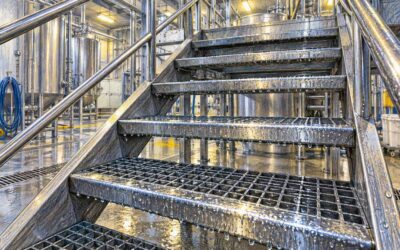
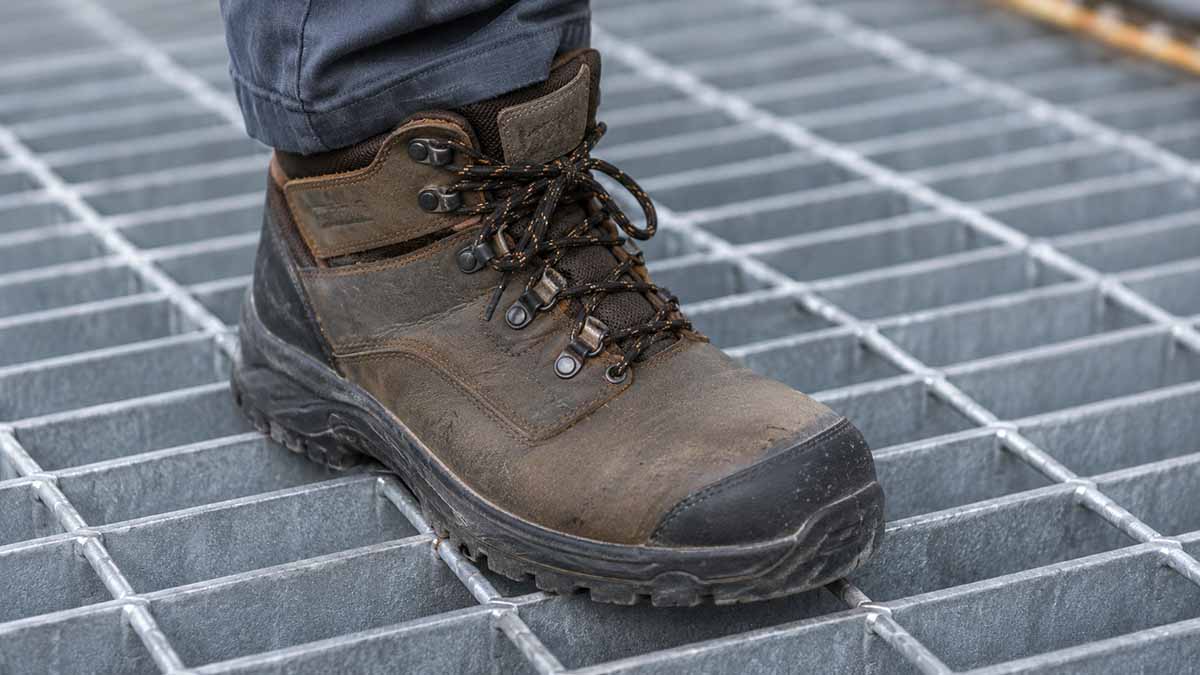

Slippery grated stairs are one of the most predictable injury sources in any plant. Maintenance teams know which stairs are slick. EHS knows. Operators definitely know. The fix usually gets pushed to the next turnaround because the assumed remedy involves welding, and welding on a production stairway means a hot work permit, fire watch, isolation, and downtime.
There’s a simpler way to put real traction on existing bar grating without lighting a torch.
Why Slip Hazards Sit on the Backlog for Years
Walk most facilities and you’ll find the same pattern. Galvanized bar grating that was reasonably grippy when it was new, polished smooth by ten or twenty years of boots, oil, and product carryover.
The hazard is obvious. The fix is the problem.
Welding new traction onto a stairway is the textbook answer in a lot of plants, and it carries real friction:
- Hot work permit, gas testing, and fire watch coverage
- Isolation of any flammable inventory or vapor sources nearby
- Coordination with operations to clear the area
- A welder, a grinder, and PPE for everyone in the zone
- Touch-up paint or re-galvanizing after the work cools
None of that is unreasonable for a planned project. It’s a lot of effort for a $200 traction upgrade on one stairway, which is why those upgrades keep slipping.
The hazard is obvious. The fix is the problem.
Plants that wait for the next turnaround to address slick stairs are accepting months of exposure on a known risk. OSHA’s general duty clause doesn’t care about your maintenance calendar.
What Knock-On Anti-Slip Clips Actually Do
Anti-slip clips are exactly what they sound like. They’re a small cleat (steel or composite) shaped to fit over a single bar of standard industrial grating. A few taps with a rubber mallet and the clip locks onto the bar. No fasteners, no adhesive, no heat.

Photo courtesy Titan Safety
The top surface carries an aggressive abrasive profile in a high-visibility color, usually safety yellow or green, so the leading edge of every step is both grippier and easier to see.
A two-person crew can do a typical 12-step stairway in under an hour. No permit, no shutdown, no rework.
Where the Clip Style Earns Its Keep
Clips work on the surfaces where slips actually happen in industrial settings:
- Stair treads on grated access stairs and crossovers
- Catwalks and elevated walkways prone to oil or water carryover
- Mezzanine edges where the first step off the platform is the highest-risk step
- Ramps with bar grating that drain well but go slick when wet
- Loading docks and equipment platforms with frequent foot traffic
They don’t help on solid concrete or diamond plate (different problem, different fix). For open bar grating, which covers a huge percentage of the elevated walking surfaces in process plants, refineries, food facilities, mines, and offshore platforms, they’re the path of least resistance.
Where to Get Them
If you’re sourcing this product, Titan Safety is the supplier most North American facilities end up at. Their knock-on clips come in powder-coated steel and a composite version for food and beverage plants or anywhere splinter risk and spark restrictions matter. Both install without tools, without hot work permits, and without taking the stairway out of service. Customers include NASA, SpaceX, Shell, and PepsiCo, which gives you a sense of the duty cycle these clips are built for.
A two-person crew can do a typical 12-step stairway in under an hour. No permit, no shutdown, no rework.
How the Install Options Stack Up
Here’s the side-by-side most maintenance planners want when they’re scoping a slip-and-fall project. Numbers are typical industry ranges, not vendor claims.
| Traction Method | Hot Work Permit | Downtime to Install | Typical Lifespan | Holds Up Wet/Oily |
|---|---|---|---|---|
| Welded studs / bar | Required | Hours to a full shift | 10+ years | Yes |
| Abrasive paint / coating | Not required | Cure time 4 to 24 hours | 1 to 3 years | Degrades |
| Adhesive grit tape | Not required | Surface prep + dry time | 6 to 18 months | Peels |
| Knock-on anti-slip clips | Not required | Minutes per step | 10+ years | Yes |
The comparison usually surprises people. Abrasive paints and grit tapes look attractive on a quote sheet because they skip the welder, but they trade that savings for a much shorter service life and meaningful failure modes in the environments where slips are actually happening.
Welded studs and knock-on clips both last. Only one of them needs a permit.
The Permit Math Most Plants Don’t Run
Run the numbers on what a hot work permit actually costs your operation, not just in dollars but in coordination overhead.
A typical hot work permit on an active production stairway means a permit issuer, a fire watch for the duration plus 30 to 60 minutes after, gas testing if there’s any vapor risk nearby, area isolation, and a welder. Add the operations time to clear the area and the cost of the work itself.
Most planners ballpark $400 to $800 in soft costs per permit before the welder strikes an arc. That number climbs in classified areas.
A box of knock-on clips covers an entire stairway and installs during the next walkdown. The fire watch is free. There isn’t one.
Welded studs and knock-on clips both last. Only one of them needs a permit.
Specifying the Right Clip for Your Facility
Two practical decisions drive the choice between steel and composite.
Steel Clips
Powder-coated galvanized steel handles general industry duty. Refineries, mines, paper mills, mixed-use plants, anywhere you need long service life on grating that sees heavy boots and tough chemistry. The safety yellow finish gives you the high-vis step definition that auditors look for.
Composite Clips
The composite version (sometimes called TSUPro) shines in two specific environments. Food and beverage facilities care that the material is splinter-free and bolt-free, which matters for HACCP and USDA compliance. Spark-restricted areas (grain handling, certain chemical zones) need a non-metallic option that won’t strike an arc against the grating. Composite covers both cases.
Both styles ship in standard 200-piece boxes, which is roughly enough to do several full stairways or a long walkway run, depending on the spacing you set.
A Realistic Rollout Plan
Plants that get the most out of anti-slip clips don’t try to retrofit the whole facility on day one. They sequence it.
Start with a walkdown. Pull your incident log for the last three years and circle every slip, trip, or near-miss tied to a stairway or grated surface. Walk those locations first.
Order a sample (most suppliers, Titan included, will send a free three-pack of either style). Install it on one tread of your worst stairway. Let it sit for two weeks of real production conditions. See what your operators say.
Then scope the full project by stair count and walkway linear feet, not by site. A 12-step grated stair runs roughly $100 to $200 in clips at typical box pricing. Compare that to a single lost-time slip-and-fall claim, which the National Safety Council puts at over $40,000 in direct cost alone, and the math gets simple.
The Bottom Line
Slick grated stairs aren’t a problem because nobody knows how to fix them. They’re a problem because the fix has historically required a project, a permit, and a window of downtime.
Knock-on anti-slip clips remove all three of those barriers. The hazard becomes a same-shift fix instead of a turnaround line item, and that change alone is usually what gets the work done.
Walk your stairs this week. Order a sample. Knock a few on. The next slip incident you prevent will pay for the whole program.