
The Real Purpose of Root Cause Analysis Process Improvement
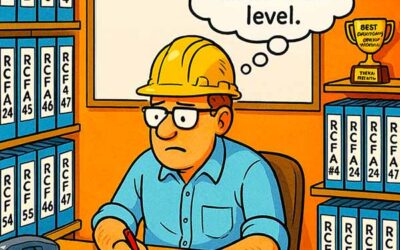
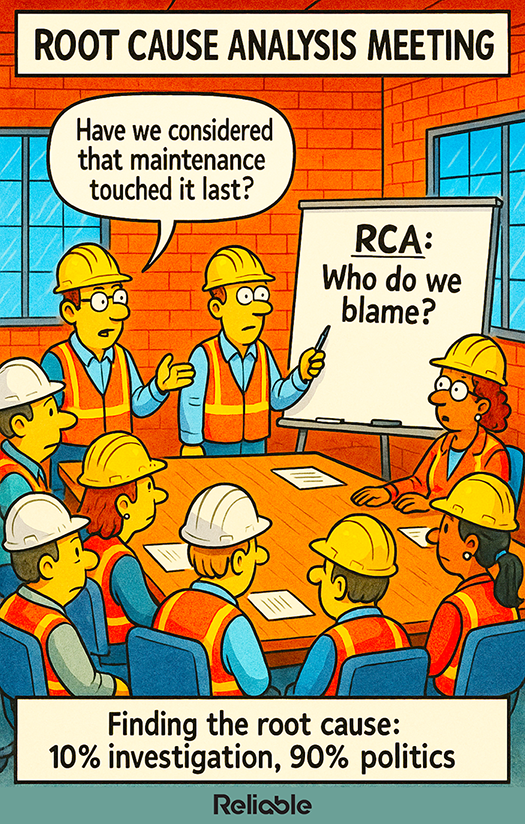
Root Cause Analysis (RCA) is meant to serve as the compass guiding reliability teams toward the truth. But in many maintenance organizations, it’s lost its bearings. Instead of finding systemic causes, RCA meetings often devolve into blame sessions -“Who touched it last?” replaces “Why did this happen?”
When truth becomes uncomfortable, RCA turns from investigation to theater – and reliability pays the price.
The root cause analysis process improvement movement aims to reclaim RCA’s original purpose: structured learning, not political defense. A proper RCA doesn’t protect reputations; it protects assets, budgets, and trust. Yet in plants under production pressure and reactive firefighting, RCA is often treated as an administrative burden rather than a strategic necessity.
The result? Repeat failures, wasted man-hours, and a culture of avoidance. When the investigation process becomes more about documentation than discovery, reliability growth halts.
To fix this, plants need to go beyond methods and tools. They need a cultural and procedural overhaul that restores credibility to the RCA process.
Why RCA Fails: The Politics of Maintenance Truth
Most RCA failures aren’t caused by poor technique; they’re caused by fear. In an environment where truth feels dangerous, evidence disappears, and honesty gets filtered.
A failed root cause analysis process improvement effort usually shares these characteristics:
- The report blames “human error” or “poor maintenance” instead of identifying why the error made sense at the time.
- The same types of failures reappear every few months, labeled differently each time.
- People stop contributing insights because they’ve seen honesty punished before.
- Leadership prioritizes closure over comprehension.
When RCA becomes about speed and optics, the lessons evaporate. Teams “complete” RCAs just to move on, and everyone feels like they’ve done their part, until the same failure returns.
Root cause analysis should never end in punishment. It should end in understanding. If maintenance teams can’t speak openly, no amount of analytics or software will fix the reliability culture.
How to Strengthen RCA Through Process Discipline
Improving the root cause analysis process requires discipline, structure, and transparency. Most organizations already have the framework; they just lack the consistency and courage to apply it.
Here’s how to turn RCA into a genuine improvement engine:
1. Build Psychological Safety Before You Investigate
People won’t share real insights if they fear consequences. Begin every RCA with a clear statement: the goal is to learn, not blame. Separate investigations from disciplinary actions.
2. Standardize the RCA Framework
Use the same steps, templates, and quality thresholds every time. Inconsistent RCAs create inconsistent learning. Standardization also allows better data comparison and long-term analysis of recurring failure patterns.
3. Make Evidence Non-Negotiable
Every conclusion should be tied to data: sensor readings, inspection logs, oil analysis results, work orders, or process histories. Opinions without evidence belong in discussions, not reports.
4. Facilitate Objectively
RCA leaders should not be part of the hierarchy being evaluated. A neutral facilitator can ask uncomfortable questions that insiders won’t. This single change is one of the fastest ways to depoliticize the process.
5. Focus on Systemic Weakness, Not Human Error
Human mistakes are outcomes, not causes. Go deeper: Was the procedure unclear? Was the training incomplete? Was there time pressure or missing information? Root cause analysis process improvement demands that you examine system design, not just technician behavior.
6. Close the Loop with Implementation
No RCA is complete until the corrective actions are verified for effectiveness. Many organizations fail here: documenting findings but never tracking whether changes actually prevent recurrence.
From RCA Fatigue to Reliability Breakthrough
RCA fatigue is real. When teams feel that investigations lead nowhere, they disengage. The solution isn’t to do fewer RCAs; it’s to make each one count.
Plants that successfully implement root cause analysis process improvement report several key shifts:
- Transparency replaces fear. Teams openly share details about near-misses and abnormal conditions.
- Patterns become visible. Aggregated RCA data reveals trends that were invisible when each case was considered in isolation.
- Accountability improves. Leaders base decisions on verified evidence, not opinions or politics.
- Reliability accelerates. Chronic equipment failures decline as corrective actions actually address true root causes.
This transformation doesn’t happen through training alone. It occurs when leadership models curiosity and rewards learning, even when findings are uncomfortable.
The Cultural Payoff of Root Cause Analysis Process Improvement
Every maintenance organization has two cultures running side by side: the official one on posters and the real one people live daily. The second is where reliability lives or dies.
A mature root cause analysis process improvement program directly impacts the real culture. It teaches people that truth is safe, that data matters, and that improvement isn’t optional. Over time, this builds alignment between maintenance, production, and engineering.
When reliability teams realize that honesty drives better design, RCA becomes a task of pride.
When people see that honest reporting leads to smarter design changes, better PM schedules, and fewer weekend callouts, participation rises. RCA shifts from being a burden to being a point of pride.
Ultimately, a robust RCA process transforms from an administrative requirement into the foundation of continuous improvement. It bridges the gap between maintenance and management, showing that reliability isn’t luck; it’s the product of disciplined investigation and fearless honesty.
Optimizing Root Cause Analysis for Predictive Maintenance Integration
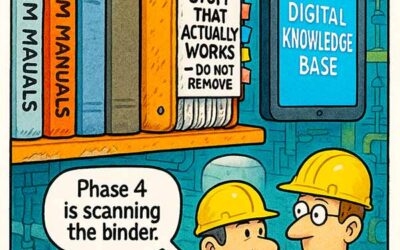
One of the most significant opportunities in root cause analysis process improvement lies in connecting RCA with predictive maintenance systems and reliability engineering analytics. Too often, RCA data lives in isolation, stored in PDFs or spreadsheets that no one revisits. When properly integrated, however, RCA findings can feed into advanced condition monitoring, asset performance management (APM) systems, and computerized maintenance management systems (CMMS).

Modern reliability programs are evolving toward predictive failure analysis, in which vibration data, oil analysis trends, thermography, and inspection results combine to trigger proactive root-cause investigations before failures occur. This shift transforms RCA from a post-event activity into a predictive reliability strategy. Maintenance leaders should link RCA records with equipment histories, mean time between failure (MTBF) reports, and failure mode and effects analysis (FMEA) data to uncover cross-asset trends.
Linking RCA with predictive analytics turns failure analysis from hindsight into foresight.
Automation also plays a growing role. AI-driven maintenance analytics platforms can identify failure correlations invisible to human analysts, flag recurring patterns, and quantify the financial impact of poor follow-up to corrective actions. These systems strengthen decision-making by providing quantitative evidence for continuous improvement initiatives, including reliability-centered maintenance (RCM) reviews, total productive maintenance (TPM) assessments, and Six Sigma projects.
To make the most of the root cause analysis process improvement, organizations should:
- Develop a shared RCA database connected to their CMMS.
- Incorporate predictive maintenance alerts as RCA triggers.
- Use dashboards to visualize equipment failure frequency, downtime cost, and action effectiveness.
- Benchmark maintenance reliability metrics such as mean time to repair (MTTR), equipment availability, and cost per work order.
- Review RCA outcomes in performance management meetings alongside key performance indicators (KPIs).
These actions shift RCA from a reactive response tool to a proactive design and optimization framework. By combining reliability data, predictive analytics, and disciplined investigation, organizations build a continuous improvement process that enhances operational efficiency, supports maintenance optimization, and eliminates recurring equipment failures across production lines.
When RCA becomes part of a broader predictive reliability ecosystem, it stops being an isolated exercise and starts becoming the foundation of an intelligent maintenance strategy.
Turning Root Cause Insights into Continuous Improvement Action
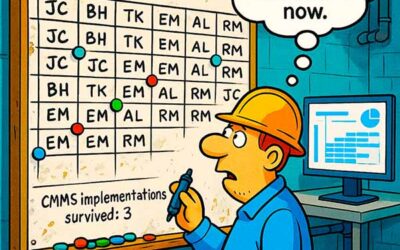
Once a plant refines its root cause analysis process improvement strategy and integrates it with predictive systems, the next challenge is conversion, turning insights into measurable, sustained action. Too many RCAs end with findings that never translate into changed behavior, revised procedures, or updated maintenance standards. The gap between “knowing” and “doing” is where most reliability programs stall.
To close that gap, the organization needs a structured, continuous improvement framework that captures RCA outcomes and embeds them directly into maintenance execution. The most effective plants use reliability action tracking systems that tie each corrective recommendation to responsible owners, target dates, and key performance indicators. These actions are monitored the same way production KPIs are, through visual management boards, dashboards, or digital workflows in the CMMS.
When RCA findings reshape daily maintenance routines, reliability stops being reactive and starts becoming cultural.
Continuous improvement doesn’t happen by accident. It requires deliberate alignment between maintenance strategy development, work execution, and performance feedback. When RCA results drive updates to lubrication routes, inspection intervals, spare parts stocking, and training programs, they begin to affect the plant’s day-to-day reliability behavior. Over time, this creates institutional memory; lessons from one failure prevent ten more.
The most mature organizations use RCA findings to refine:
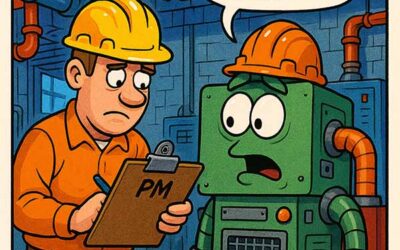
- Preventive maintenance optimization, ensuring PM frequencies reflect real failure data.
- Asset criticality ranking, reprioritizing based on risk and downtime impact.
- Maintenance planning and scheduling efficiency, using validated root causes to streamline workflow.
- Operator care programs, training frontline teams to detect early warning signs uncovered during investigations.
This closed-loop approach transforms the root cause analysis process improvement from an investigative tool into an organizational learning engine. It bridges reliability engineering with operational excellence, ensuring that every failure, big or small, strengthens the plant’s reliability DNA.
When RCA results are reviewed, implemented, audited, and continuously improved, the process becomes self-sustaining. That’s when reliability stops being a goal and becomes part of how the organization thinks, plans, and performs every day.
From Blame to Betterment
Reliability doesn’t grow through perfection; it grows through reflection. The purpose of the root cause analysis process improvement is to ensure that every failure teaches something valuable.
When a maintenance team learns to approach RCA without politics, blame disappears, insight multiplies, and reliability accelerates. Each investigation is a step toward operational maturity, one in which transparency, data, and trust guide every decision.
Blame might be the easiest root cause to find, but truth is the only one that prevents recurrence.