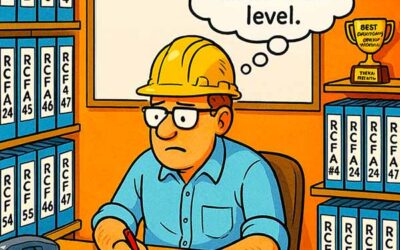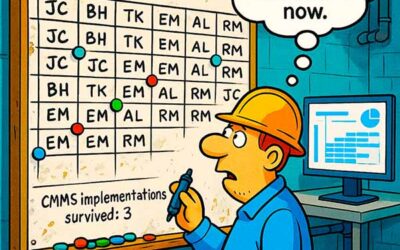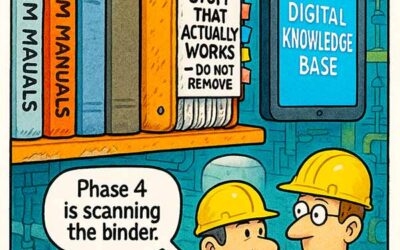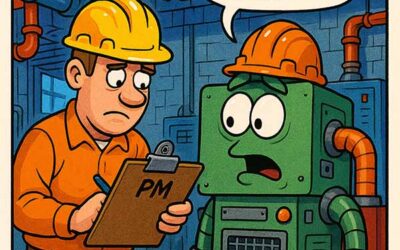
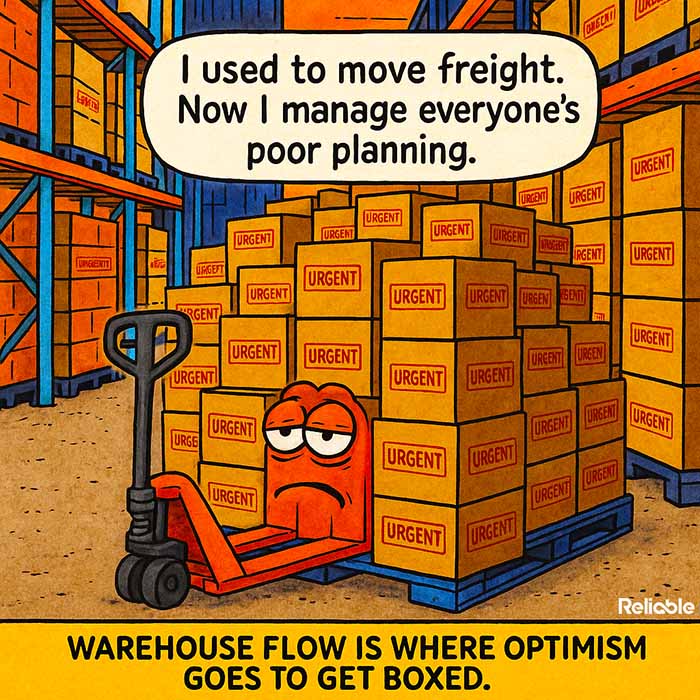

Every part is critical. Every request is a rush. When your MRO storeroom operates in permanent emergency mode, nothing actually gets prioritized. The result is wasted motion, missing parts, and maintenance crews standing idle while someone digs through bins looking for a seal kit that should have been on the shelf.
If you’re wondering how to improve MRO storeroom efficiency, start here: the biggest gains come from planning, not heroics. A well-run storeroom doesn’t sprint through every shift. It flows.
This guide breaks down the root causes of storeroom chaos and offers practical strategies to restore order. Whether you manage a single parts crib or a multi-site warehouse network, these principles apply.
Why Most MRO Storerooms Struggle
The pattern is predictable. A plant runs lean on inventory to cut costs. Then a critical asset fails, and nobody can find the right bearing or seal. Maintenance scrambles. Someone places an emergency order at triple the cost. The part arrives two days late. Production takes the hit.
Over time, that cycle trains everyone to treat every request as urgent. Planners stop trusting lead times. Technicians start hoarding parts in personal toolboxes and gang boxes. Supervisors bypass the storeroom altogether and order direct from suppliers using credit cards. The storeroom, now starved of accurate data, loses visibility into what it actually stocks and what it needs.
This reactive spiral doesn’t just waste money. It erodes trust between maintenance, operations, and procurement. And once trust breaks down, rebuilding storeroom processes gets exponentially harder.
When every part request is treated as an emergency, your storeroom loses the ability to distinguish between what truly matters and what can wait.
The good news: most storeroom dysfunction traces back to a handful of fixable problems. Addressing those problems systematically will deliver faster results than any single technology investment or software upgrade.
How to Improve MRO Storeroom Efficiency With Better Inventory Practices
Inventory management is the backbone of a functioning storeroom. Without clear policies for what to stock, how much to carry, and when to reorder, you’re guessing. And guessing leads to two equally painful outcomes: stockouts that halt production or bloated shelves full of parts that never move.
Classify Your Inventory by Criticality
Start with an ABC classification. Not every SKU deserves the same level of attention, and treating them all equally spreads your resources too thin.
- A items: High-value or critical spares tied to production-critical assets. These need tight reorder points, regular cycle counts, and secure storage. Think long-lead-time bearings for your bottleneck equipment.
- B items: Moderate-value parts with predictable demand. Standard min/max levels and quarterly reviews work well here. Mechanical seals and couplings often fall into this category.
- C items: Low-cost consumables like fasteners, filters, and lubricants. Buy in bulk, keep them accessible, and don’t overthink it.
This classification drives smarter purchasing decisions. It also helps you allocate storeroom real estate more effectively, keeping high-turnover items close to the service window and slow movers in secondary storage locations.
Set Reorder Points Based on Data
Too many storerooms rely on gut feeling for reorder triggers. That works until it doesn’t. A data-driven approach uses historical consumption rates, supplier lead times, and criticality ratings to calculate min/max levels for each SKU.
Review those levels at least twice a year. Demand shifts as assets age, production schedules change, and new equipment comes online. A reorder point that made sense 18 months ago may be dangerously low (or wastefully high) today.
Safety stock calculations deserve special attention for A items. Factor in lead time variability, not just average lead time. A supplier who delivers in five to fifteen days is very different from one who delivers consistently in ten, even though the average is the same.
Organizing the Physical Space for Speed
A storeroom can have perfect data in its CMMS and still fail if the physical layout doesn’t support efficient picking and putaway. Layout matters more than most managers realize.
Design for Flow
Think of your storeroom like a kitchen, not a closet. Parts should move through the space in a logical sequence: receiving at one end, staging and kitting in the middle, issue window or self-serve area at the other. When the layout forces technicians to crisscross the room searching for items, you lose minutes on every single transaction.
Slotting optimization helps here. Place fast-moving items at waist height near the issue point. Store heavy items on lower shelves. Keep related parts together (gasket kits near the pumps they serve, for example). These small adjustments compound into significant time savings over thousands of annual picks.
A storeroom designed for storage fills up fast. A storeroom designed for flow stays productive year after year.
Label everything clearly. Bin locations, shelf labels, row markers, and clear signage are essential. If a new hire can’t find a part within two minutes of getting a bin location from the system, your labeling needs work.
Control Access Without Creating Bottlenecks
Open storerooms invite shrinkage and data corruption. If anyone can grab parts without logging a transaction, your inventory counts become fiction within weeks. But locking down the storeroom so tightly that technicians wait 20 minutes for service creates its own set of problems, especially on night shifts when staffing is light.
The middle ground involves a controlled service window during peak hours, vending machines for high-frequency consumables, and barcode or RFID scanning at every point of issue. This approach balances accountability with speed. Some facilities also use after-hours self-serve kiosks where technicians badge in, scan what they take, and the transaction logs automatically.
How to Improve MRO Storeroom Efficiency Through Smarter Processes
Technology and layout changes only stick when they’re supported by solid processes. The daily habits of storeroom staff, planners, and maintenance technicians determine whether improvements hold or fade within months.
Kitting and Staging for Planned Work
Kitting is one of the highest-impact changes a storeroom can make. Instead of issuing parts one at a time as technicians show up at the window, the storeroom assembles complete kits for planned work orders in advance.
The benefits stack up quickly.
- Technicians spend less time walking to and from the storeroom during active jobs.
- Missing parts get identified days before the job starts, not the morning of execution.
- Wrench time increases because crews start work immediately instead of gathering materials.
- The storeroom team can build kits during off-peak hours, smoothing their own workload throughout the week.
Kitting does require tight coordination with the planning and scheduling function. The storeroom needs visibility into the weekly work schedule at least five days out. That collaboration alone can transform how to improve MRO storeroom efficiency across the entire maintenance operation.
Cycle Counting Over Annual Inventories
Annual wall-to-wall inventory counts are disruptive, exhausting, and often inaccurate. By the time you finish counting thousands of SKUs, the first ones you counted have already changed. A better approach uses cycle counting, where small batches of items get counted on a rotating schedule throughout the year.
Tie your cycle count frequency to your ABC classification. Count A items monthly, B items quarterly, and C items annually. This keeps accuracy high where it matters most and reduces the overall burden on storeroom staff.
You don’t need a perfect inventory count. You need an accurate count of the parts that matter most, updated frequently enough to catch problems before they cause stockouts.
Track your cycle count accuracy as a KPI. Aim for 95% or better on A and B items. When accuracy dips, investigate root causes: unauthorized withdrawals, receiving errors, or incorrect unit-of-measure settings in the CMMS are the most common culprits.
Getting the Most From Your CMMS
Your computerized maintenance management system is only as good as the data feeding it. Storerooms that treat CMMS data entry as an afterthought end up with ghost records, duplicate part numbers, and reports nobody trusts.
Clean Up Your Master Data
A master data cleanup project may sound tedious, but the payoff is enormous. Standardize part descriptions using a consistent naming convention (noun first, then modifiers). Merge duplicate records. Link every spare part to the assets it supports. Remove obsolete items tied to decommissioned equipment.
This cleanup directly supports efforts to improve MRO storeroom efficiency because it makes searching faster, reporting more reliable, and reorder automation possible. Without clean data, even the best CMMS is just an expensive filing cabinet.
Automate Where It Makes Sense
Automatic reorder triggers, barcode scanning for issues and receipts, and integration between the CMMS and procurement system can eliminate hours of manual work each week. Focus automation on high-volume, repetitive tasks first.
- Auto-generate purchase requisitions when stock hits the reorder point.
- Use barcode or QR code scanning to log every transaction in real time.
- Set up alerts for items that haven’t moved in 12 months so you can review and potentially dispose of dead stock.
- Integrate receiving workflows so parts get logged into the system the moment they arrive at the dock.
Automation frees storeroom staff to focus on higher-value activities like kitting, vendor management, and root cause analysis of recurring stockouts.
Building a Team That Sustains the Gains
Process improvements fail without people who understand and believe in them. Storeroom roles are often undervalued in maintenance organizations, treated as entry-level positions rather than the skilled work they truly are.
A skilled storeroom coordinator understands inventory management principles, knows the assets their parts support, and can spot trends in consumption data. Investing in training for storeroom staff pays dividends in accuracy, speed, and morale. Consider sending your team to APICS or ISM courses focused on inventory fundamentals.
Cross-training also matters. When only one person knows the storeroom’s layout and systems, every vacation or sick day becomes a crisis. Document procedures, share knowledge, and build redundancy into the team structure.
Measure What Matters
You can’t sustain improvements without tracking them. Key storeroom metrics include stockout rate, inventory accuracy, fill rate (percentage of requests filled from stock), inventory turnover ratio, and average time to issue a part. Pick three or four that align with your biggest pain points and review them monthly.
Share results with the maintenance team. When technicians see that storeroom improvements translate to less waiting and more wrench time, they become allies instead of adversaries. That alignment is what separates teams that improve MRO storeroom efficiency on paper from those that sustain real gains in practice.
From Reactive to Reliable
The path from reactive chaos to a well-run MRO storeroom follows a clear sequence. Classify your inventory. Clean your data. Organize your space for flow. Kit parts for planned work. Count what matters. Train your people. Measure your progress.
Each of these steps reinforces the others. Better data enables smarter stocking decisions. Smarter stocking reduces emergency orders. Fewer emergencies give the storeroom team time to plan ahead. And planning, as it turns out, is how to improve MRO storeroom efficiency for good.
Stop treating every request like a five-alarm fire. Build the systems that let your storeroom breathe. The parts will be there when you need them, and your maintenance team will finally have what they need to do their best work.