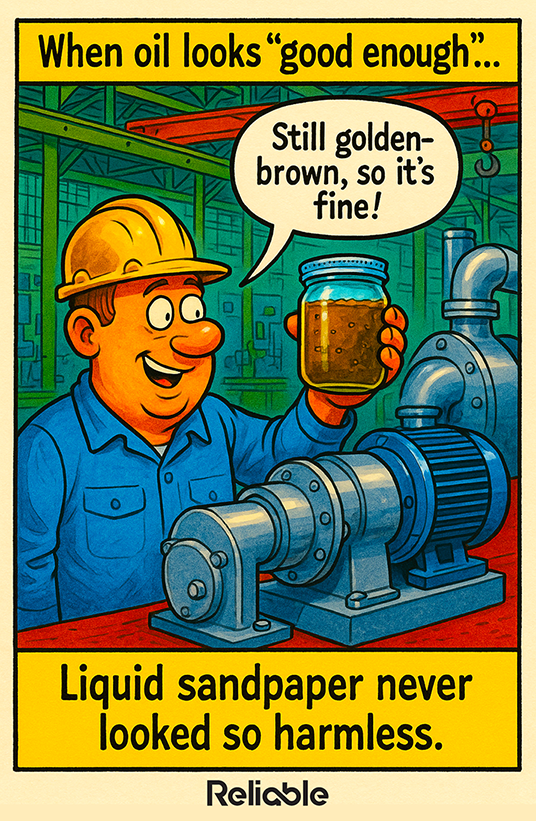

The Trap of “Good Enough” Oil Appearance
Walk into any maintenance shop and you’ll hear it: “The oil still looks golden-brown, so it’s fine.” It’s a line passed from shift to shift, often spoken with the confidence of experience. Yet, that confidence is a trap. Color alone does not equal condition, and mistaking appearance for health has been the downfall of countless machines.
Here’s the truth: oil is a fluid asset, but unlike steel or bearings, it’s transparent, literally and figuratively. The eye deceives. What looks harmless can be packed with abrasive particles, oxidized molecules, or depleted additives. In reliability terms, that jar of “good-looking oil” may be nothing more than liquid sandpaper grinding away unseen.
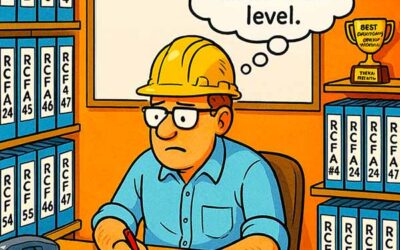
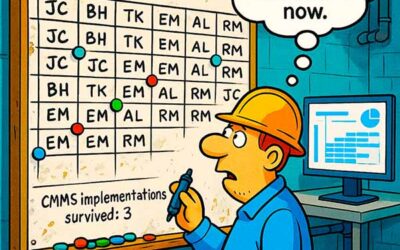
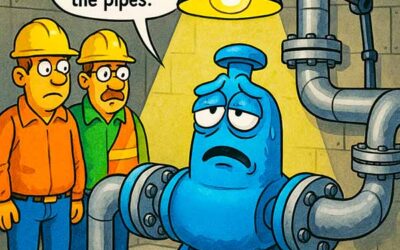
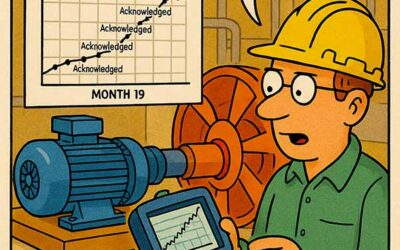
This cartoon captures the deception with humor, but in practice, the consequences are anything but amusing. Plants have lost millions in downtime because operators trusted their eyes instead of their oil analysis. If we want true lubrication reliability, we must abandon the myth of “good enough.”
Why Oil Color Is a False Indicator of Lubrication Reliability
The myth of golden-brown oil is perhaps lubrication reliability’s greatest enemy. Color has little to do with the actual health of oil.
- Contaminants: Dust, silica, and wear particles are invisible at the levels that destroy bearings. A sample can appear clear yet still contain millions of particles, exceeding ISO cleanliness targets.
- Oxidation: Early-stage oxidation – the chemical breakdown of the base oil – produces acidic compounds long before any darkening is visible. Left unchecked, it triggers varnish and sludge.
- Additive depletion: Detergents, anti-wear agents, and antioxidants are consumed silently. Their absence doesn’t change color but removes the protection that keeps assets alive.
Consider this scenario: A pump motor runs with oil that “looks fine.” Yet, analysis reveals a particle count of 20/18/15, which is well above the manufacturer’s ISO target. To the naked eye, the oil is clear. To the lab, it’s a death sentence for the pump. Within weeks, bearing spalling begins, escalating into a catastrophic failure. Cost: $50,000 in repairs, weeks of downtime. The root cause: reliance on appearance.
Lubrication reliability is about predictive insight, not gut feel. The myth of “good enough” dies the day you compare lab data against what your eyes saw.
The True Cost of Ignoring Oil Analysis in Lubrication Reliability
Skipping oil analysis may feel like a cost-saving move, but it’s the classic case of stepping over dollars to pick up pennies. A single $50 test can save $500,000 in avoided downtime. Plants that anchor their maintenance strategy to lubrication reliability know this, but others still gamble on “good enough.”
The results are predictable:
- Accelerated wear – Contaminants act like microscopic chisels, removing layers of surface metal.
- Hidden failures – Without particle counts, moisture detection, or TAN (Total Acid Number), problems remain invisible until breakdown.
- Financial chaos – Emergency repairs, expediting fees, and unplanned outages eat budgets alive.
A chemical plant in Louisiana discovered the cost the hard way. After cutting oil analysis to “save money,” they saw a 28% jump in rotating equipment failures in just 14 months. The irony? Their repair costs were ten times higher than the testing program they eliminated. The oil wasn’t the enemy, bad decisions were.
Lubrication reliability reframes the cost argument. Instead of asking, “What does analysis cost?” ask, “What does ignorance cost?” The numbers will always favor data-driven decisions.
Building a Culture of Lubrication Reliability
Changing culture isn’t easy. Operators often trust their eyes because it feels immediate, practical, and intuitive. However, culture change occurs when leadership provides better tools, training, and expectations. To embed lubrication reliability into the fabric of a plant, four disciplines matter most:
- Routine Oil Analysis as Preventive Medicine
Stop treating analysis as a “failure autopsy.” Make it scheduled, consistent, and mandatory. Every sample presents an opportunity to extend machine life. - Particle Counts and Contamination Control
Target ISO cleanliness codes that align with the criticality of assets. Use proper filtration, desiccant breathers, and sealed containers to prevent contamination. A drop from ISO 22/20/18 to 18/16/13 can double component life. - Moisture and Varnish Control
Water at 500 ppm doubles bearing fatigue rates. Varnish fouls valves long before oil looks dark. Karl Fischer titration and MPC varnish tests aren’t luxuries—they’re lifelines. - Operator Education and Engagement
Give frontline teams simple metrics: show them how “clear oil” may still contain millions of particles. Replace myths with evidence, and give them ownership of reliability outcomes.
The culture shift is subtle but powerful: from trusting appearance to trusting data, from firefighting failures to preventing them, from “good enough” to good forever. That is lubrication reliability in action.
Conclusion: Beyond Golden Illusions, Toward True Lubrication Reliability
The cartoon makes us laugh because it’s painfully familiar. We’ve all seen someone hold up a jar of oil and declare, “It looks fine.” But reliability doesn’t live in appearances. It lives in data, discipline, and deliberate practice.
Lubrication reliability requires us to shed old habits. It means replacing “good enough” with “proven healthy.” It means realizing that golden color can mask deadly contaminants. It means seeing every oil sample as a window into machine health, not a casual guess.
The future of reliability is not built on hunches. It’s built on facts, measurements, and proactive decisions. And when you commit to lubrication reliability, you stop fighting breakdowns and start extending uptime.
In the end, the question is simple: Do you want to trust your eyes, or trust your equipment’s future? Because “liquid sandpaper” never looked so harmless.