

Defining Equipment Failure: The Root of Confusion
In the world of reliability and maintenance, the term “failure” is deceptively simple—but the implications of how it’s defined are massive. A single word can determine whether a piece of equipment is flagged for repair, ignored, or celebrated for uptime. The problem? Everyone brings their own version of “failure” to the table.
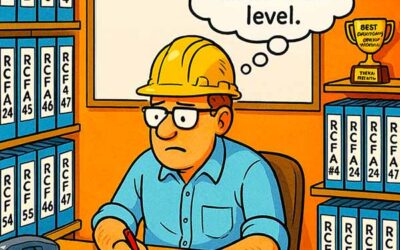
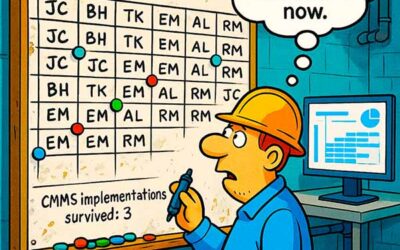
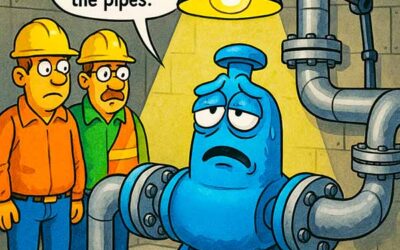
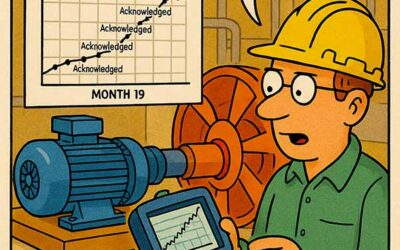
For some, a pump that won’t start is a failure. For others, a drop in pressure qualifies. This cartoon perfectly captures the gridlock that occurs when teams come together to define something they’ve all already decided means something different.
A lack of alignment in defining equipment failure causes miscommunication, skewed KPIs, wasted man-hours, and missed improvement opportunities. Leaders who want to improve MTBF, cut unplanned downtime, and run leaner operations must begin with one foundational step: agreeing on a shared, precise definition of failure. That’s where the real battle begins.
Why “Defining Equipment Failure” Is Not Just Semantics
Engineers and operators aren’t fighting over vocabulary—they’re fighting over implications. Defining equipment failure sets the trigger point for action. Is the pump considered failed when it stops running, or when it drops below its design pressure? When the motor won’t turn, or when it starts pulling 10% more amps?
A clear and consistent failure definition is essential for:
- Root cause analysis (RCA)
- Asset performance management
- Preventive and predictive maintenance planning
- Failure mode and effects analysis (FMEA)
Without it, you’re not measuring downtime—you’re measuring disagreement. This ambiguity corrodes trust in data and paralyzes decision-making.
Common Failure Definition Frameworks and Why They Matter
There are two dominant ways reliability teams define failure:
1. Functional Failure (Degraded performance):
This is when equipment still runs but doesn’t meet the required performance standard. Think: a fan still spinning, but not delivering airflow.
2. Complete Failure (Broken-down state):
This is what most operators recognize—something has stopped working entirely. Lights are off. Output is zero.
Which one should you use? Both. Functional failure is what helps you catch problems early. Complete failure is what you use for triage and emergency response. But neither works without agreement across your team. And without that agreement, defining equipment failure remains an academic debate that stalls improvement initiatives.
How to Align Teams on Defining Equipment Failure
The best way to end the battle of definitions is to build consensus into your reliability culture. Here’s how:
- Involve the cross-functional team. Get input from operations, maintenance, engineering, and production. If you don’t, you’ll end up enforcing a definition nobody follows.
- Use clear, asset-specific criteria. Don’t settle for “when it breaks.” Define thresholds—pressure, flow, temperature, vibration—that mark functional degradation and trigger alerts.
- Update your CMMS and procedures. Once defined, failure criteria must be embedded into work orders, inspections, and asset strategies.
- Tie definitions to KPIs. Metrics like MTBF and failure rate only have meaning when everyone agrees on what counts as a failure.
Done right, defining equipment failure becomes the cornerstone of asset strategy—not a meeting punchline.
The Consequences of Avoiding the Hard Work
Look at the guy in the cartoon who says, “Let’s circle back next year.” That’s not just a punchline—it’s a cultural red flag. Avoiding the conversation means tolerating ambiguity. It allows failure to hide in plain sight, letting degraded assets limp along while metrics look deceptively good. Worse, it turns your data into noise and undermines continuous improvement efforts.
Here’s what happens when you skip defining equipment failure:
- KPIs lose meaning and become unreliable
- RCA becomes guesswork
- Improvement projects stall
- PM/PdM tasks get misprioritized
- Operators and technicians grow frustrated
The cost? Not just wasted resources—but missed opportunities to drive availability, performance, and safety.
Conclusion
“Defining equipment failure” sounds simple, but it’s foundational to building a high-performance maintenance strategy. Without clarity, your team’s improvement efforts rest on quicksand. With it, you unlock aligned action, meaningful metrics, and the ability to drive real change.
So have the tough meeting. Don’t circle back next year. Circle in everyone today.