
Here’s a question that will make your safety manager uncomfortable: when was the last time someone with authority walked every level of your facility, looked at the actual conditions, and wrote down what they found?
Skip the scheduled audit checklist for a minute. Think about a real, unannounced, eyes-on walk through the plant floor, the mezzanine, the loading dock, and that stairwell behind the compressor room that everyone avoids.
If you can’t answer that question with a specific date, you’ve got a problem. And you’re in good company, because most facilities can’t either.
The Gap Between Your Safety Program and Your Facility
Every industrial facility in North America has a safety program. Policies exist. Training records are up to date. The safety board in the breakroom has fresh statistics pinned to it. All the paperwork looks right.
Then somebody slips on a corroded grating step that’s been deteriorating for 14 months, and suddenly everyone wants to know how it happened.
Most slip and fall incidents trace back to hazards that people walk past every single day without reporting.
The Bureau of Labor Statistics reports that slips, trips, and falls account for roughly 27% of all nonfederal workplace injuries resulting in days away from work. That’s been consistent for years. The number barely moves because the root causes barely change: worn surfaces, contamination, poor visibility, missing traction where traction used to exist.
Every one of these hazards is visible, obvious, and sitting in plain sight. They persist because nobody with the authority to fix them is walking the floor often enough to see them.
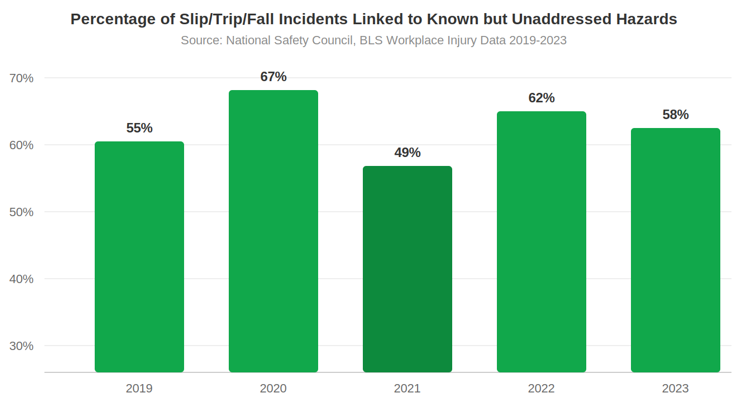
Figure 1: More than half of all STF incidents involve hazards that were already visible before the injury occurred.
Look at those numbers. In every single year, more than half of slip, trip, and fall incidents involved a hazard that someone could have identified beforehand. The 2020 spike to 67% likely reflects reduced staffing and deferred maintenance during the pandemic, but the baseline trend tells the real story: facilities know where the problems are. They just don’t act fast enough.
Why Scheduled Audits Miss So Much
Most safety audits happen on a cycle. Monthly. Quarterly. Annually. And they follow a checklist, which means they follow a route, which means they follow a pattern.
Patterns create blind spots. If the audit always starts at the front entrance and works clockwise, the areas at the end of the route get a quicker look. If the audit is scheduled for the first Tuesday of every month, the facility gets cleaned up on the first Monday. Everyone knows this. Nobody talks about it.
What Scheduled Audits Tend to Miss
- Worn traction surfaces on grating, stairs, and ramps that degrade slowly between inspection cycles
- Lighting deficiencies in stairwells, pipe racks, and secondary walkways that aren’t on the primary audit route
- Accumulation of oil, dust, chemical residue, or moisture on walking surfaces in process areas
- Missing or damaged handrails that operators have been working around for months
- Temporary fixes (plywood over holes, duct tape on edges, cones that became permanent) that never got a proper work order
The common thread? These are all things you’d see if you walked the floor with no checklist and no agenda. Just your eyes and your experience.
The Walkdown: An Old Practice That Still Works
The concept of a facility walkdown is as old as industrial operations. Supervisors used to do it daily. Plant managers did it weekly. Somewhere along the way, it got replaced by digital checklists, remote dashboards, and the assumption that if nobody filed a report, everything must be fine.
A 20-minute unscripted walk through your facility will teach you more about your safety culture than a 200-page audit report ever will.
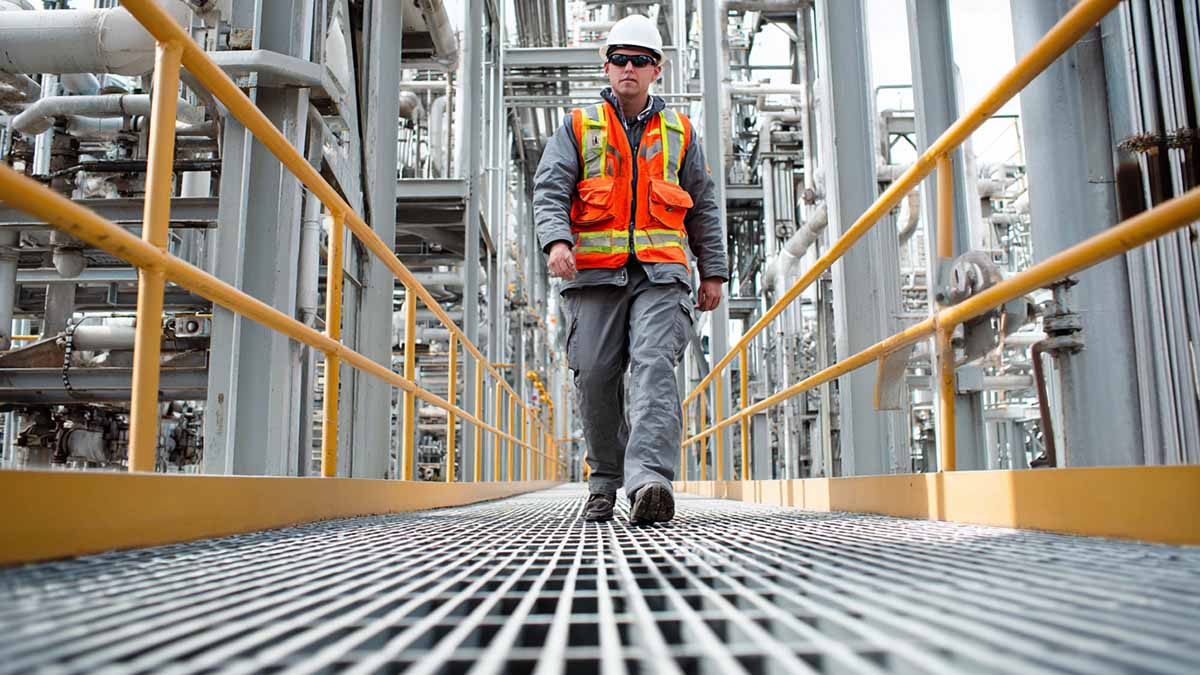
A good walkdown takes 20 to 45 minutes, depending on the size of the facility. You bring a notebook or a phone camera. You don’t announce it. You don’t follow a route. You go where your instincts take you, and you pay attention to what you see, hear, and smell.
Pay special attention to transitions: where flooring material changes, where indoor meets outdoor, where stairs connect levels, where traffic patterns converge. These are the spots where conditions degrade fastest and where incidents are most likely to occur.
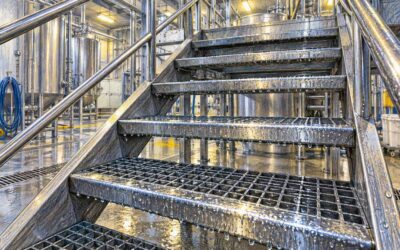
Some of the fixes you’ll find on a walkdown are surprisingly fast. Take, for example, grated stairs and catwalks. Open steel grating is everywhere in industrial facilities, and the serrations that were supposed to provide grip wear down over time or get clogged with debris.

Photo courtesy Titan Safety
Companies like Titan Safety have addressed this with anti-slip clips that knock onto existing bar grating without any tools, welding, or hot work permits. A maintenance tech can retrofit an entire stairway during a break. That’s the kind of low-cost, zero-downtime improvement that shows up on a walkdown but almost never surfaces in a formal audit.
Building the Habit Into Your Reliability Culture
The best reliability programs treat facility condition the same way they treat equipment condition. They monitor it. They trend it. They act on what they find before something fails.
Walking the floor is condition monitoring for your facility. And like vibration analysis or oil sampling, it only works if you do it consistently and act on the data.
How to Make Walkdowns Stick
Start with leadership. If the plant manager or maintenance director does a visible walkdown once a week, it sends a signal that can’t be replicated by an email or a policy update. People notice when leaders show up on the floor. They notice even more when something actually gets fixed as a result.
Rotate who does the walkdown. Maintenance supervisors see different things than EHS professionals. Operators see things that both groups miss. A production lead who walks the same path every shift will spot a change in floor condition that a monthly auditor would never catch.
- Schedule walkdowns weekly, but vary the day, time, and route so they don’t become predictable
- Capture findings with photos and brief notes, then feed them directly into the CMMS as work requests
- Track time-to-close on walkdown findings the same way you’d track PM completion rates
- Share findings openly in toolbox talks and crew meetings so people see that the walkdowns produce real action
The goal here is accountability. A walkdown that doesn’t result in work orders is just a walk. And a work order that sits in the backlog for six months is just documentation of negligence.
The Cost of Not Looking
The National Safety Council estimates that the average cost of a workplace slip, trip, or fall incident resulting in days away from work is over $47,000 when you factor in direct medical costs, indemnity, and indirect expenses like investigation time, replacement labor, and regulatory follow-up.
The most expensive hazard in your facility is the one that everyone can see but nobody has written up.
For facilities with elevated grating, catwalks, and multi-level access, that number goes up. Falls from height carry higher severity, longer recovery times, and significantly more regulatory scrutiny. OSHA doesn’t differentiate between a hazard you didn’t know about and a hazard you chose to ignore. The citation looks the same either way.
But the real cost is cultural. When workers see hazards go unfixed for weeks or months, they stop reporting them. They assume nobody cares, or they assume reporting doesn’t lead to action. Either way, you lose the single most valuable source of safety intelligence your facility has: the people who work there every day.
What a Good Walkdown Looks Like in Practice
It’s Tuesday at 2:15 PM. The maintenance director finishes a meeting, grabs a hard hat, and heads to Level 3 of the process building. No clipboard. No checklist. Just a phone with a camera.
In 30 minutes, she finds a handrail with a missing bolt (it’s been missing long enough for the hole to rust), a grating landing where the anti-slip serrations are completely worn smooth, a lighting fixture above a stairwell that’s been burned out, and an extension cord running across a walkway that someone has taped down with electrical tape as a permanent solution.
She takes four photos. She sends them to the planner before she gets back to her office. By Thursday, three of the four items have work orders. The extension cord gets pulled that afternoon because it’s an immediate trip hazard.
Total time invested: 30 minutes. Total cost: zero (she was already on the clock). Hazards addressed: four, at least two of which had injury potential.
That’s the return on investment for walking the floor. It’s probably the cheapest reliability improvement a facility can make, and it requires no special tools, software, or training.
Stop Admiring the Problem
Every facility has a list of known issues that haven’t been addressed. Some are stuck in the backlog. Some haven’t even been written up. Some are so familiar that people have stopped seeing them entirely.
The walkdown forces you to see them again. It forces you to acknowledge that the cracked step, the bald grating, and the pooling water in Bay 7 are all active hazards with your company’s name on them.
So here’s the challenge: put it on your calendar. This week. Block 30 minutes, leave your office, and walk your facility with fresh eyes. Write down what you find. Act on it.
The worst thing you can discover on a walkdown is nothing, because that means you weren’t really looking.