
A vibration sensor can see a failing bearing three weeks out. It can’t see a foreman who punishes operators for flagging problems. That’s the gap most PdM programs fall into, and the reason so many of them stall within 18 months of the kickoff meeting.
Technology magnifies whatever culture you already have. It won’t fix a broken one. If your people don’t trust each other, don’t talk to each other, and don’t believe leadership will act on data, no amount of spectrum analysis will change the outcome.
The plants winning with PdM figured this out early. They spent money on people before they spent it on hardware.
The Uncomfortable Math
Most PdM initiatives quietly underdeliver. The sensors go in, the dashboards light up, and three years later the site is still firefighting. That pattern has been remarkably stable for the last decade.
The failure almost never traces back to the technology. Sensors work. Analytics platforms work. Oil analysis labs have been reliable for 40 years. What breaks is the handoff between the alert and the action.
Here’s the pattern I’ve watched play out at dozens of sites:
- A sensor flags a developing fault on Pump 14.
- The alert lands in an analyst’s inbox on Tuesday.
- The analyst emails the planner on Wednesday.
- The planner tries to schedule the work, but production won’t release the asset.
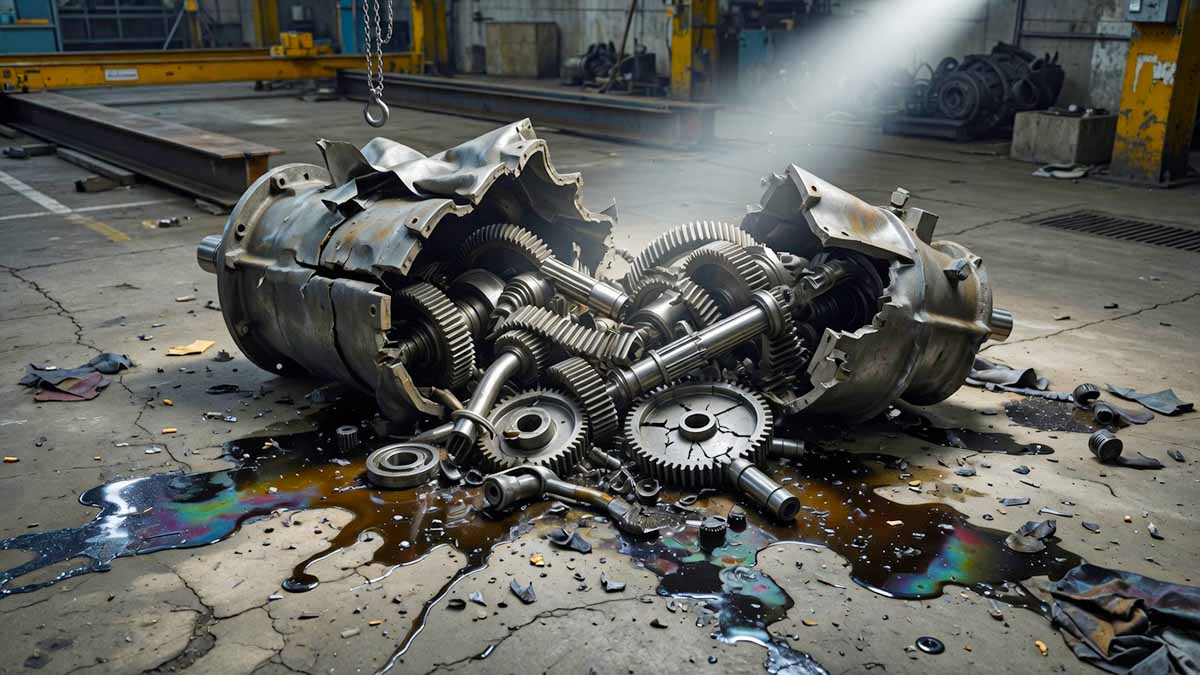
- Pump 14 fails catastrophically on Sunday at 2 a.m.
- Everyone blames the sensor or the software.
The tech did its job. The culture around it did not.
I’ve seen this exact sequence cost a mid-size food plant $340,000 in a single weekend: lost production, expedited parts from Germany, a wrecked coupling, and a 36-hour recovery. The original PdM alert had been sitting in a queue for 11 days.
A sensor can see the fault. It can’t see the meeting where production refused to release the asset.
What a Broken Culture Actually Looks Like
Broken culture rarely announces itself. It shows up in small signals that most leaders learn to ignore.
Signal 1: Operators stop reporting
In a healthy plant, operators flag abnormal sounds, vibrations, leaks, and smells every shift. They know someone will listen. In a broken plant, they stop bothering after the third time their report gets buried.
Once operators go quiet, your best early-warning system is offline. No PdM platform replaces 80 sets of trained eyes and ears walking the floor every day.
If the hero at 3 a.m. gets the handshake and the prevention gets silence, you’ve told everyone what to optimize for.
Signal 2: Planners and production are at war
When the planner and the production supervisor don’t speak, PdM alerts pile up on a spreadsheet nobody opens. The analyst becomes a ghost, the planner becomes a paper-pusher, and the assets keep running until they don’t.
Signal 3: Leadership celebrates firefighting
If the person who rebuilt the gearbox at 3 a.m. gets the handshake, and the person who prevented the failure six weeks earlier gets nothing, you’ve told everyone exactly what to optimize for. They’ll optimize for chaos.
The Maturity Curve Nobody Wants to Talk About
PdM ROI scales with cultural readiness far more than it scales with investment. Two plants can buy the same sensors and software, and one will see a 10x return while the other sees almost nothing.
The gap comes down to how the organization is wired to respond to information.
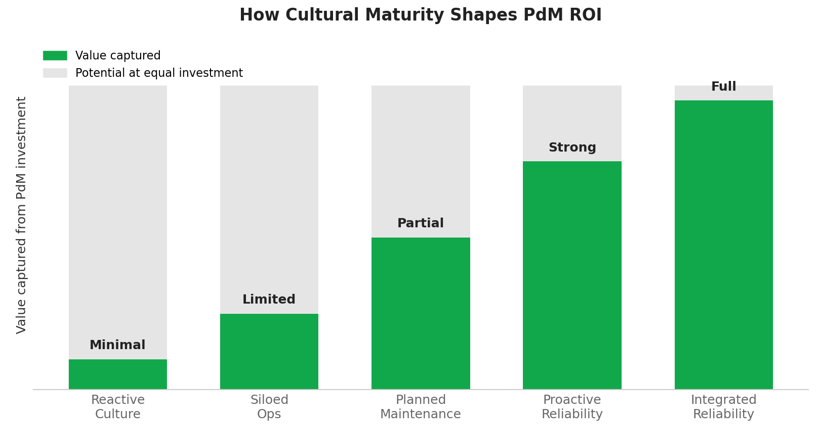
Figure 1. How cultural maturity shapes the value captured from a PdM investment.
The chart tells a brutal story. A reactive plant running a PdM pilot is essentially setting money on fire. The sensors generate alerts, and the alerts generate noise. Move the same program into an integrated reliability culture, and the value flips on.
Cultural maturity is the single largest predictor of whether a PdM program delivers. Every other variable is downstream of that one.
The Five Cultural Prerequisites
Before you sign a PO for a single sensor, five conditions need to be genuinely present at your site. Present on the floor, where the actual work happens, visible in how people behave on a Tuesday afternoon.
- Psychological safety. Operators and technicians can report problems, push back on plans, and admit mistakes without career damage.
- A credible planning function. Someone owns the schedule, and that schedule actually drives what gets done.
- Production and maintenance alignment. Both sides agree on uptime targets, and both sides share the pain when assets fail.
- A bias toward prevention. Leaders visibly reward the quiet save, not just the heroic rescue.
- Data literacy at the supervisor level. Frontline leaders can read a trend chart without needing a consultant to translate.
Miss one of these, and your PdM program is a rowboat with a hole in it. You can row harder. You can buy a better oar. You’re still going down.
Every missing cultural prerequisite cuts your PdM value roughly in half. The effect compounds.
I’ve walked sites where three of these five were already in decent shape, and the PdM rollout still flamed out because the last two weren’t. The weak links dominate the outcome.
How to Diagnose Your Culture Before You Buy Anything
You don’t need a consultant for this. You need a week and some honesty.
Walk the floor at 2 a.m.
Night shift tells the truth. If the operators on C crew are using workarounds, bypassing interlocks, or keeping their own private maintenance logs, that’s your real condition assessment.
Read the last 20 root cause analyses
Count how many ended with a genuine system fix versus a training recommendation or a procedural update that everyone ignored. If 80% of them blame the human, you have a culture problem masquerading as a skills problem.
Ask the planner this one question
“What percentage of the work you schedule actually gets done in the week you scheduled it?” If the answer is under 70%, you’re running a wish list dressed up as a schedule. PdM alerts dropped into that system will die there.
The Sequence That Actually Works
The plants that get PdM right start with the boring work that makes PdM possible, long before any sensors go in.
First, they stabilize planning and scheduling. Weekly schedule compliance climbs above 80%. Work requests move through a real workflow instead of a group chat.
Second, they rebuild the operator care routine. Basic inspections, lubrication checks, and cleaning get scheduled, tracked, and audited. The operators become the first line of condition monitoring, because they’re the ones with the asset in front of them eight hours a day.
Third, they fix the reward system. The metrics that get celebrated in the monthly ops review shift from reactive hours avoided to failures prevented. Production and maintenance share one scorecard instead of two.
Only then do the sensors go in. At that point, the technology amplifies a system that already works. The alerts hit a planning function that can act on them. The action hits a production team that wants to cooperate. The results hit a leadership team that will notice and reinforce them.
The Hard Truth for Leaders
Predictive maintenance is a force multiplier. Multiply zero by anything and you still get zero.
If you’re considering a major PdM investment and you’re quietly worried that your culture isn’t ready, trust that instinct. Spend the first six months on the human system. Rebuild trust between production and maintenance. Fix the scheduling process. Kill the firefighting reward loop.
Then buy the sensors. You’ll get ten times the value and half the headaches.
The companies crushing it with PdM in 2026 are the ones who understood reliability was always a people problem with a technology assist. The sensors just amplify the culture already running the plant.