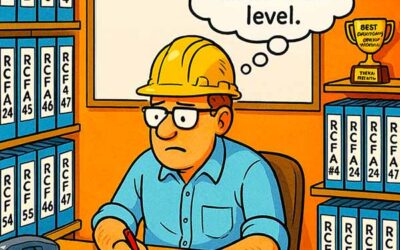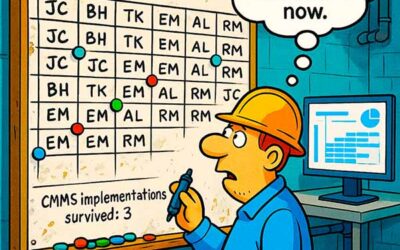

Some failures happen once and teach you something. Others keep showing up like clockwork, same asset, same shift, same circumstances, and somehow nobody connects the dots. Learning how to identify recurring equipment failures is the difference between a maintenance team that improves year over year and one that stays trapped in a cycle of identical breakdowns.
The pattern is always there. The challenge is building the systems and habits to see it.
The Anatomy of a Recurring Failure
Recurring failures share a few characteristics that distinguish them from random, one-off breakdowns. Understanding these traits is the first step toward catching them.
First, they cluster. The same pump seal fails every four months. The same conveyor belt tracking issue reappears after every outage. The same motor overheats during summer peak loads. These clusters are visible in your CMMS data if you know how to look for them.
A failure that happens three times on the same asset is one problem you haven’t solved yet.
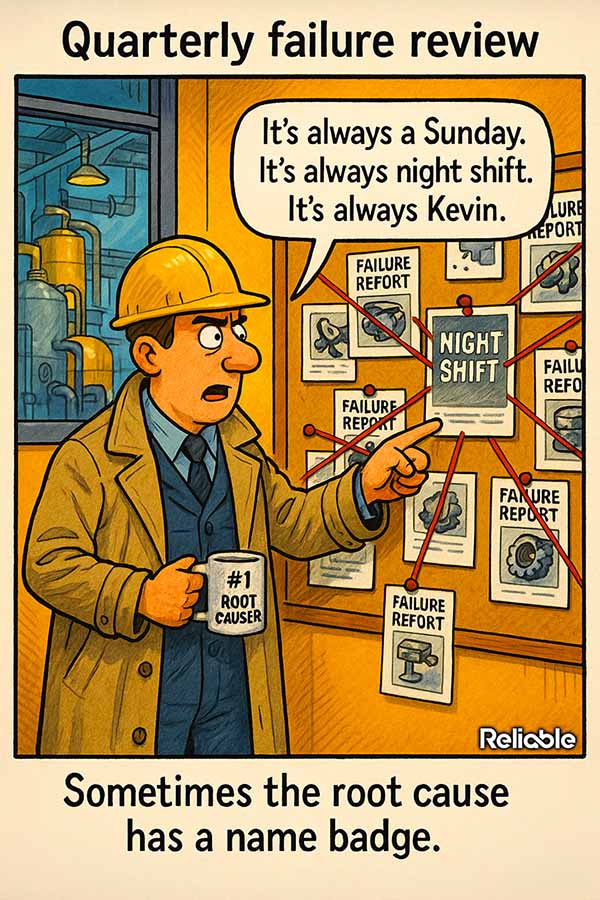
Second, recurring failures often involve a human element. The repair procedure misses a step. A specific shift consistently overtorques fasteners. The rebuild spec calls for one bearing type, but the storeroom stocks a different one because someone entered the wrong part number in 2019 and nobody caught it.
Third, they tend to involve systemic root causes that a quick repair can’t fix. Replacing a failed coupling addresses the symptom. Discovering that the coupling fails because the baseplate has 15 mils of soft foot, and addressing that, solves the actual problem.
How to Identify Recurring Equipment Failures in Your Data
Your CMMS contains years of repair history. The problem is that most plants use it as a work order generator rather than an analytical tool. Pulling the patterns out requires some deliberate effort.
Bad Actor Analysis
Start with a simple bad actor report: sort assets by work order count and total repair cost over the last 24 months. The top 10% of your asset list will account for a disproportionate share of your maintenance spend. These are your chronic offenders.
For each bad actor, pull the work order history and look for repetition. Are the same failure modes appearing? Is the time between failures consistent? If a centrifugal pump has had five mechanical seal replacements in two years, you’re dealing with a recurring failure, full stop.
- Sort assets by total work order count over 24 months. Flag anything with 3+ corrective work orders for the same failure mode.
- Calculate mean time between failures (MTBF) for flagged assets. A declining MTBF indicates the problem is worsening.
- Cross-reference with parts consumption. Repeated purchases of the same spare part for the same asset confirm the pattern.
The data points you where to dig. Pair it with field observations and conversations with the technicians who keep rebuilding the same equipment, and the root cause picture starts to sharpen.
Most plants have the data to spot recurring failures already sitting in their CMMS. The missing ingredient is the habit of asking it the right questions.
Once you’ve built that habit, the next step is mapping the failures against time to uncover patterns your work order list alone won’t reveal.
Timeline Pattern Recognition
Map the failures on a calendar. Some patterns only emerge when you see them laid out chronologically.
Seasonal patterns are common: cooling systems that struggle every July, steam traps that fail every winter, outdoor equipment that corrodes faster in wet months. These point to environmental root causes that a standard repair procedure will never address.
Shift-related patterns deserve scrutiny too. If a particular piece of equipment fails more frequently during one shift than others, the root cause likely involves procedural differences. Maybe one crew runs the equipment at higher rates. Maybe the startup sequence varies. Maybe the lubrication rounds get skipped when staffing is short on weekends.
Outage-related patterns are the most frustrating. Equipment that fails within days or weeks of a planned outage often points to maintenance-induced failures: incorrect reassembly, wrong torque specs, contaminated lubricant, or a missed alignment check.
The Five Most Common Root Causes Behind Repeat Breakdowns
After you learn how to identify recurring equipment failures, you need to understand what drives them. In most industrial settings, the root causes fall into five buckets.
1. Inadequate Repair Procedures
The technician fixed the symptom but missed the underlying condition. A bearing gets replaced, but nobody checks the shaft for wear or measures the housing bore. The new bearing goes into the same degraded environment and fails on the same timeline.
The most expensive repair is the one you have to do twice because the procedure only covered half the problem.
Fix this with detailed job plans that include acceptance criteria. A bearing replacement job plan should specify shaft diameter tolerances, housing bore measurements, proper lubrication fill volumes, and post-installation vibration baselines.
2. Wrong Parts or Materials
This one hides in plain sight. The original equipment manufacturer specifies a Viton O-ring. The storeroom carries Buna-N because it’s cheaper and “close enough.” The seal lasts 90 days instead of 18 months. Multiply this across hundreds of rotating assets and you’ve built a factory of recurring failures.
Audit your bill of materials against OEM specs. Flag substitutions. Some will be legitimate engineering decisions. Others will be purchasing shortcuts that cost far more in downtime than they save in unit price.
3. Operating Outside Design Envelope
Equipment designed for one set of conditions gets pushed into another. Pumps run off their best efficiency point. Motors operate with voltage imbalance above 2%. Compressors cycle more frequently than the manufacturer intended.
These operating deviations create predictable, recurring failure patterns. Pump seals fail from cavitation. Motor windings degrade from overheating. Compressor valves wear prematurely from rapid cycling.
- Compare actual operating parameters against design specifications for your worst-performing assets.
- Check pump curves: are your centrifugal pumps running within 80% to 110% of BEP?
- Measure voltage imbalance at the motor terminals, especially on critical drives.
- Review operating logs for start/stop frequency on compressors and large motors.
4. Installation and Alignment Defects
Precision alignment matters. A motor-pump combination with 3 mils of parallel misalignment will eat couplings and bearings at a predictable rate. The failures will look random to anyone who doesn’t check alignment data. They will look completely predictable to anyone who does.
Soft foot, pipe strain, and thermal growth compensation are all installation-quality issues that cause recurring mechanical failures. A laser alignment at installation means little if the pipe gets reconnected and pulls the pump casing 10 mils out of position.
5. Lubrication Failures
Wrong lubricant, wrong volume, wrong interval, or contaminated supply. Oil analysis programs catch some of these issues, but only if the results get reviewed and acted upon promptly. A quarterly oil sample that shows elevated wear metals does no good if the report sits in an inbox for six weeks.
- Standardize lubricant types and consolidate where possible to reduce cross-contamination risk.
- Use color-coded labeling on storage, dispensing equipment, and fill points.
- Establish re-lubrication intervals based on bearing calculations, not arbitrary calendar schedules.
Breaking the Cycle of Recurring Equipment Failures
Identifying the pattern is step one. Breaking it requires a structured response.
For each recurring failure, conduct a formal root cause analysis. Keep it proportional: a 5-Why for a minor repeater, a full fault tree analysis for a failure that costs six figures or poses a safety risk. Document the findings. Assign corrective actions with owners and deadlines.
Root cause analysis without corrective action follow-through is just an autopsy. It documents what happened but changes nothing going forward.
Track corrective action completion rates. A common failure mode in reliability programs is generating excellent RCA reports that identify real root causes, then letting 40% of the corrective actions die on the vine because nobody tracks closure. Assign an owner. Set a deadline. Review status weekly until the action is complete.
Re-measure after the fix. If you replaced a failing mechanical seal and addressed the pipe strain causing misalignment, verify the MTBF actually improves. Give it two to three expected failure intervals. If the failure doesn’t recur, close the loop and move on. If it does, your root cause analysis missed something, and it’s time to go deeper.
Making Pattern Recognition a Habit
The best reliability teams don’t wait for someone to notice that the same pump has failed again. They build recurring failure identification into their routine processes.
Monthly bad actor reviews, where the top five maintenance cost drivers are discussed with both maintenance and operations leadership, keep chronic problems visible. Quarterly MTBF trending reports show whether the overall equipment base is improving or degrading. Annual Pareto analyses of failure modes by cost and frequency reveal whether last year’s corrective actions actually worked.
These are basic data hygiene practices that most CMMS platforms can support with standard reports. The barrier is the discipline to run the reports, discuss the findings, and follow through on the actions.
Plants that master this cycle (spot the pattern, find the root cause, fix it, verify the fix) see their maintenance costs decline year over year while their equipment reliability improves. Plants that skip it keep replacing the same bearings, rebuilding the same pumps, and wondering why the maintenance budget never goes down.