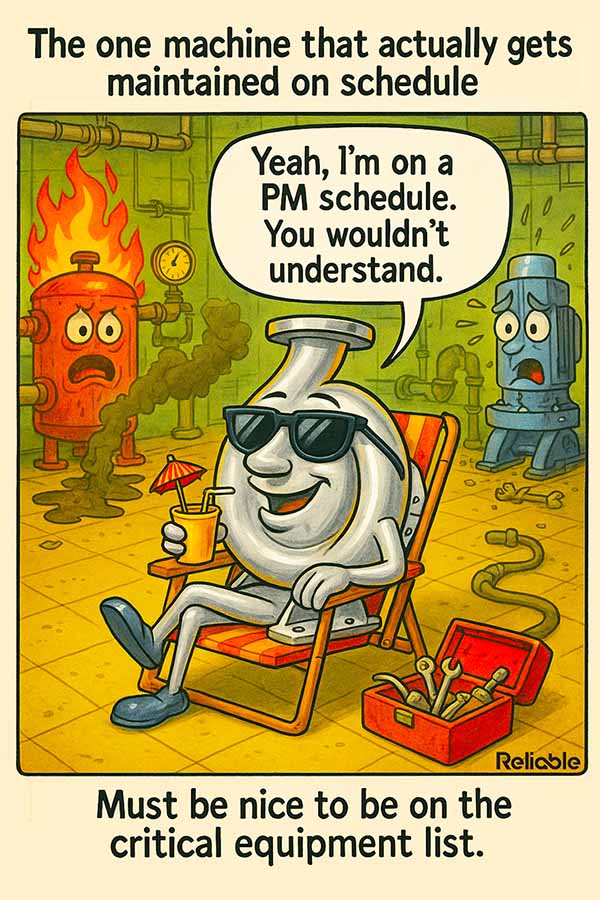

Every maintenance department has a handful of golden assets. The compressors, turbines, and reactors that sit at the top of the criticality list get weekly inspections, quarterly overhauls, and dedicated technicians who know every bolt by name.
Meanwhile, the rest of the plant’s equipment quietly deteriorates.
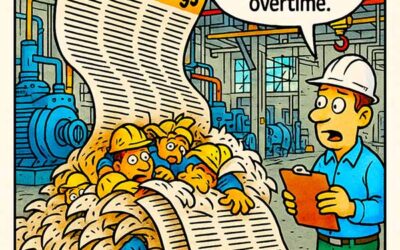
It’s a pattern so common it barely registers as a problem. The critical equipment list was built years ago, probably during a FMEA workshop that took three days and produced a spreadsheet nobody has revisited since. And now, that outdated ranking is driving 80% of your PM labor toward assets that account for maybe 20% of your actual unplanned downtime.
The Criticality Trap
Here’s what usually happens. A plant builds its first criticality ranking during commissioning or after a major reliability initiative. Engineers score each asset based on safety, environmental, production, and cost consequences. The top tier gets loaded with PMs. The bottom tier gets run to failure. Everything in the middle gets something in between.
So far, so reasonable.
The problem isn’t how plants rank their equipment. It’s that they rank it once and never look back.
The trouble starts two or three years later, when production has shifted, new equipment has been installed, and failure patterns have changed. That auxiliary pump that scored a 3 out of 10 in 2019? It’s now feeding a reformulated product line that accounts for 30% of revenue. But it’s still sitting on a run-to-failure plan because nobody updated the model.
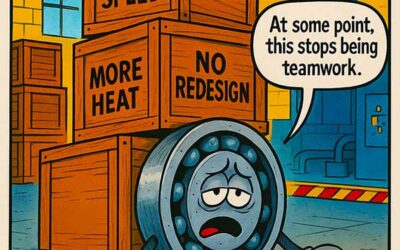
Plants that fall into this trap tend to have a strange mix of over-maintained critical assets and under-maintained everything else. The critical stuff rarely breaks (because it’s drowning in PM hours), which reinforces the belief that the program is working. The non-critical stuff breaks constantly, which gets blamed on age, budget, or bad luck.
What the Data Actually Shows
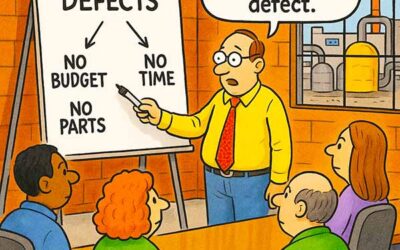
When reliability teams audit their work order history honestly, the results are almost always surprising. A 2023 study published in the Journal of Quality in Maintenance Engineering found that in heavy industrial plants, 55% to 65% of unplanned downtime events originated from assets classified as “medium” or “low” criticality.
That’s not a rounding error. That’s the majority of your downtime coming from equipment your PM program has deprioritized.
More than half of unplanned downtime in most plants comes from assets the PM program has decided aren’t worth worrying about.
The reasons are straightforward. Critical assets get so much attention that their failure rate drops dramatically. That’s the whole point. But the PM hours freed up by that reliability improvement don’t flow downward to the next tier. They get absorbed by emergency repairs on the neglected equipment, creating a self-reinforcing cycle.
Rebuilding Your Criticality Rankings
Updating a criticality model doesn’t require another three-day workshop. It does require current data and a willingness to challenge assumptions. Here’s a practical framework:
- Pull 24 months of work order data and sort by total downtime hours per asset. Compare the actual failure impact against the criticality score each asset currently holds.
- Flag any asset where the gap between assigned criticality and actual downtime impact is greater than two tiers. These are your misranked assets.
- Interview operators on the floor. They know which equipment is “about to go” long before the CMMS does. Their input should carry real weight in re-ranking.
- Set a calendar reminder to repeat this exercise every 12 months. Criticality rankings are living documents, not historical artifacts.
The goal is a PM program that distributes labor based on actual risk, not inherited assumptions. Some of your current “critical” assets may have been over-maintained for years and could safely move to a condition monitoring approach, freeing up hours for equipment that’s genuinely struggling.
Condition Monitoring as the Equalizer
One of the most effective ways to extend PM coverage without ballooning your labor budget is condition monitoring technology. Vibration sensors, infrared thermography, ultrasonic detection, and oil analysis can watch hundreds of assets simultaneously for a fraction of the cost of manual inspections.
The math works particularly well for that neglected middle tier. You can’t justify a dedicated technician for a $15,000 pump. But you can justify a $200 wireless vibration sensor that alerts you when bearing frequencies start trending upward.
Condition monitoring lets you give every asset a voice, regardless of where it sits on the criticality list.
Plants that deploy condition monitoring broadly (rather than only on critical assets) consistently report 15% to 25% reductions in unplanned downtime within the first 18 months. The gains come almost entirely from catching failures on equipment that was previously running to failure by default.
Rebalancing PM Labor
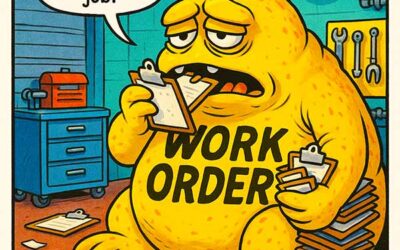
The practical question is always: where do the hours come from? Most maintenance departments are already stretched thin. Adding PMs to neglected equipment means taking hours from somewhere else.
Start with a PM optimization review on your most heavily maintained assets. Common findings include:
- Duplicate inspections where condition monitoring already provides continuous coverage
- Time-based oil changes on systems where oil analysis shows the lubricant is still performing well
- Quarterly overhauls on equipment that shows no degradation pattern on a quarterly cycle
Most plants find they can cut 20% to 30% of PM tasks on critical equipment without any increase in risk, simply by eliminating redundant or low-value activities. Those recovered hours go straight to the assets that have been starved of attention.
The Payoff
Plants that rebalance their PM programs consistently see two things happen. First, total unplanned downtime drops because the equipment that was actually causing most of the disruption finally gets attention. Second, maintenance costs often decrease because the over-maintained critical assets are consuming less labor.
It’s a rare situation where doing less on one side and more on the other produces better results on both. But that’s exactly what happens when your PM program stops playing favorites.
- Review criticality rankings annually against actual failure data
- Deploy condition monitoring on mid-tier assets to extend coverage without adding labor
- Audit top-tier PM tasks for redundancy and eliminate low-value activities
Your maintenance program should protect the whole plant, not just the assets that made the list five years ago. The equipment that keeps breaking is telling you something. It’s worth listening.