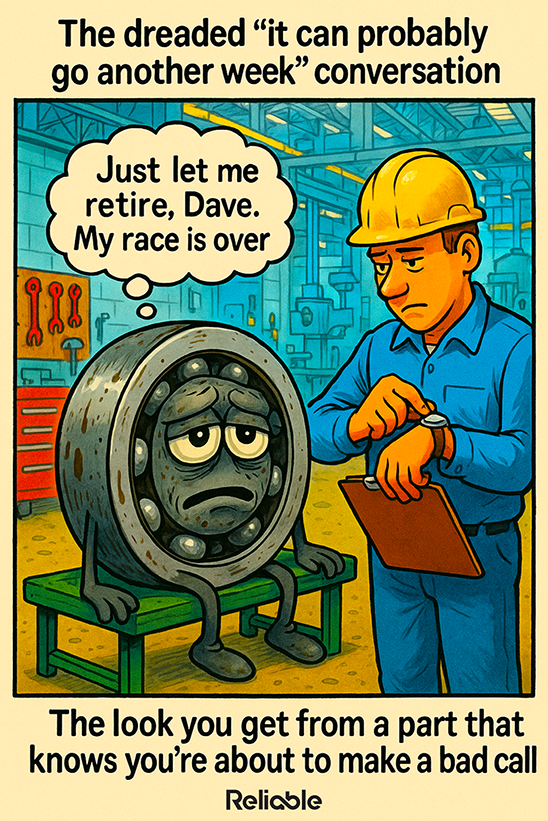

Bearing Maintenance: The Foundation of Mechanical Reliability
Every rotating machine depends on its bearings. From massive turbines to small electric motors, these precision components quietly support dynamic loads, enabling smooth, efficient operation. When they fail, the cost isn’t just a new bearing. It’s lost production, labor, secondary damage, and sometimes, safety incidents. Effective bearing maintenance turns this weak link into a reliability advantage.
Most bearing failures. studies show up to 80%, are preventable. The culprits are rarely manufacturing defects. Instead, they stem from poor lubrication, contamination, misalignment, or improper installation. Each of these is a controllable human factor. The challenge isn’t knowing what to do. It’s executing it consistently and precisely, every time.
In world-class facilities, bearing maintenance is treated like a precision craft. Technicians understand film thickness, grease compatibility, and interference fits as profoundly as a machinist understands tolerances. Their goal isn’t just keeping bearings alive. It’s optimizing them for performance, longevity, and energy efficiency.
Lubrication: The Lifeblood of Bearing Maintenance
Lubrication failures cause more bearing failures than any other cause. Yet lubrication remains one of the most mismanaged practices across industry. In bearing maintenance, lubrication must evolve from guesswork to precision control.
1. Selecting the Right Lubricant
Choose lubricants based on viscosity, additive chemistry, and base oil compatibility. High-speed bearings often require lighter oils, while heavily loaded, slow-speed bearings require higher-viscosity grades. For greases, pay attention to thickener compatibility. Mixing incompatible greases can cause separation and starvation.
2. Clean Handling and Storage
Even a single grain of sand can dramatically shorten bearing life. Store grease guns capped, label them clearly, and use dedicated tools to avoid cross-contamination. Cleanliness extends lubricant life and protects seals and rolling elements.
3. Controlled Re-Lubrication
Schedule lubrication by condition, not by calendar. Consider bearing speed, load, temperature, and contamination exposure. Tools like ultrasound sensors can measure friction in real time, guiding technicians to stop greasing the instant friction drops, preventing over-lubrication —one of the most common errors.
Over-lubrication kills silently. It looks like maintenance – but behaves like failure.
Automatic lubrication systems add consistency and remove human variation, ensuring bearings receive the precise volume needed for optimal film thickness. The result is cooler operation, longer intervals, and improved reliability.
Precision Installation and Alignment: Where Reliability Begins
A bearing’s destiny is often sealed at installation. Poor handling or misalignment at this stage can cut lifespan by 50% or more. Precision bearing maintenance demands a clean environment, proper tools, and meticulous adherence to specifications.
Best Practices for Installation and Alignment
- Avoid impact mounting. Never hammer bearings into position; use thermal or hydraulic mounting tools.
- Maintain housing and shaft cleanliness. Microscopic debris can cause fretting corrosion and premature failure.
- Check fits carefully. Use micrometers and bore gauges to confirm interference or clearance fits per manufacturer guidelines.
- Ensure alignment precision. Laser alignment tools eliminate human error and prevent uneven loading that accelerates fatigue.
- Verify after running. Recheck alignment after thermal stabilization. Shafts grow under load and heat.
Even the best lubricants can’t compensate for poor installation. Bearings that are perfectly aligned, correctly mounted, and well-lubricated routinely deliver a service life 5 to 10 times longer than those installed carelessly.
Condition Monitoring: Predicting Failure Before It Happens
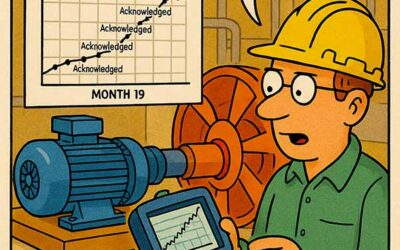
Traditional maintenance reacts to symptoms; predictive maintenance reacts to data. Modern bearing maintenance relies on continuous condition monitoring to detect microscopic signs of wear, friction, or electrical discharge long before failure occurs.
Key Predictive Techniques
- Vibration Analysis: Detects early-stage defects in rolling elements, raceways, and cages using frequency pattern analysis.
- Ultrasound Testing: Identifies lubrication starvation or friction changes that precede vibration anomalies.
- Motor Current Analysis: Diagnoses rotor bar issues and electrical fluting in motor-driven bearings.
- Infrared Thermography: Highlights localized heat zones or poor lubrication distribution.
- Oil Analysis: Tracks contamination, oxidation, and additive depletion in circulating systems.
Integrating these data streams into your CMMS or reliability dashboard provides a continuous bearing health profile. Algorithms flag changes in spectral signatures or temperature trends, triggering proactive interventions before catastrophic failure.
Example: One petrochemical facility reduced bearing failures by 68% after implementing vibration-based trend analysis linked to automatic work order generation in their CMMS. The ROI is recovered in less than 6 months.
Creating a Culture of Bearing Reliability
Technical excellence is only sustainable when supported by culture. The best bearing maintenance programs embed precision behaviors into everyday operations. Reliability-focused plants establish clear standards, provide training, and hold people accountable.
Core Cultural Habits for Sustainable Success
- Treat bearings as precision components, not consumables. Store them sealed and climate-controlled.
- Use visual lubrication charts—mark grease fittings with color codes and lubrication intervals.
- Document everything: record lubricant type, date, technician, and ultrasound decibel readings.
- Perform failure autopsies. Dissect every failed bearing. Identify failure modes such as abrasion, corrosion, fatigue, or electrical pitting, and trace them back to their root causes.
- Reward reliability. Celebrate extended bearing life and precision practices, not just uptime.
“Culture eats maintenance plans for breakfast.” A plant can have world-class tools and sensors, but without disciplined execution, reliability remains a matter of luck.
Leaders who prioritize training, enforce standards, and link metrics to root causes build organizations that sustain high reliability even as personnel change.
Extending the Bearing Lifecycle: Beyond Maintenance
Exceptional reliability comes from system thinking. Bearings don’t exist in isolation. They reflect the health of their ecosystem: balance, load distribution, sealing, and lubrication flow.
Advanced Practices That Extend Life:
- Dynamic balancing of rotors and shafts to minimize vibration amplitude.
- Precision shaft grounding in VFD-driven motors to prevent electrical fluting.
- Sealing improvements using labyrinth or magnetic seals to block contaminants.
- Temperature and torque trending to detect overload conditions.
- Root cause trending across identical assets to identify systemic issues.
These improvements elevate bearing maintenance from tactical activity to strategic advantage. Plants that integrate condition-based monitoring, failure analysis, and disciplined lubrication often achieve predictive reliability, where unplanned bearing failures are nearly extinct.
Bearings as the Barometer of Reliability
Bearings are mechanical truth-tellers. When they fail, they expose weaknesses in lubrication discipline, installation precision, or maintenance culture. When they thrive, they validate excellence across all three.
Effective bearing maintenance is both science and craft; a blend of physics, chemistry, and human precision. It turns maintenance from a cost center into a performance multiplier. As one reliability engineer put it: “We stopped fighting failures when we started listening to our bearings.”
If you master the art of bearing maintenance, you master reliability itself.