


Oil analysis is one of the most powerful condition monitoring tools available to maintenance teams. It can detect wear metals, contamination, additive depletion, and viscosity shifts long before a failure becomes catastrophic. When done right, it’s an early warning system that pays for itself many times over.
The problem is that most plants aren’t doing it right. Not because the lab is bad or the tests are wrong, but because the sample that arrives at the lab doesn’t represent what’s actually happening inside the machine. The failure occurs at the point of collection, and it happens far more often than anyone wants to admit.
If your oil analysis program isn’t delivering actionable results, the odds are good that the issue is upstream of the lab. Here are the sampling mistakes that quietly destroy the value of every report you receive.
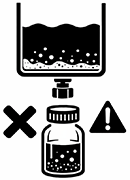 Oil Sampling From the Drain Port
This is the single most common mistake in oil sampling, and it’s the one that does the most damage to data quality.
Drain ports sit at the lowest point of a reservoir or sump. That’s exactly where settled contaminants, water, and heavy wear debris accumulate. When you pull a sample from the drain, you’re not capturing the oil that’s circulating through the system. You’re capturing the sediment layer at the bottom. The result is a sample that exaggerates contamination levels and skews particle counts, making clean oil look dirty and triggering unnecessary maintenance actions.
Samples should be taken from a live, turbulent zone in the system – ideally from a dedicated sample valve installed on a return line upstream of the filter and downstream of the component you’re trying to monitor. The goal is to capture oil that represents what the machine is actually seeing during operation. Drain ports fail that test every time.
If the oil isn’t representative of operating conditions, the data isn’t representative of reality.
If your equipment doesn’t have dedicated sample ports, install them. A minimess valve and a length of tubing cost less than a single lab report. Without proper sample points, you’re paying for analysis on oil that has nothing useful to tell you.
Oil Sampling With the Machine Off
This one seems harmless, and it’s incredibly common. The tech walks up to the machine at the start of the shift, before the equipment has been running, and pulls a sample from a system that’s been sitting idle for hours.
When oil sits static, particles settle, water separates, and the fluid stratifies. A sample taken from a cold, dormant system doesn’t reflect operating conditions. It reflects gravity. You’ll get artificially low particle counts in some areas, artificially high readings in others, and none of it tells you what the oil looks like when it’s actually doing its job.
Best practice is to sample while the equipment is running at normal operating temperature and has been running for at least 20 to 30 minutes. If the machine can’t be sampled while running for safety reasons, sample as soon as possible after shutdown – within minutes, not hours.
 Dirty Bottles, Dirty Data
Sample bottle cleanliness is one of those details that sounds trivial until you realize how sensitive modern lab instruments are. Particle counters can detect contamination levels as low as 4 microns. A single speck of dust, a fingerprint on the inside of the bottle cap, or a bottle that’s been sitting open on a shelf in the maintenance shop can introduce enough foreign material to completely distort the results.
Always use new, factory-sealed sample bottles. Never reuse bottles. Never pre-open bottles and leave them sitting around. Keep them sealed until the exact moment you’re ready to fill them, and cap them immediately after. If the bottle comes into contact with anything other than the oil stream – the floor, a dirty glove, the side of the machine – discard it and start over.
Sampling cleanliness sets the ceiling on data quality.
This isn’t perfectionism. This is the minimum standard for producing a sample that the lab can actually trust. Everything downstream of collection depends on this step being done cleanly.
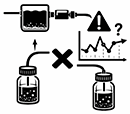 Inconsistent Oil Sample Points
Trending is the backbone of oil analysis. A single report in isolation tells you very little. The real value comes from comparing results over time to identify patterns: rising wear metals, increasing moisture, declining viscosity. But trending only works if every sample in the series comes from the same location on the same machine under the same conditions.
If one tech pulls from the return line and the next pulls from the drain, the trend is meaningless. If one sample is taken at operating temperature and the next is taken cold, the comparison falls apart. If the sample point shifts from upstream of the filter to downstream, you’ll see a dramatic drop in particle counts that has nothing to do with machine condition and everything to do with the filter doing its job.
Document every sample point. Label the valve or port physically on the machine. Include the sample location, machine operating state, and any relevant conditions on the sample submission form. Make it impossible for the next person to pull from the wrong spot.
Oil Flushing Failures
Before pulling a sample from any valve or port, you need to flush the dead volume. The oil sitting in the sample valve, the tubing, and the fitting between the system and the collection point is stagnant. It’s been sitting in a small-diameter space exposed to temperature swings and potential external contamination. If that’s the first oil that goes into your bottle, it’s not a sample of system oil. It’s a sample of whatever has been sitting in the plumbing.
If you don’t flush the dead volume first, you’re sampling the plumbing – not the machine.
The standard practice is to flush a minimum of five to ten times the dead volume of the sample hardware before collecting. For a typical minimess valve and short length of tubing, that’s usually a few ounces of oil. Flush it into a waste container, then collect the sample. It takes 30 extra seconds, and it’s the difference between a usable result and noise.
Skipping the flush is one of those shortcuts that doesn’t look like a shortcut. The tech still pulls a sample, fills out the form, and sends it to the lab. The report comes back with numbers. Nobody questions them. But the numbers are wrong, and any decision made from them is built on a bad foundation.
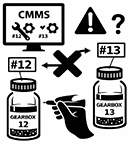 Mislabeled Oil Samples
This one isn’t a sampling technique error. It’s an administrative error. And it happens constantly.
A sample pulled from Gearbox 12 gets labeled as Gearbox 13. A hydraulic unit gets logged under the wrong asset number. The machine ID on the bottle doesn’t match the ID in the CMMS. The lab runs the analysis, generates a perfectly accurate report, and attaches it to the wrong equipment history. Now you’ve got phantom trends, unexplained anomalies, and a reliability engineer chasing a problem that doesn’t exist on an asset that’s actually fine.
Use pre-printed labels tied to your CMMS asset numbers. If your lab offers barcode or QR-coded sample submission, use it. Eliminate handwritten labels wherever possible. One transposed digit can invalidate months of trending data and trigger unnecessary work orders.
The Lab Can’t Fix What You Break in the Field
There’s a persistent belief in some maintenance organizations that the lab is the quality control checkpoint. If the sample is bad, the lab will catch it. That’s not how it works. The lab analyzes what you send them. If you send them a contaminated, mislabeled sample pulled from a drain port on a cold machine, they’ll analyze it with precision and send you back a beautifully formatted report full of meaningless data.
The quality of your oil analysis program is determined in the field, not in the lab. It’s determined by the tech holding the sample bottle, the procedures they follow, and the training they’ve received. If you’re spending thousands of dollars a year on lab fees and not investing in sampling training, you’re paying for answers you can’t trust.
Fix the sample. The lab will take care of the rest.