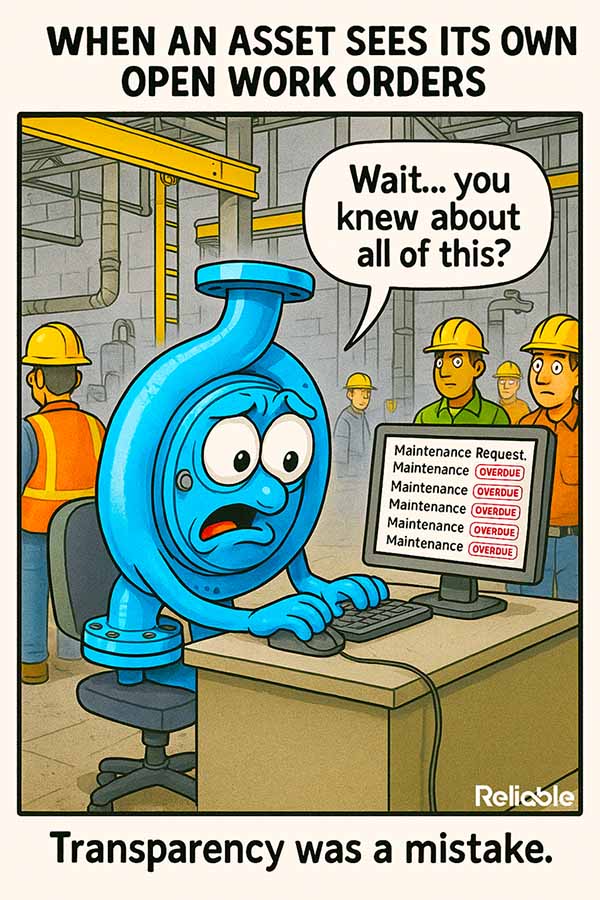

Every maintenance operation reaches a point where the list of open jobs can outgrow the hours available to close them, and learning how to manage overdue work orders becomes a core work-management skill. An overdue work order is one whose required or planned completion date has passed. It may be late because priorities changed, parts were unavailable, capacity was short, or the original due date was unrealistic. A screen full of overdue work is a signal to examine both workload and due-date discipline.
The real danger is that an aging backlog can stop looking urgent. Jobs blur together, priorities drift, and a single asset can carry several overdue requests while everyone assumes someone else is tracking them. Getting control starts with validating the work, its priority, and its current condition before deciding what belongs on the schedule.
An overdue list can be useful once a team reads it correctly. After duplicates, obsolete requests, and low-value noise are removed, it can show where risk is accumulating, where capacity is constrained, and which assets keep generating corrective work. The trick is to act on that signal instead of letting it harden into background noise.
Why Overdue Work Orders Pile Up in Plain Sight
Backlogs can grow from a mismatch between incoming work and available execution capacity, but that is not the only cause. Breakdowns, staffing changes, parts delays, poor job planning, weak prioritization, and unrealistic due dates can all push the overdue count higher.
The list also hides its own shape. Without disciplined review, a team can let an urgent safety job and a low-consequence cosmetic task age side by side. Strong maintenance scheduling and prioritization keep that from happening by matching work priority to risk, readiness, and real capacity.
A backlog is demand and capacity speaking out loud, and an overdue line needs context before anyone decides what it means.
Left unmanaged, aging safety, compliance, and high-risk corrective work can become a real liability. Operators may also lose confidence that submitted defects will be addressed, which weakens the quality of the work-request system.
That drift can carry real cost. The deferred maintenance risks buried in an aging backlog do not all grow at the same rate, but defects that continue to degrade can become more expensive or disruptive if they are postponed too long.
There can be a morale cost too. When technicians and operators repeatedly see valid requests age without a decision, they may become less willing to report new defects. A backlog that is visibly reviewed and dispositioned sends the opposite message and keeps useful information flowing from the floor.
Reading the Backlog Before You Attack It
Before a crew can burn down the list, someone has to make sense of it. A focused triage pass separates obsolete or duplicate work from valid jobs and ranks the remaining work by risk and readiness. The time required depends on the size and quality of the backlog.
- Flag safety, environmental, and compliance work for immediate risk review, then rank the rest using consequence, asset criticality, current condition, due date, and available controls. A bad-actor label by itself should not automatically outrank a higher-risk job.
- Group requests by asset, so a machine carrying five overdue jobs earns one coordinated visit instead of five separate trips.
- Mark duplicates, canceled needs, and jobs overtaken by events, because older backlogs often contain requests that are no longer valid.
That pass can reduce the noise and turn a wall of red into a ranked queue that a planner can schedule against the labor, parts, permits, and access actually available.
It also reveals patterns worth acting on. When the same asset keeps surfacing at the top of the triage, the backlog has just handed you a candidate for a deeper reliability review long before the next failure forces the issue.
How to Manage Overdue Work Orders Without Burning Out the Crew
Once the list is ranked, how to manage overdue work orders becomes a question of sustained throughput rather than heroics. A weekend blitz can reduce the count, but it will not solve the underlying problem if intake, planning quality, priorities, or capacity remain unchanged.
A durable answer is to reserve planned capacity for the highest-value backlog work while also working to reduce reactive maintenance at the source. The exact share of weekly hours should reflect backlog age, risk, workload, and the plant’s operating needs rather than a universal percentage.
You do not fix a systemic backlog with a one-time blitz; you reduce it with risk-based priorities and sustained capacity.
Set targets the team can see, but avoid a metric that rewards closing easy jobs. Track measures such as overdue work by priority and age, estimated backlog labor hours, incoming versus completed work, and schedule compliance, then review the trend during weekly scheduling.
Just as important, tighten the intake. Screen and prioritize new requests, make sure the work is defined well enough to plan, and assign realistic required-by dates. That keeps the overdue list from being inflated by weak dates or fed faster than the organization can manage it.
Keeping the List From Coming Back
Clearing the backlog once is the easy part. Keeping it clear is a discipline that has to be built into the weekly rhythm of the whole department.
- Review the overdue list on a defined cadence, often weekly, so high-risk requests do not quietly age without a decision.
- Balance new promises against real capacity, and say so plainly when the plant is asking for more than the hours allow.
- Feed recurring corrective work on the same defect or asset into a reliability review. A repeating corrective problem can signal a deeper cause, while a recurring preventive task may simply be performing as designed.
Handled this way, the overdue column becomes a useful indicator of workload, prioritization, and due-date discipline rather than a source of dread. Knowing how to manage overdue work orders means matching risk and promises to real capacity, week after week, until aging work stops surprising the team.