

Why Maintenance Planning Defines Reliability
Every plant wants reliability, but few master the discipline of maintenance planning. It’s not just about scheduling work. It’s about designing a system that anticipates, prepares for, and prevents problems. Too many organizations confuse maintenance activity with progress. Crews are busy, PMs are checked off, and yet failures keep recurring. The reason is simple: maintenance is reactive without proper planning discipline.
When the planner and production manager are locked in conflict, it’s usually not because they disagree about goals—it’s because the system forces them to compete. Maintenance wants to preserve assets; production wants to meet quotas. Both are right in isolation, but wrong in isolationism. The cure isn’t compromise. It’s synchronization.
Effective maintenance planning aligns reliability efforts with production throughput, ensuring both serve the same master: consistent, predictable performance. It brings order to chaos, translating reliability goals into actionable schedules that minimize disruption and maximize uptime.
The Core Principles of Maintenance Planning
Strong maintenance planning relies on fundamentals that don’t change, regardless of technology, industry, or plant size. These are the building blocks of a system that works under pressure and delivers measurable outcomes.
1. Plan Before You Schedule
Planning is strategy; scheduling is execution. When you skip planning and go straight to scheduling, you’re just reacting faster. True maintenance planning defines what must be done, what tools and parts are needed, what hazards exist, and how long the work should take. Scheduling simply decides when and by whom it will be done. Separate the two roles and protect the planner’s time to plan—not to chase parts, fight fires, or cover absences.
2. Standardize Job Plans
Every task performed more than once should have a standard job plan. These plans reduce human variation, protect safety, and cut wasted time. Include clear scopes, checklists, materials, and tools for each job. Standardization converts experience into institutional knowledge, ensuring consistent execution even as personnel change.
3. Prioritize by Risk and Impact
Not all assets are equal, and not every PM deserves the same attention. Effective maintenance planning ranks work by the consequences of failure, not by convenience. This approach channels effort where it prevents the most loss: financial, safety, or operational. When resources are limited, this prioritization keeps the plant reliable rather than merely busy.
4. Build in Feedback Loops
Each work order is a lesson. Capture “planned vs. actual” data—time, materials, delay reasons—and feed it back into planning. This iterative refinement is how planners become predictors instead of guessers. Over time, planning accuracy improves, wrench time increases, and unplanned downtime shrinks.
Aligning Maintenance Planning With Production Goals
The biggest friction in manufacturing isn’t between people. It’s between priorities. Production wants throughput now; maintenance wants uptime later. Without alignment, one wins today while the other loses tomorrow.
1. Create Shared Metrics
When production and maintenance use different scorecards, they chase different outcomes. Instead, use shared KPIs: uptime, OEE, schedule compliance, and quality. That way, maintenance success becomes production success, and vice versa.
2. Communicate in Business Language
Maintenance must translate technical needs into financial logic. Don’t just say “we need downtime.” Say, “An hour now prevents eight hours of outage next quarter.” Effective maintenance planning turns technical decisions into business cases, gaining production’s cooperation through clarity.
3. Synchronize Calendars and Constraints
Joint planning meetings should look 4–6 weeks ahead. Maintenance can plan labor and materials; production can allocate downtime windows around bottlenecks. The result: coordinated, not conflicting, schedules.
When done right, maintenance planning becomes the glue between operations and reliability. It replaces arguments with data and competition with coordination.
Turning Maintenance Planning Into a Continuous System
Maintenance planning is not a one-time initiative. It’s a living, breathing system that evolves with experience, technology, and asset data. Mature organizations use it as a foundation for reliability-centered maintenance, predictive analytics, and digital transformation.
Develop Planning Maturity
Plants evolve through five maturity stages:
- Reactive: Work orders appear only after failure.
- Preventive: Routine tasks exist, but without performance tracking.
- Predictive: Condition data informs planning decisions.
- Proactive: Failures are rare, and planning accuracy is high.
- Integrated: Maintenance, production, and reliability operate as one system.
Each step requires deliberate effort. You can’t jump from chaos to precision overnight—but you can measure your progress.
Leverage Technology Wisely
Modern CMMS and EAM systems make maintenance planning data-driven. Use them to forecast parts, generate PMs, analyze backlog, and trigger work orders from sensor data. Integrate planning with reliability engineering tools—such as FMEA and root cause analysis—to seamlessly connect cause, effect, and prevention.
Train Planners as Strategic Thinkers
The best planners aren’t clerks. They’re reliability strategists. They understand asset criticality, cost drivers, and production flow. Invest in their training and shield them from distractions like firefighting or expediting. A planner’s job is to stay one step ahead of chaos, not inside it.
Downloadable Planning Resource:
Want to see where your plant stands? Download the Reliable Maintenance Planning Maturity Assessment [PDF]
Use this quick 10-question tool to benchmark your planning process and identify improvement priorities.
The Cultural Shift: From Firefighting to Forecasting
True reliability begins when leadership sees maintenance planning as a business process, not an administrative one. The most reliable plants in the world didn’t get there by luck or slogans—they built systems that turn information into foresight.
A well-planned maintenance program transforms culture:
- Technicians trust their schedules because the work is ready.
- Production trusts maintenance because downtime is predictable.
- Management trusts the data because results are repeatable.
Predictability is the currency of reliability. When every job is planned, scheduled, and analyzed, chaos gives way to control.
The Payoff: Reliability You Can Count On
Plants that master maintenance planning gain measurable, lasting advantages, such as higher OEE, fewer failures, safer operations, and happier crews. But the deeper benefit is alignment: maintenance and production stop pulling in opposite directions.
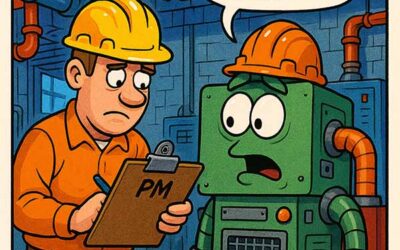
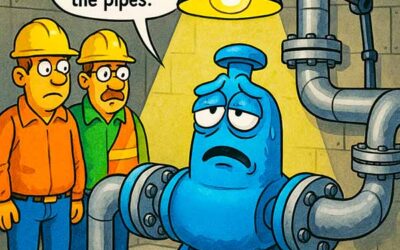
In a well-planned operation, reliability isn’t a department. It’s a shared mindset. The planner’s calendar and the production schedule stop being battlegrounds and become blueprints for stability. And when the system works, the “broken asset” in the cartoon becomes something far more valuable: a shared victory between two departments that finally learned to plan together.