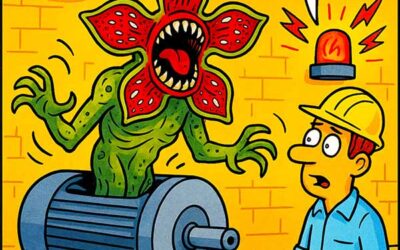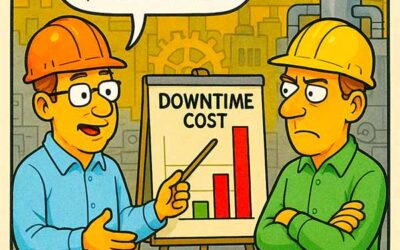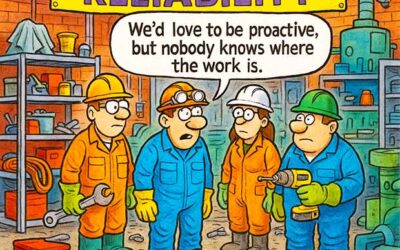


In reliability and maintenance, the true challenge isn’t fixing machines, it’s fixing mindsets. Every plant has its “repeat offenders”: motors that keep eating bearings, pumps that repeatedly cavitate, gearboxes that leak despite new seals. These chronic failures are symptoms, not causes, of a deeper issue: an organizational inability to learn from failure.
You can’t fix what you refuse to face. The real root cause is often cultural, not mechanical.
That’s where root cause analysis in maintenance becomes essential. RCA is not just an engineering tool, it’s a structured discipline for turning technical problems into cultural progress. Like a support group for equipment, the first step is honesty: admitting failure without blame. Because when organizations normalize discussing failure openly, they unlock the insights buried beneath years of reactive habits.
Why Root Cause Analysis in Maintenance Often Misses the Mark
The phrase root cause analysis in maintenance gets tossed around a lot. Yet, most RCAs are shallow exercises that scratch at symptoms instead of causes. Many teams conduct RCAs simply to close audit requirements or satisfy management demands, not to uncover systemic weaknesses.
Here’s why RCA frequently fails to deliver meaningful change:
- Blame culture dominates. Instead of identifying process flaws, investigations devolve into finger-pointing.
- Premature conclusions. Teams stop the “why” chain too soon, declaring “operator error” or “bearing defect” as root causes without probing deeper into training, alignment, or lubrication practices.
- Lack of follow-up. Even when genuine causes are found, few organizations verify whether corrective actions were implemented or effective.
An RCA that ends with a new procedure but not a behavioral change is only half done. The goal isn’t to file reports, it’s to eliminate recurrence. The most successful organizations view RCA as a continuous learning loop, not a one-time event.
The Human Factor in Root Cause Analysis in Maintenance
Every chronic machine failure has a human story behind it. The motor that “keeps eating bearings” might point to poor installation practices, but the deeper cause could be production pressure, rushed startup sequences, or inadequate training.
Effective root cause analysis in maintenance blends technical evidence with cultural awareness. It requires leaders who can create psychological safety—spaces where technicians and operators can discuss errors without fear. In environments ruled by punishment, people hide problems. In cultures that reward learning, they reveal them early.
The most productive RCAs sound more like therapy sessions than interrogations. Facilitators ask open-ended questions, probe for context, and focus on “why” instead of “who.” When people feel heard, the truth surfaces faster, and permanent fixes follow.
Machines don’t lie, but people do – especially when they’re afraid of being blamed.
When people stop defending themselves and start analyzing their systems, reliability takes off. Admitting mistakes is no longer career suicide—it’s professional maturity.
Building a Technical Backbone for Root Cause Analysis in Maintenance
Culture is the foundation, but data is the backbone. A world-class root cause analysis in maintenance program depends on evidence gathered from modern condition monitoring systems.
Technologies like vibration analysis, oil analysis, infrared thermography, and ultrasound reveal hidden failure mechanisms before they surface. But data alone isn’t insight, it must be organized, contextualized, and interpreted.
A disciplined RCA follows a structured, data-driven workflow:
- Define the failure mode precisely. Describe what failed, how it manifested, and when it occurred.
- Collect high-quality data. Pull logs from CMMS, SCADA, and predictive tools. Time-correlate with production data to find triggering events.
- Use cause-and-effect trees or fishbone diagrams. Map physical, human, and systemic contributors.
- Quantify probability. Use Weibull analysis or FMEA data to confirm recurring patterns and identify high-risk factors.
- Validate hypotheses with experiments or reinspection. Don’t rely on assumptions, verify each suspected cause.
- Implement and track corrective actions. Assign responsibility, timeline, and measurable KPIs to ensure completion.
The strength of RCA lies in verification. If you don’t measure whether corrective actions reduced recurrence, the process loses value. RCA isn’t about closing cases, it’s about preventing them from reopening.
Embedding Root Cause Analysis in Maintenance Culture
To sustain improvement, root cause analysis in maintenance must evolve from a project into a daily habit. The organizations that achieve this don’t wait for catastrophic failures, they apply RCA thinking continuously, even to minor deviations.
Here’s how to operationalize RCA into the culture:
- Create RCA triggers. For example, every unplanned downtime event over four hours or any repeat failure within 90 days automatically initiates an RCA.
- Train facilitators. RCA leaders should be skilled in both technical analysis and group dynamics.
- Integrate RCA into CMMS. Automate tracking of failure data, action item completion, and recurrence rates.
- Share lessons publicly. Use visual dashboards or team briefings to show progress and celebrate solved issues.
When RCA becomes part of standard operations, it transforms from a reactive exercise into a proactive capability. Over time, chronic failures disappear, MTBF increases, and teams become more confident in their ability to influence outcomes.
More importantly, people start thinking systemically. They no longer view breakdowns as isolated incidents but as feedback about process design, skill gaps, or communication bottlenecks.
The Payoff: Reliability Through Accountability, Not Blame
Organizations that fully embrace root cause analysis in maintenance experience a cultural inflection point. Accountability replaces blame. Data replaces speculation. Conversations shift from “Who caused it?” to “What allowed it?”
This shift produces measurable business outcomes:
- Reduced reactive work. Fewer emergency repairs free up labor for planned maintenance.
- Higher OEE and asset uptime. Eliminating chronic causes of downtime directly boosts throughput.
- Lower maintenance costs. Addressing systemic causes, like misalignment or poor lubrication, cuts recurring material and labor waste.
- Improved safety and morale. Transparent investigation practices reduce stress and encourage pride in problem-solving.
True reliability maturity isn’t achieved by eliminating all failure, it’s achieved by learning from every one. Plants that excel in RCA develop a “no-surprise” culture, where every incident feeds organizational intelligence.
The Courage to Confront the Truth
Reliability isn’t built on perfect machines, it’s built on honest reflection. Every failed bearing, cracked impeller, and burnt winding is feedback waiting to be decoded. When teams normalize root cause analysis in maintenance as a core behavior, they stop firefighting and start future-proofing.
Admitting failure isn’t defeat, it’s leadership. The courage to face uncomfortable truths separates plants that repeat history from those that rewrite it. Reliability begins not with technology, but with humility.