

Diagnosing Machinery Sleep Disorders with Vibration Analysis
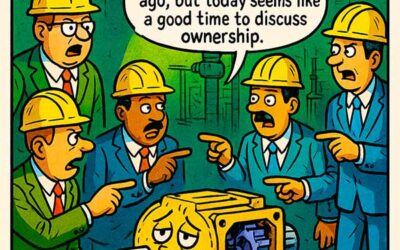
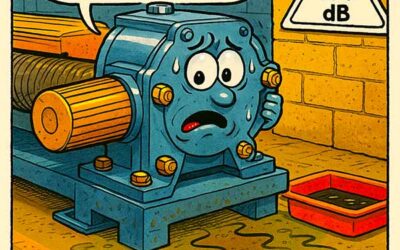
When a bearing won’t “sleep,” your plant won’t either. This cartoon captures a vivid metaphor—a motor tucked into bed, sensors monitoring its “dreams,” and a concerned technician diagnosing the problem: Restless Bearing Syndrome. It’s humorous, yes—but beneath the satire lies truth. Using vibration analysis for bearing fault detection, we can uncover early indicators of machine distress before they become costly nightmares.
In this post, we’ll explore the technical realities behind this metaphor. We’ll connect vibration patterns to actual bearing failure modes, discuss how early detection saves money and downtime, and explain why condition monitoring is essential for asset reliability.
What Is Restless Bearing Syndrome, Technically Speaking?
While the cartoon calls it “Restless Bearing Syndrome,” the real issue is unplanned micro-movements and fault signatures that vibration sensors detect. Common causes include:
- Inner or outer raceway defects
- Lubrication starvation
- Misalignment
- Overloading or imbalance
- Contaminant-induced pitting
Each of these faults leaves a trace—a specific frequency, amplitude, or pattern in the vibration spectrum. Using vibration analysis for bearing fault detection, reliability engineers can pinpoint which failure mode is developing. Think of it as interpreting a motor’s sleep apnea study—only instead of oxygen dips, we track g-force spikes and frequency harmonics.
Why Early Vibration Monitoring Beats Late-Stage Repair
The earlier you catch a problem, the more options you have. Vibration signatures tied to bearing defects often show up long before audible noise, heat buildup, or visible wear. This gives you lead time to:
- Schedule corrective work without disrupting operations
- Order replacement parts in advance
- Investigate root causes (lubrication failure, misalignment, etc.)
- Avoid catastrophic failure and secondary equipment damage
By applying vibration analysis for bearing fault detection, teams avoid the high costs of reactive maintenance. In many cases, it’s the difference between a $500 bearing swap and a $50,000 motor rebuild.
Building a Sleep Study for Your Rotating Assets
A real-world “sleep study” involves setting up condition monitoring tools for critical machines:
- Accelerometers placed in axial and radial positions on the housing
- Data acquisition systems configured to record during normal operations and transients
- Trend analysis dashboards that flag changes in baseline values
- Alarm thresholds tailored to each machine’s normal vibration envelope
The most mature reliability programs integrate vibration data with oil analysis, ultrasound, and thermography to create a multi-sensor “diagnosis” of machine health. But it starts with solid, consistent vibration analysis for bearing fault detection as your primary tool.
When the Chart Looks Like a Seismograph, Act
The cartoon’s vibration chart mimics the spikes of a sleep study gone wrong—telltale signs of underlying disruption. This isn’t far from reality. High-frequency resonances, spikes in acceleration, and repeating harmonics (typically multiples of shaft speed) are all red flags in the vibration spectrum.
A trained analyst knows how to separate noise from signal, and more importantly, when the signal indicates pending failure. Waiting too long can result in:
- Total machine seizure
- Coupling damage
- Shaft misalignment transfer
- Lost production
If your trend data shows growing instability—don’t wait. Schedule a follow-up “exam,” dig into the root cause, and treat the bearing like a patient in your care. Machines, like people, need rest—but only if the internal environment is stable.
Conclusion
The cartoon is funny, but the underlying message is serious: vibration analysis is diagnostic medicine for rotating equipment. When used proactively, vibration analysis for bearing fault detection helps maintenance teams spot emerging issues, intervene early, and dramatically improve reliability outcomes. Your machines may not sleep—but that doesn’t mean they should shake through the night.