
Why Critical Spare Parts Disappear and What to Do About It Permanently
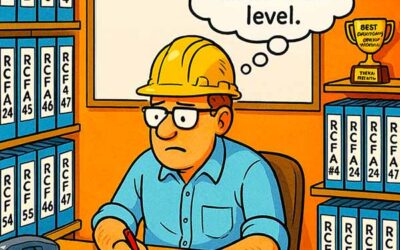
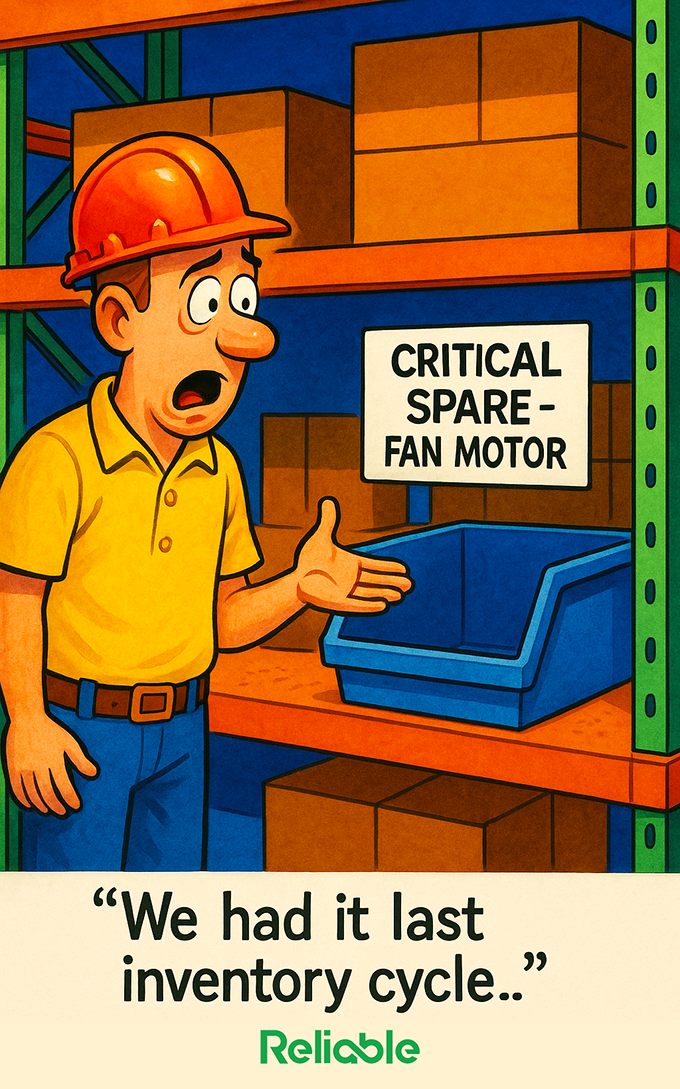
You walk into the storeroom expecting a simple answer. The tag says “CRITICAL SPARE – FAN MOTOR.” But the bin is empty. The tech shrugs. “We had it last inventory cycle…” And just like that, the line goes down for three hours while everyone scrambles.
It’s not a joke—it’s a crisis. And it’s more common than most reliability leaders are willing to admit.
In the reliability world, this moment is the result of years of unnoticed systemic failure. The critical part didn’t just vanish. It was consumed without replacement. The process failed long before the outage did. So let’s ask the real question: why do critical spare parts disappear? And more importantly, how do we stop it?
Ghost Inventory: Why Critical Spare Parts Disappear Without a Trace
The short answer: they were never “managed” in the first place—just stored.
Here are the real reasons critical spares vanish:
- Unlinked consumption: A part is pulled for a job, but no CMMS transaction is made. It’s never subtracted from inventory.
- Manual systems: Handwritten logbooks, memory-based replenishment, or “Joe always restocks that one” methods fail the moment Joe takes a vacation.
- Lack of classification: Many plants don’t even have a “critical” flag in the inventory system. All parts are treated equally—even the ones that could take down a process line.
- No reorder triggers: Without min/max levels or kanban systems in place, there’s no automatic flag to reorder when a bin goes empty.
- Tribal knowledge: A tech assumes someone else is handling replenishment. “We always had one” becomes “I thought we had one.”
Inventory isn’t just about what’s on the shelf—it’s about whether the right part is there when you need it. And when critical parts are missing, that’s not a storeroom failure. It’s a reliability failure.
Critical Spares Are Not Inventory—They’re Insurance
Let’s flip the mindset. Stop calling them “inventory.” Start calling them risk mitigators. That fan motor in the cartoon? That’s not a part—it’s uptime insurance. And if you wouldn’t let your insurance lapse, you can’t let that bin sit empty.
Here’s how to reframe your approach:
- Assign ownership: Give critical spare oversight to someone with reliability accountability—not just purchasing.
- Mark them visibly: Physically distinguish critical spares with color-coded bins, tags, or labels that scream “This matters.”
- Limit access: Require sign-off or CMMS interaction for any removal. Create digital fingerprints for every touch.
- Automate replenishment: Implement systems that generate automatic POs or at least reorder alerts the moment the part leaves the shelf.
- Track usage trends: Identify which critical parts are used frequently and analyze root causes. Is it a bad design? An overworked asset? Fix the upstream issue too.
If you’re still managing spares like it’s 1987, with handwritten clipboards and once-a-year cycle counts, you’re setting yourself up to fail. Modern reliability requires systemic visibility and replenishment automation.
Maintenance Without Critical Spares Is Russian Roulette
Let’s run a thought experiment. Say your most critical fan motor fails. You call the storeroom. They say, “We had it last inventory cycle.” You now have:
- 6 hours of unscheduled downtime
- 14 operators waiting around
- Emergency sourcing from a vendor 300 miles away
- Premium freight charges
- An angry plant manager demanding answers
All because a $900 motor didn’t get restocked.
That’s not a parts issue—that’s a risk exposure problem.
You wouldn’t run a plant without fire suppression. So why run it without critical spares?
If you’re asking “why critical spare parts disappear,” the better question is why wasn’t someone responsible for making sure it didn’t?
And if the answer is “because no one was assigned,” then you’ve just diagnosed the root cause.
Implement a Reliability-Centered Spares Management System
Here’s a proactive system to prevent future cartoon-worthy catastrophes:
Inventory audit and classification
- Review your entire parts catalog.
- Assign criticality based on consequence of failure and lead time to replace.
- Flag all critical spares digitally and physically.
Link CMMS to storeroom transactions
- Any work order that consumes a part must deduct it from inventory.
- Automate low-level alerts and reorder processes.
- Create a dashboard for critical spares stock-outs.
Conduct monthly spot checks—not annual cycle counts
- Check the 20 most critical spares monthly. If even one is missing without a reorder pending, escalate.
Assign a spares champion
- One person should own the responsibility for critical spare replenishment and reporting.
- Their KPI? Zero critical stock-outs per quarter.
Tie it to downtime metrics
- Track every unplanned downtime event caused by missing spares.
- Report that data in reliability reviews.
The bottom line: if your spares process doesn’t ensure availability, accountability, and automation, you’re not managing risk. You’re inviting it.
Final Thought: Reliability Starts in the Storeroom
The plant floor gets the spotlight. But reliability starts in the shadows—in the bins, shelves, and racks where silent risks hide. Every empty “critical spare” bin is a red flag that should never make it to production. Yet it does. Often.
If you’re still wondering why critical spare parts disappear, remember: they don’t disappear—they’re allowed to vanish.
Don’t let your plant become the next cartoon. Make critical spares management a non-negotiable reliability practice. The cost of inaction is always greater than the cost of prevention.