

Introduction: Why Root Cause Analysis Often Misses the Mark
When failures repeat despite “solving the problem,” it’s usually because we treated symptoms, not causes. Root cause analysis (RCA) is intended to address this issue; however, it often becomes a mere checklist exercise. People often look for blame rather than solutions.
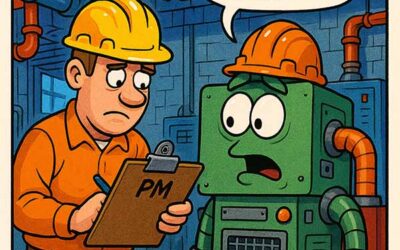
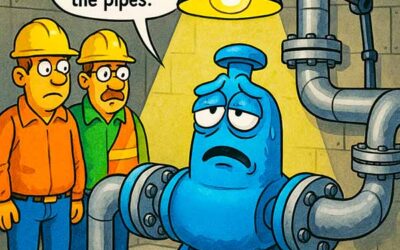
The cartoon captures this perfectly: a frustrated engineer interrogating a pump as if it could confess. In reality, machines don’t talk, but their failure patterns do, if we know how to listen. That’s where root cause analysis best practices come in. Done right, RCA turns chaos into learning, and learning into reliability.
1. Define the Problem Without Bias
The first best practice is resisting the temptation to blame. A failed pump doesn’t mean “the pump was bad.” It means the system, design, operation, or maintenance allowed conditions that caused failure. Start with a neutral statement: “Pump X failed due to clogging.” This removes judgment and clears the way for fact-based investigation.
A good RCA team begins with “what happened?” and aligns on the failure event itself. Did debris cause the clogging? Lubricant breakdown? Operator error? Or an upstream process issue? If the problem definition is unclear, the rest of the investigation becomes a matter of guesswork. By establishing a precise event description, the team ensures they are solving the actual problem, not chasing shadows.
2. Ask Better Questions, Not More Questions
The heart of root cause analysis best practices lies in inquiry. Tools like the “5 Whys” or fault tree analysis can work—but only if they are applied with discipline. A weak “why” leads to shallow answers like “operator error” or “bad part.” A strong “why” digs deeper into systemic contributors: Was training insufficient? Was the procedure unclear? Was the supplier spec inadequate?
A good facilitator steers the group away from surface-level answers. For example, if a motor fails due to overheating, asking “why” five times may reveal it wasn’t just a failed bearing, but lubrication starvation caused by improper relubrication intervals, which in turn resulted from missing PM tasks due to poor scheduling.
This demonstrates why structured questioning is more potent than simply asking “what went wrong?” because it reveals systemic breakdowns hidden under symptoms.
3. Use Evidence, Not Opinions
RCA meetings often dissolve into debates: “I think it’s maintenance’s fault,” versus “No, operations ran it wrong.” Opinions don’t fix machines—evidence does. That means inspecting failed parts, reviewing condition monitoring data, analyzing lubrication samples, and comparing failure patterns.
One of the most overlooked root cause analysis best practices is building a fact base. Without evidence, conclusions are guesses. With evidence, solutions become undeniable. For example, metallurgical analysis may reveal fatigue cracks from misalignment. Oil analysis may reveal varnish precursors, indicating thermal stress. Thermography may identify hot spots that indicate inadequate cooling.
This evidence-driven approach eliminates personal bias. Instead of an argument, the machine’s data becomes the witness. When teams rely on facts, the solution path becomes clearer and far more defensible when challenged.
4. Implement and Verify Solutions
Finding the root cause isn’t the finish line; it’s half the race. The other half is implementing and verifying solutions. Too many organizations stop once they’ve identified a cause. If corrective actions aren’t applied, tracked, and audited, the failure will return.
For example, if the root cause of clogging is poor filtration, the solution might involve upgrading the filter design, tightening work practices, and increasing inspection frequency. But unless leadership ensures those fixes are adopted and followed, the clogging will recur.
One of the critical root cause analysis best practices is validation, which involves measuring results after changes are made. If the number of clogging incidents drops 80% in six months, that’s proof. If nothing changes, then either the fix was wrong or the execution was weak. Either way, RCA must loop back to reassess and adapt.
5. Build a Culture of Learning, Not Blame
The cartoon shows RCA as a hostile interrogation. In many plants, that’s not far from reality. When RCA becomes personal, people withhold information, protect themselves, and resist contributing. This undermines the entire process.
A true culture of RCA sees failures as opportunities for learning, not witch hunts. Leaders must model curiosity, not accusation. Celebrating “lessons learned” sends the message that uncovering weaknesses is progress, not punishment.
One plant I worked with transformed reliability performance by shifting from “who messed up?” to “what did we learn?” Over time, operators stopped hiding minor issues and started reporting them early. That openness created a goldmine of insights that dramatically reduced downtime. This is one of the most potent yet underutilized root cause analysis best practices, building psychological safety into the process.
6. Expand RCA Beyond Failures (New Section for Depth)
The best organizations don’t wait for catastrophic breakdowns to apply RCA. They use it proactively. Minor anomalies, like rising vibration or unusual oil color, can be triggers for “mini-RCAs.” Instead of asking, “Who caused this?” the team asks, “What’s this data trying to tell us?”
For example, a rise in bearing temperature may indicate early-stage lubrication failure. Investigating that anomaly may uncover poor grease storage conditions long before a bearing seizes. Applying RCA early prevents escalation, turning potential downtime into a simple adjustment.
Expanding RCA into predictive maintenance is one of the most advanced root cause analysis best practices, as it connects data-driven monitoring with systemic problem-solving. This integration enables reliability teams to transition from reactive firefighting to true predictive control.
Conclusion: Turning Pressure Into Progress
Machines don’t lie, but they can’t talk either. It’s up to us to interpret what their failures mean. Root cause analysis is the translator between breakdowns and breakthroughs. When teams follow root cause analysis best practices, including defining the problem clearly, asking better questions, using evidence, verifying solutions, fostering a learning culture, and even applying RCA proactively, they transition from firefighting to foresight.
Failures will still occur, but instead of being mysteries, they’ll serve as roadmaps for improvement. That’s how RCA stops being personal and starts being powerful.