

The Data Revolution in Reliability
Machines have always communicated, but now they have a voice we can finally hear. Through online condition monitoring, industrial assets continuously share performance data through vibration, temperature, ultrasonic, and oil analysis sensors. This technology gives maintenance teams eyes and ears inside every critical component, long before symptoms surface.
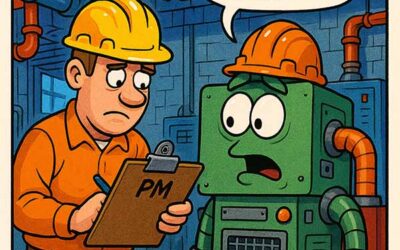
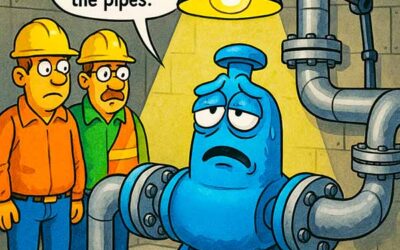
Online condition monitoring turns machine whispers into clear warnings, giving reliability teams the power to act before failure strikes.
Online condition monitoring is no longer optional; it’s foundational. Plants that still rely solely on periodic inspections or route-based data collection operate with blind spots that modern reliability programs can’t afford.
Real-time data changes the game by revealing deterioration trends as they happen, turning maintenance into a strategic, data-led discipline rather than an emergency response function.
However, data abundance doesn’t guarantee insight. Many organizations drown in dashboards, reacting only when alarms become urgent. The issue isn’t the technology; it’s how the data is managed, analyzed, and acted upon. That’s where diagnostics and disciplined decision-making turn information into a true reliability advantage.
Data That Speaks: Turning Signals Into Insight
Online condition monitoring captures streams of raw data that describe the internal health of machines: what’s vibrating, heating, leaking, or wearing down. But this data, without diagnostic interpretation, is noise. The actual value lies in reading the story it tells.
1. Vibration Analysis
Vibration sensors detect mechanical distress, such as imbalance, misalignment, or bearing damage, long before physical symptoms appear. Frequency spectrum analysis identifies the exact fault type and progression rate, enabling targeted intervention rather than generalized overhauls.
2. Thermography
Thermal cameras detect hotspots from electrical resistance, bearing friction, or misalignment. When trended over time, temperature maps become fingerprints of machine performance. Online thermography systems alert engineers to insulation breakdown, lubrication failure, or motor overload conditions in real time.
3. Ultrasound Monitoring
Ultrasound detects friction and turbulence, both of which indicate lubrication or flow issues. It detects problems too subtle for vibration analysis, such as early-stage bearing distress or compressed air leaks, providing a low-cost, high-sensitivity complement to other methods.
4. Oil Analysis
Lubricant condition reflects machine condition. Online particle counters, moisture sensors, and viscosity monitors reveal contamination, oxidation, or additive depletion trends. When integrated into online condition-monitoring dashboards, oil data becomes a continuous health indicator for rotating equipment.
Data is abundant, but diagnosis creates value. Machines don’t fail for lack of data—they fail for lack of interpretation.
Integrated Diagnostics combines these techniques into one narrative: vibration indicates imbalance, oil analysis confirms wear debris, and thermography shows localized heat. The machine is speaking in multiple languages—the key is listening with translation tools that connect those signals into actionable insight.
Online Condition Monitoring and the Human Element
The strongest predictive systems fail without human understanding. Online condition monitoring doesn’t replace the technician. It empowers them. The shift from manual inspection to real-time diagnostics changes the technician’s role from observer to strategist.
Still, many reliability programs falter at this cultural inflection point. Common challenges include:
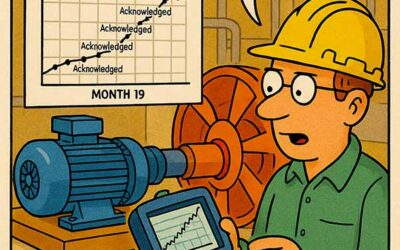
- Alert Fatigue: When too many low-severity notifications flood screens, teams learn to ignore them.
- Unclear Ownership: If no one “owns” the alert review process, problems drift through the cracks.
- Disconnection from Workflows: If monitoring platforms don’t link to the CMMS, alerts never translate into actions.
- Lack of Trust: When false positives persist, faith in the system diminishes.
Leading organizations close these gaps with integration and accountability. Online condition monitoring systems automatically generate work orders in the CMMS when verified thresholds are crossed. Technicians can trace alerts, log findings, and update condition notes directly within the workflow.
Continuous training also plays a pivotal role. Teams need to interpret spectral signatures, temperature deltas, and oil chemistry reports—not just acknowledge alarms. When they understand what the data means and how it affects uptime, ownership, and engagement, they rise dramatically.
From Data to Decision-Making
The fundamental transformation happens when monitoring insights directly shape maintenance and business decisions. Online condition monitoring creates a continuous improvement cycle where every data point contributes to a smarter reliability strategy.
1. Prioritization and Planning
When alerts are ranked by asset criticality and consequence of failure, maintenance leaders can allocate resources with precision. The plant shifts from reacting to what’s broken to planning what’s about to break.
2. Predictive and Prescriptive Maintenance
Online condition monitoring supports predictive analytics by identifying degradation patterns and estimating remaining useful life (RUL). Machine learning algorithms can even recommend the optimal maintenance window—turning predictive maintenance into prescriptive maintenance.
3. Financial Insight
Data-driven reliability connects directly to cost control. Fewer emergency shutdowns mean lower overtime, reduced spare part consumption, and improved energy efficiency. Tracking avoided failures provides measurable ROI, giving leadership confidence to invest further in reliability initiatives.
4. Continuous Optimization
By closing the loop and verifying which alerts correctly predicted issues, plants continuously refine alarm thresholds and data models. Over time, false positives decrease, accuracy improves, and maintenance precision sharpens.
Decision-making evolves from subjective debate to objective confidence. The data doesn’t just describe the past; it guides the future.
Online Condition Monitoring as a Competitive Advantage
Plants that fully implement online condition monitoring operate in a different reliability class. Instead of discovering problems after failure, they engineer predictability into daily operations.
Key enablers of that success include:
- Cross-Technology Integration: Fusing vibration, infrared, ultrasound, and oil data into one coherent diagnostic view.
- Automated Analytics: Leveraging AI to find hidden correlations and weak signals invisible to human review.
- Dynamic Thresholding: Adjusting alarm limits in real time as load, speed, and environment change.
- Cultural Alignment: Shifting from “maintenance” to “machine intelligence,” a mindset where every technician becomes a data-driven problem solver.
When this integration reaches maturity, maintenance becomes invisible, and failures are prevented before they exist. Production schedules stabilize, spare part inventories shrink, and uptime becomes the default state rather than the goal.
Reliability isn’t an abstract metric anymore. It’s a competitive differentiator.
The New Language of Machines
Online condition monitoring represents more than technology. It’s a shift in industrial consciousness. Every reading, every trend line, every alarm is part of a larger dialogue between machine and human. The plants that thrive are those that not only collect this data but also learn to listen and respond.
As industries evolve toward autonomy, online condition monitoring will form the neural network of smart factories. The companies mastering it today will define the reliability benchmarks of tomorrow.
The message is clear: machines already know when they’re about to fail. The only question is whether we’ll hear them in time.