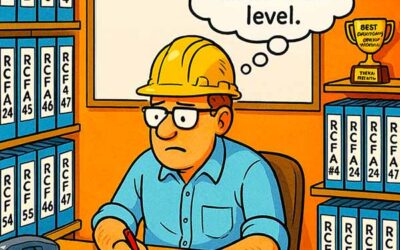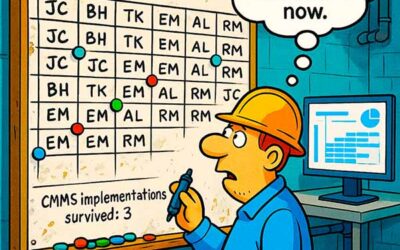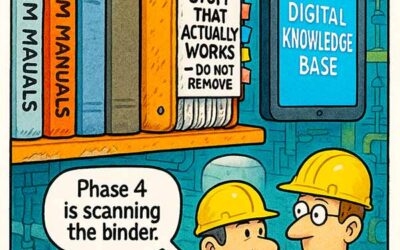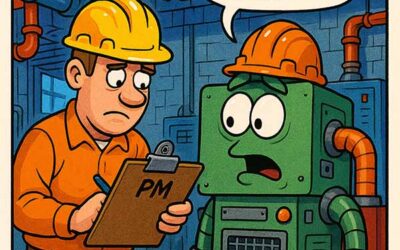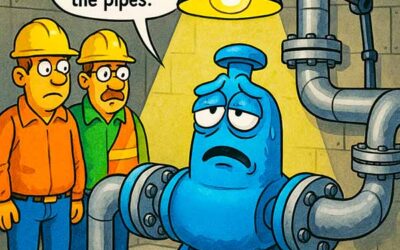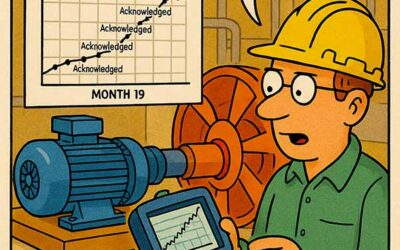


The cartoon says it all: a nervous motor wants to “get its issue over with now.”
It’s a perfect metaphor for today’s maintenance reality: our machines know what’s coming before we do. But while predictive systems have become remarkably accurate, their value depends entirely on one thing: what we do with the prediction.
Motor predictive maintenance is no longer a futuristic concept. It’s a practical, data-driven approach that helps plants shift from firefighting to foresight. It merges condition monitoring, analytics, and smart scheduling to prevent failures before they affect uptime. In reliability programs, this approach represents the next evolution beyond preventive maintenance: precision maintenance based on actual machine health.
Understanding Motor Predictive Maintenance and Why It Matters
Motor predictive maintenance uses real-time monitoring tools like vibration sensors, infrared thermography, ultrasound, oil analysis, and current signature analysis to identify subtle indicators of mechanical or electrical distress. Each method contributes to the overall health picture.
For example:
- Vibration analysis spots bearing wear and imbalance long before noise or heat develops.
- Infrared thermography identifies poor connections and hot spots invisible to the naked eye.
- Electrical signature analysis detects rotor bar defects or phase imbalances.
- Ultrasound testing reveals early lubrication and friction issues.
The data from these technologies feed into a predictive model that uses machine learning and statistical algorithms to detect patterns that signal degradation. Unlike traditional preventive maintenance, which relies on calendar-based intervals, motor predictive maintenance acts only when actual evidence of deterioration appears.
A predictive alert is only valuable if it leads to a better decision faster.
This difference drives enormous savings. According to multiple industry benchmarks, predictive maintenance programs can reduce unplanned motor failures by up to 55% and increase equipment availability by 20% or more. The ROI becomes self-evident when production losses, replacement parts, and labor hours are compared.
How to Turn Predictive Data into Proactive Action
The hardest part of predictive maintenance isn’t collecting the data; it’s knowing what to do with it. Many organizations fall into “analysis paralysis,” where dashboards are full of red flags but no one acts.
To avoid this trap, predictive insights must flow seamlessly into operational workflows.
Step 1: Prioritize by criticality
Not every detected fault deserves the same response. Rank motors by their function in production; those driving bottleneck assets deserve top priority.
Step 2: Connect predictive alerts to your CMMS
Integration allows data from your motor predictive maintenance system to trigger work orders automatically. This ensures the findings move beyond reports and become scheduled, actionable maintenance.
Step 3: Use condition-based scheduling
Instead of fixed intervals, plan lubrication, alignment, or bearing replacements based on measured degradation trends.
Step 4: Close the feedback loop
Every completed task feeds new data back into the model, helping the system refine its predictions and improve accuracy over time.
This continuous loop – data, decision, execution, feedback – is the foundation of what leading reliability teams call digital maintenance intelligence.
Key Metrics That Define Success in Motor Predictive Maintenance
Predictive maintenance without measurement is just intuition wrapped in technology. To prove its impact, maintenance leaders must quantify reliability performance. The following metrics reveal whether your predictive strategy truly works:
- Mean Time Between Failures (MTBF): Measures how predictive actions extend asset life cycles.
- Maintenance Cost as % of Asset Value: Correlates cost control with reliability gains.
- Unplanned Downtime Hours: Direct indicator of predictive program maturity.
- Maintenance Work Order Closure Rate: Shows how effectively predictions turn into actions.
- Prediction Accuracy: Percentage of alerts that correspond to verified issues.
Tracking these metrics over time builds credibility for your motor predictive maintenance program and demonstrates ROI to leadership. The best reliability engineers present not just data, but stories; how a single early detection prevented a $100,000 outage.
Every prevented failure should be treated as a success story, not just a statistic.
Building the Right Culture for Predictive Reliability
Even the best system fails without the right mindset. Predictive maintenance success depends on people as much as on technology. Teams must trust the data and act promptly when insights emerge.
Culture-building principles:
- Promote curiosity, not compliance. Encourage technicians to question why an alert occurred, not just clear it.
- Show the wins. Visual dashboards showing avoided failures motivate teams and validate the investment.
- Invest in skill development. Train your team in vibration analysis, thermography, and data interpretation.
- Create accountability. Assign predictive review responsibilities in weekly meetings, turning insights into habits.
- Foster collaboration. Reliability, operations, and maintenance should operate as a single unit focused on uptime, not as departmental silos.
When culture and technology align, predictive maintenance becomes more than a tool. It becomes the DNA of operational excellence.
The Future of Motor Predictive Maintenance
The next frontier is predictive automation: using AI-driven analytics not only to predict but also to prescribe. These systems will automatically recommend corrective actions, calculate repair urgency, and even order spare parts before failures occur.
Emerging technologies will push boundaries further:
- Edge computing will reduce latency in sensor data processing.
- Digital twins will simulate failure patterns to validate predictions.
- AI diagnostics will correlate cross-asset data for system-level insights.
Speculative note: Within 5 years, predictive systems could autonomously coordinate maintenance crews, adjusting schedules dynamically across facilities.
However, predictive maintenance will never replace people. It will augment them. The most powerful reliability ecosystems blend intelligent machines with experienced humans who interpret, prioritize, and act with context.
Predict the Problem, Prevent the Pain
The cartoon’s sweating mechanic and anxious motor remind us that even with all our smart systems, maintenance still involves human decisions. Predictive tools can warn us, but they can’t act for us.
Motor predictive maintenance isn’t about forecasting failure. It’s about engineering confidence. It turns uncertainty into preparation, and preparation into uptime. By combining sensor data, analytics, and skilled technicians, maintenance leaders can eliminate surprises and build plants that perform with quiet reliability.
The best predictive programs don’t make you feel like the motor in the cartoon – worried about what’s coming. They make you feel ready for whatever’s next.