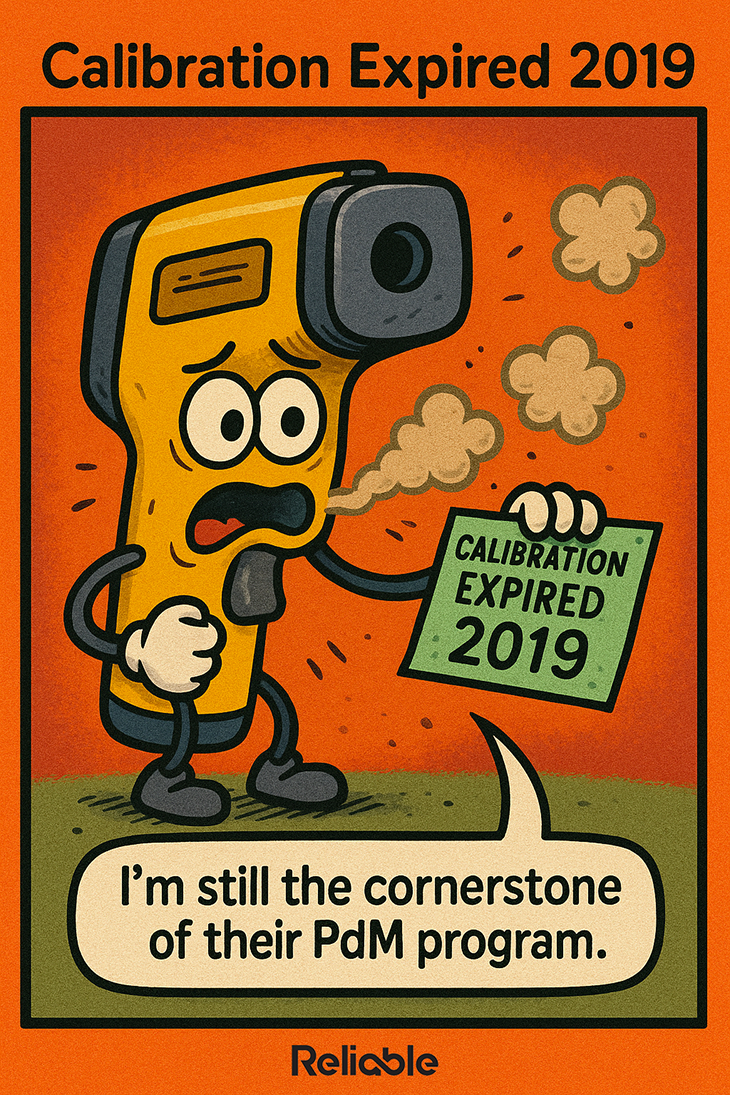

An infrared camera with an expired calibration will still power on, still display a thermal image, and still let you walk a route and collect data. That’s the problem. Nothing about the experience tells you the readings may be inaccurate. Understanding infrared thermography calibration requirements is the difference between a predictive maintenance program that catches real problems and one that generates confident reports based on unverified data.
Calibration drift happens gradually. Sensors age, internal reference sources shift, and environmental exposure can take a cumulative toll on measurement accuracy. A camera that was accurate to plus or minus 2°C when calibrated may no longer meet the manufacturer’s accuracy specification after an overdue calibration interval, especially after heavy use or harsh storage conditions. For qualitative surveys (looking for relative hot spots between similar components), that drift might not change the outcome. For quantitative measurements where specific temperature thresholds trigger work orders, it can change everything.
What Infrared Thermography Calibration Requirements Actually Involve
Infrared camera manufacturers often recommend periodic calibration, commonly annually, though the actual interval depends on the camera model, usage intensity, accuracy requirements, and operating environment. Calibration involves comparing the camera’s temperature readings against traceable reference standards (typically blackbody sources at known temperatures) across the relevant measurement range and adjusting or documenting any deviations found. Organizations serious about their predictive maintenance strategy track calibration and verification dates the same way they track any other critical instrument certification.
Turnaround time and cost vary by manufacturer, lab, camera model, measurement ranges, and certificate requirements. Manufacturer or accredited-lab calibration may take days to weeks, with expedited service sometimes available for a premium.
A camera that reads low on a hot bearing can delay or prevent an alarm threshold from being triggered. If the bearing later fails, the thermographic report from two weeks earlier may appear to show it was “within normal range” when the measurement system was actually the problem.
That cost feels significant in isolation. Compare it to the consequences of a missed detection: a single unplanned motor failure on a critical production line can cost tens or hundreds of thousands of dollars when you factor in replacement hardware, emergency labor, lost throughput, and downstream schedule disruption. The calibration fee is small by comparison.
Compliance Standards That Define Thermography Calibration Requirements
Several industry standards and best-practice documents address the use, verification, and documentation of thermographic equipment used in industrial inspections. ASTM E1934 covers practices for examining electrical and mechanical equipment with infrared thermography and supports the use of suitable, properly maintained instruments. ISO/IEC 17025 governs calibration laboratory competence and accreditation. Certification and qualification programs such as ASNT SNT-TC-1A depend on documented procedures, qualified personnel, and appropriate equipment for reliable survey work.
Insurance carriers and auditors may ask for calibration documentation when evaluating electrical system survey results. If your thermographic inspection supports an insurance claim, compliance filing, or safety-critical decision, an expired calibration certificate can weaken the credibility and acceptance of the findings. The survey data doesn’t change, but its legal and financial weight may be challenged.
- Maintain a calibration log for every infrared camera in your program. Record the date of last calibration, the calibrating lab’s accreditation number, the certificate number, and the next due date.
- Set CMMS reminders 60 days before calibration expires. This gives you enough lead time to schedule the send-out, arrange a loaner camera if needed, and avoid gaps in your thermographic route coverage.
- Keep calibration certificates on file and readily accessible. Auditors, insurance inspectors, and internal quality teams may ask for them, often with short notice.
These practices align with the broader discipline of early failure detection. Any instrument used for early detection needs to be accurate enough to catch subtle changes before they become obvious problems. An unverified or out-of-calibration camera can undermine that premise from the ground up.
What Happens When Calibration Lapses
The consequences of lapsed calibration are insidious because they don’t announce themselves. Routes get walked. Reports get filed. Trends get charted. Everything looks normal on paper, except the underlying measurements may be increasingly unreliable.
Temperature readings can drift from true values, alarm thresholds can lose meaning, and the program’s ability to distinguish a developing fault from normal operation can degrade quietly over months. The thermographer collecting the data may have little indication the readings are off unless the camera is checked against a known reference or compared with another verified instrument.
Lapsed calibration erodes your program from the inside. Every route walked with an unverified or inaccurate camera adds a layer of false confidence that makes the eventual surprise failure even harder to explain.
When a failure occurs on an asset that was recently “cleared” by a thermographic survey, the post-mortem investigation should ask: was the camera calibrated and verified? If the answer is no, or “we’re not sure,” the credibility damage can extend beyond that single event. Operations teams remember that kind of failure. Rebuilding trust in the thermographic program takes demonstrated, verified accuracy.
Building Calibration Discipline Into Your Thermography Program
- Assign calibration tracking to a specific person. Shared ownership means nobody checks the due dates until a camera is already months overdue.
- Budget for calibration annually as a line item in the predictive maintenance budget, not as a discretionary expense that gets deferred when budgets tighten. Deferring calibration may save money this quarter, but it increases the risk that a critical temperature-based decision is made with unreliable data.
- If your facility runs more than one camera, stagger the calibration schedules so you always have at least one calibrated unit available for route coverage. Gaps in thermographic coverage during calibration send-outs are a common and entirely avoidable program weakness.
Meeting thermography calibration requirements takes modest effort compared to the consequences of skipping them. A disciplined calibration program protects every diagnostic decision your camera supports, from vibration analysis cross-checks to standalone thermal surveys. Let calibration lapse, and temperature readings, trend comparisons, and alarm thresholds become less defensible.
- Review calibration records during every annual program audit. Treat an expired certificate the same way you’d treat an expired safety certification: the instrument should not be used for quantitative decisions until it’s current.
- Document any measurement anomalies or field discrepancies that could indicate mid-cycle drift. If a camera consistently reads lower than a recently calibrated unit on the same equipment, send it in early rather than waiting for the scheduled date.