

Neglect Is the Silent Motor Killer
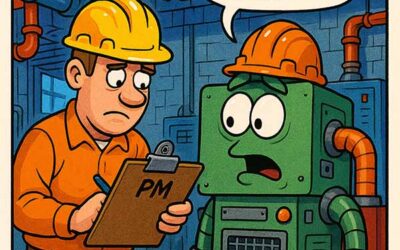
Inside most plants, the scene plays out the same way: a technician stands over a burnt-out motor while another shakes his head and scribbles on a clipboard. The culprit isn’t always voltage spikes or design flaws. More often, it’s neglect. Motors don’t suddenly fail; they gradually deteriorate through inattention. Dust blocks airflow, bearings dry out, cooling fans seize, and over time, heat claims its victim.
This is precisely why every facility needs an electric motor preventive maintenance checklist. It’s not a formality; it’s the difference between continuous uptime and recurring chaos. Each box you tick delays failure, extends equipment life, and reduces both maintenance hours and safety risks.
Motor neglect rarely makes headlines, but its financial impact is staggering. A single failed 50-horsepower motor can cost tens of thousands of dollars in downtime and labor, not including the lost production value. Multiply that by dozens of motors across a facility, and the economics of inaction become painfully clear.
Why Every Plant Needs a Motor Maintenance Checklist
An electric motor preventive maintenance checklist provides structure and accountability. Without it, maintenance becomes reactive, performed only when something breaks. With it, inspections are routine, issues are caught early, and downtime becomes predictable and manageable.
Electric motors face four main enemies: heat, contamination, vibration, and electrical imbalance. Each one has a preventive countermeasure that can be embedded into your checklist:
- Heat: Clean vents, ensure airflow, and log temperature trends.
- Contamination: Keep motors sealed, wipe down housings, and inspect filters.
- Vibration: Check alignment, tighten bolts, and measure bearing condition.
- Electrical imbalance: Verify phase currents, insulation resistance, and grounding.
Plants that adopt checklists not only reduce motor failures but also extend mean time between repairs (MTBR) by 40–60%. A correctly implemented maintenance program turns motor care from a cost center into a reliability multiplier.
A checklist also reinforces communication across shifts. When operators and technicians share documented findings, everyone stays aligned on equipment condition. This collaborative visibility is what separates best-in-class plants from those constantly firefighting.
Designing an Effective Electric Motor Preventive Maintenance Checklist
No two facilities operate the same way, so your electric motor preventive maintenance checklist should reflect the environment, motor criticality, and duty cycle. A motor running 24/7 in a dusty cement plant will need different intervals than one operating intermittently in a clean packaging facility.
Here’s a structure that works for most operations:
1. Daily / Weekly Checks
- Clear dust and debris from cooling fins, vents, and guards.
- Look for unusual noise, vibration, or smells.
- Verify motor is operating within temperature and amperage limits.
- Confirm fans and couplings are turning freely.
2. Monthly / Quarterly Checks
- Lubricate bearings with the correct grease type and quantity.
- Check alignment between motor and driven equipment.
- Inspect electrical connections for looseness or corrosion.
- Record vibration levels and compare against baseline readings.
3. Semiannual Checks
- Test insulation resistance and winding condition.
- Verify motor load versus rated capacity.
- Inspect terminal boxes for contamination or moisture.
- Confirm proper operation of overload relays and starters.
4. Annual Checks
- Review historical performance data and trends.
- Conduct thermography to detect hot spots.
- Rebalance rotating components if necessary.
- Replace or refurbish motors nearing end of life.
Documentation is crucial. Record each observation and trend data over time. Predictive technologies like thermography and vibration analysis add precision to what was once a purely manual task. A well-maintained logbook often provides early warnings long before failure occurs.
Integrating Predictive Tools into Preventive Maintenance
The best checklists now blend preventive and predictive strategies. Infrared thermography, for example, can instantly reveal hot spots caused by friction or phase imbalance. Vibration sensors detect bearing wear far earlier than human senses can.
Integrating these tools into your electric motor preventive maintenance checklist makes it dynamic, data-driven, and actionable. Instead of inspecting on fixed intervals, you respond to real conditions. For instance, when vibration levels trend upward, you can plan a bearing replacement during scheduled downtime rather than an emergency shutdown.
Some plants link this data directly into computerized maintenance management systems (CMMS). When a parameter drifts outside limits, the CMMS automatically triggers a work order. This creates a living maintenance system: self-correcting, traceable, and continuously improving.
The return on investment is immediate:
- Reduced unplanned downtime
- Lower maintenance costs per operating hour
- Improved overall equipment effectiveness (OEE)
- Extended motor lifespan
Neglect may be silent, but so are the savings from doing things right.
From Autopsy to Prevention: Changing the Mindset
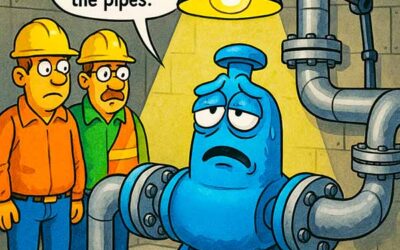
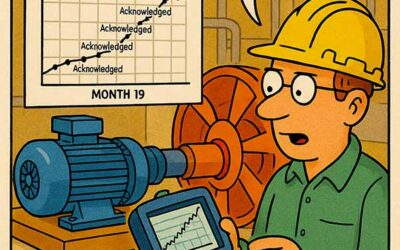
The cartoon’s “CSI Motor Division” joke hits close to home. Many plants are brilliant at diagnosing failures after the fact, but slow to change the behaviors that cause them. The shift from reaction to prevention is cultural. It requires leadership support, disciplined documentation, and frontline ownership.
When you embed an electric motor preventive maintenance checklist into your reliability strategy, you’re not just maintaining motors; you’re maintaining consistency. Each task performed on schedule builds a barrier against costly failure. Over time, that consistency compounds into reliability maturity.
Your goal isn’t to find what failed. It’s to make failure boringly rare. The best plants aren’t those that fix problems fast; they’re the ones where motors quietly run, year after year, untouched by neglect.
Reliability Begins Where Neglect Ends
Every failed motor tells a familiar story: no airflow, no lube, no follow-up. The autopsy always ends with the same line, cause of death: neglect. But you can rewrite that story with structure, discipline, and foresight.
Start small. Build and use an electric motor preventive maintenance checklist that fits your operation. Refine it monthly. In time, you’ll move from firefighting to foresight, from failure investigation to failure prevention.
Because in maintenance, consistency – not luck – is what keeps machines alive.